
1. Introduction: Why Choosing the Right Line Matters
For any food manufacturer, efficiency and quality are the cornerstones of success. When it comes to processing carrots on an industrial scale, the decision to invest in the right carrot processing line directly affects product consistency, cost efficiency, and compliance with international food safety standards.
Carrots are a versatile raw material. They can be washed and packed fresh, diced and frozen for IQF mixes, canned or retorted for shelf-stable goods, or processed into purees and juices. Each end product requires a different degree of washing, peeling, cutting, blanching, cooling, and packaging. Therefore, no two carrot processing lines are completely identical—factories need tailored solutions.
This article will guide food processors through the essential considerations when selecting the most suitable carrot processing line for their facilities. Instead of presenting generic advice, we will break down the technical, operational, and financial factors that actually determine whether an investment delivers long-term value.
2. Understanding What a Carrot Processing Line Includes
Before comparing options, it is important to understand what makes up a complete carrot processing line. At its core, such a line integrates several machines into a continuous, automated workflow that takes raw carrots from receiving to a finished, packaged product.
Typical Sections of a Carrot Processing Line
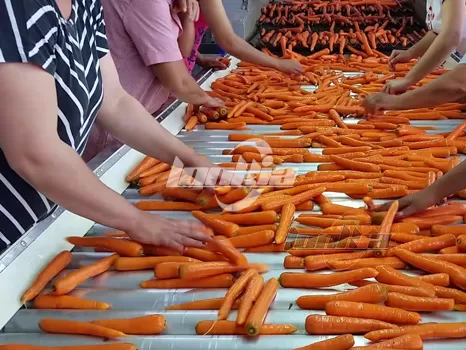
Raw material receiving & inspection – conveyors, sorting belts, or optical sorters.
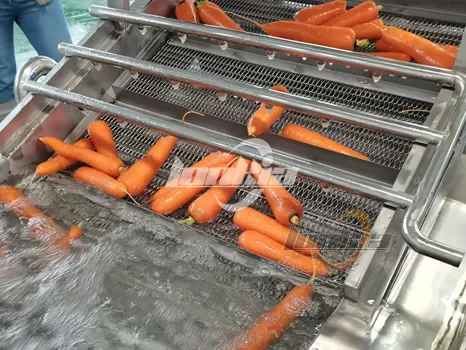
Washing & peeling systems – bubble washers, drum washers, and mechanical or steam peelers.
Cutting or dicing equipment – for sticks, cubes, slices, or julienne cuts.
Blanching & cooling units – to preserve color, texture, and nutritional value.
Dewatering & drying (if required) – especially important for frozen or dehydrated carrot products.
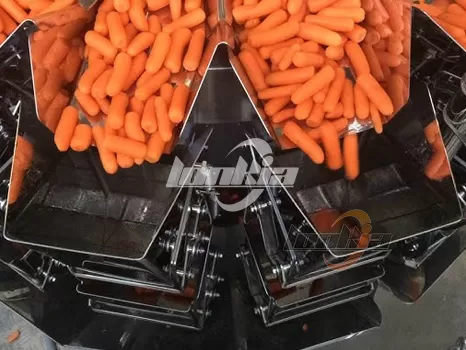
Packaging line – bagging, sealing, or vacuum systems depending on the end market.
Auxiliary systems – water filtration, waste collection, and CIP (clean-in-place) sanitation units.
By knowing these key stages, decision-makers can assess whether they need a full turnkey solution or only selected components to integrate into their existing plant.
3. Key Production Capacity Requirements
One of the first decisions when choosing a carrot processing line is capacity. Different factories have vastly different throughput needs depending on their market and distribution channels.
Small-scale operations (500–1000 kg/h): Typically serve local markets, restaurants, or fresh-cut suppliers. Flexibility and lower upfront cost are prioritized.
Medium-scale operations (1–3 tons/h): Common for regional distributors or frozen food plants. They require stronger automation, reliable quality control, and durable materials.
Large-scale operations (5–10+ tons/h): Geared toward export markets, global food brands, or contract manufacturing. Here, efficiency, hygienic design, and minimal downtime are essential.
The choice of capacity does not only affect machine size; it also determines conveyor speed, water treatment systems, and labor requirements. Underestimating capacity can lead to bottlenecks, while oversizing equipment results in wasted energy and unnecessary capital expenditure.
4. Hygiene and Food Safety Standards
Because carrots are consumed fresh, frozen, or in ready-to-eat formats, hygiene is non-negotiable. Any carrot processing equipment must meet stringent food safety requirements such as HACCP, ISO 22000, or FDA compliance.
Hygiene Factors to Consider
Material of construction: Stainless steel (304 or 316) is mandatory to resist corrosion and allow easy sanitation.
Cleanability: Equipment should support CIP systems, smooth surfaces, and minimal dead zones where bacteria can accumulate.
Water recycling: Integrated filtration systems help reduce water usage while maintaining microbiological safety.
Separation of zones: Raw carrots should not cross paths with semi-processed or finished products to avoid contamination.
Factories that plan for certification audits must ensure their carrot processing line design facilitates record-keeping, traceability, and easy inspection by regulators.
5. Automation, Flexibility, and Integration
Modern food factories cannot rely solely on manual labor. Automation plays a key role in reducing costs, improving consistency, and addressing labor shortages.
Questions to Ask Before Investing
Automation level: Do you want a semi-automatic line where workers still perform some tasks, or a fully automatic line where the entire washing-to-packaging process is machine-driven?
Flexibility: Can the line handle carrots of different sizes, shapes, and grades? Can it switch between slicing, dicing, and julienne without excessive downtime?
Integration: How well does the carrot processing line connect with existing upstream (receiving) and downstream (packaging/freezing) systems?
Digital monitoring: Advanced systems now include PLCs and IoT sensors to monitor water temperature, cutting speed, and energy consumption in real time.
A processing line that balances flexibility with automation ensures long-term adaptability as consumer demands evolve.
6. Energy Efficiency and Sustainability Factors
Energy and water consumption are two of the biggest operating costs in vegetable processing plants. With rising energy prices and stricter environmental regulations, sustainability has become a key selection criterion.
Sustainability Considerations in Carrot Processing
Water recycling & filtration systems: Reduce fresh water intake while ensuring clean wash cycles.
Heat recovery units: Capture heat from blanching or steam peeling systems and reuse it in preheating water.
Efficient motors and drives: Variable-frequency drives (VFDs) can cut electricity usage on conveyors and pumps.
Waste utilization: Carrot peels and trimmings can be redirected into animal feed or bio-digestion facilities.
Investing in a sustainable carrot processing line may increase upfront cost, but it delivers long-term savings, helps meet ESG goals, and strengthens a manufacturer’s reputation with consumers and retailers.
7. Maintenance and After-Sales Support
Even the best-designed carrot processing line requires ongoing maintenance. A neglected system not only reduces efficiency but can also compromise hygiene standards and food safety.
Why Maintenance Matters
Minimized downtime: Regularly serviced machines break down less frequently.
Extended equipment life: Preventive maintenance reduces wear and tear.
Consistent quality: Sharp blades, clean washing tanks, and well-calibrated sensors ensure uniform output.
Key Maintenance Practices
Scheduled cleaning: Daily cleaning of washers, conveyors, and peelers to avoid microbial build-up.
Blade checks: Cutting machines need sharp, well-maintained blades to prevent irregular shapes and waste.
Lubrication and calibration: Motors, pumps, and sensors should be serviced according to manufacturer instructions.
Spare parts availability: Choosing a supplier that provides easy access to spare parts prevents long downtime.
When selecting a supplier, evaluate their after-sales support system. Some reputable manufacturers provide remote monitoring, training for operators, and dedicated service teams to handle emergencies.
8. Cost Analysis: Initial Investment vs. Long-Term ROI
Factories often hesitate to invest in advanced carrot processing equipment due to high upfront costs. However, the true calculation lies in the total cost of ownership.
Factors in Cost Evaluation
Initial investment – Purchase price of the processing line.
Operating costs – Labor, energy, water, and cleaning agents.
Maintenance costs – Regular servicing, spare parts, and technical support.
Yield and waste reduction – A well-designed line reduces peel loss and cutting waste.
Downtime costs – Frequent breakdowns lead to lost production time.
ROI Perspective
A low-cost line might save money upfront but create hidden costs through inefficiency.
A well-engineered line typically delivers ROI in 2–4 years through reduced waste, lower labor needs, and better yield.
Energy-efficient systems can reduce utility bills by up to 20%, further improving margins.
For factories aiming to supply international retailers, investing in higher-standard equipment can be the difference between securing export contracts and losing opportunities.
9. How to Evaluate and Choose the Right Supplier
Choosing the right carrot processing line manufacturer is just as important as selecting the right machine specifications.
Key Supplier Evaluation Criteria
Experience and expertise: Does the supplier specialize in vegetable processing equipment, or are they a general machinery provider?
Customization options: Can they adapt the line to your exact capacity, layout, and product needs?
Certifications: Ensure CE, ISO, or FDA compliance depending on your target markets.
Global references: Ask for case studies or existing clients who can verify performance.
After-sales support: Spare parts, service networks, and operator training must be included.
A reliable supplier is a long-term partner, not just a vendor. Their ability to provide technical know-how and process optimization often outweighs price differences.
10. Case Studies: Lessons from Real-World Installations
Learning from industry examples helps clarify what works—and what doesn’t—in carrot processing.
Case 1: Frozen Carrot Producer in Europe
A mid-sized frozen vegetable company upgraded from manual peeling to a semi-automatic carrot processing line. Result: 25% less product loss, 30% faster throughput, and compliance with EU hygiene regulations.Case 2: Large Asian Exporter
A factory exporting diced carrots for soups and ready meals installed a fully automated 5-ton/hour processing line. By integrating water recycling and steam peeling, they reduced water consumption by 40% and energy costs by 18%.Case 3: North American Fresh-Cut Supplier
Serving supermarkets with fresh carrot sticks, this plant invested in modular cutting machines. The flexibility to switch between julienne and sticks allowed them to meet seasonal demand without major changeovers.
These cases illustrate that the right carrot processing equipment is not about size alone—it’s about how well the system aligns with business goals.
11. Future Trends in Carrot Processing Lines
The food processing industry is evolving rapidly. Manufacturers that want to stay ahead should be aware of upcoming trends that will shape carrot processing in the next decade.
Key Trends to Watch
Increased automation: Robotics and AI vision systems will further reduce manual labor.
IoT integration: Real-time data monitoring for yield, energy use, and machine health.
Sustainability focus: Demand for water recycling, heat recovery, and waste valorization will grow.
Flexible product lines: Equipment capable of handling multiple vegetables beyond carrots.
Hygienic design innovation: Faster CIP cycles, antimicrobial surfaces, and reduced cleaning downtime.
Investing in future-ready carrot processing lines ensures longevity of equipment and competitiveness in global markets.
12. Conclusion & FAQs
Selecting the right carrot processing line is not just a procurement decision—it is a strategic investment that defines product quality, cost efficiency, and long-term competitiveness. By carefully evaluating production capacity, hygiene standards, automation level, sustainability, maintenance needs, and supplier reliability, factories can avoid costly mistakes and secure higher ROI.
The best solution is one that fits your specific product portfolio and future growth strategy. Whether producing diced, frozen, canned, or juiced carrots, the right processing line ensures efficiency from farm to package.
FAQs
Q1: What is the average cost of a carrot processing line?
A: Costs range widely—from $50,000 for small-scale semi-automatic systems to $500,000+ for fully automated large-capacity lines. Actual cost depends on customization and included modules.
Q2: Can one carrot processing line handle multiple products?
A: Yes. Modern lines are designed for flexibility, allowing them to process carrots alongside other root vegetables such as potatoes, beets, or radishes with minimal adjustments.
Q3: How much space does a typical carrot processing line require?
A: Small lines may fit into 200–300 m², while large-scale plants can occupy several thousand square meters depending on layout and capacity.
Q4: What maintenance schedule is recommended?
A: Daily cleaning, weekly inspections of blades and belts, and quarterly calibration checks are standard. Preventive servicing every 6–12 months helps avoid costly downtime.
Q5: Is automation always better than semi-automatic processing?
A: Not necessarily. For smaller factories with variable demand, semi-automatic lines offer flexibility and lower investment costs. For high-volume continuous operations, automation provides better efficiency and ROI.