
In industries such as food processing and logistics, the cleanliness of baskets directly impacts production efficiency and hygiene standards. As automated cleaning equipment, basket washing machines are gradually replacing manual cleaning and becoming standard equipment in factories. So, how exactly do these basket washer machines work? And how do they help businesses solve practical problems? This article will provide a systematic analysis of this type of equipment from the perspective of what customers care about most.
What Is a Basket Washing Machine?
A basket washing machine is an industrial device specifically designed to clean containers such as plastic baskets, storage bins, and food baskets. It is widely used in food processing, central kitchens, warehousing, and logistics.
The equipment typically features a stainless steel construction and is manufactured to hygiene design standards, capable of accommodating the cleaning needs of baskets of various sizes and types.
Compared to manual cleaning, its core value lies in:
- More thorough cleaning
- Higher efficiency
- More consistent standards
For enterprises pursuing large-scale production, this is not merely an equipment upgrade but a crucial step in optimizing production processes.
Working Principle of the Basket Washing Machine
Understanding the basket washing equipment's principles helps determine whether the cleaning results are reliable.
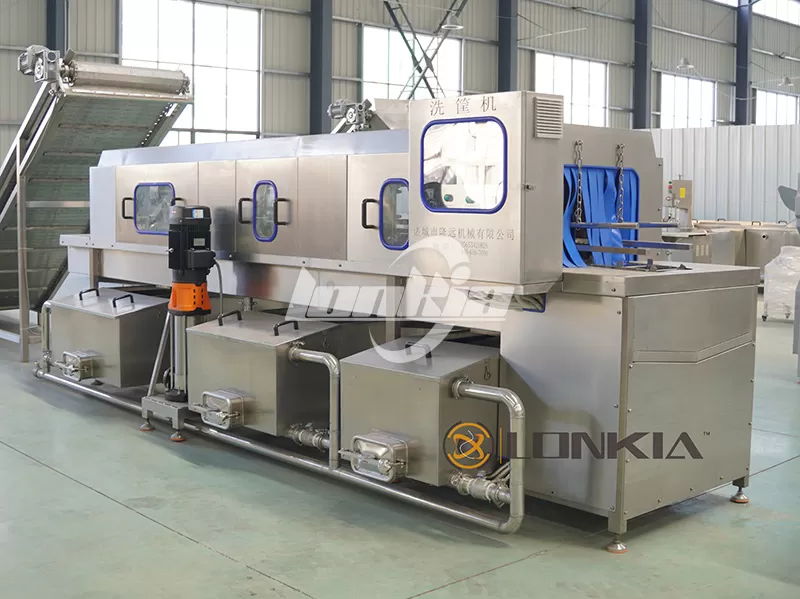
A typical basket washing machine primarily consists of a conveyor system, a spray system, and a water circulation system. Its workflow is as follows:
- Pre-wash Stage: Baskets enter the machine via a conveyor belt, where surface dirt is initially rinsed off to loosen any debris.
- High-Pressure Spray Wash: The machine uses multi-angle high-pressure nozzles to thoroughly rinse the baskets inside and out, effectively removing grease, residue, and other contaminants.
- Rinse Stage: A secondary rinse with clean water further enhances cleanliness while ensuring no cleaning solution remains.
- (Optional) Air-drying: A high-pressure blower rapidly removes moisture to improve turnaround efficiency.
👉 The multi-stage cleaning structure (separate washing and rinsing zones) is a key design feature that ensures effective cleaning.
Why Do Factories Need a Basket Washing Machine?
The primary concern many customers have before purchasing is: Is it really necessary?
The answer typically hinges on three core pain points:
- Low efficiency of manual cleaning: Manual cleaning is not only slow but also lacks consistent standards, making it difficult to meet high-volume demands.
- High hygiene risks: Repeated use of baskets easily leads to the accumulation of bacteria and grime; if not cleaned thoroughly, this can compromise product quality.
- Rising costs: As labor costs increase, automated equipment offers better long-term cost-effectiveness.
In contrast, automated equipment enables continuous cleaning, significantly shortening operation time and ensuring consistent cleanliness for every basket.
Key Features of a High-Quality Basket Washer Machine
When selecting equipment, the following points are particularly critical:
- High-pressure spray system: Determines cleaning intensity and effectiveness, directly impacting stain removal capability.
- Water recirculation and filtration system: The equipment reuses water resources while reducing impurities through filtration to improve efficiency.
- Segmented cleaning structure: Separation of the washing and rinsing zones prevents secondary contamination.
- Adjustable Parameters: Includes conveyor speed, temperature, and other settings to accommodate different basket types.
- Customization Capabilities: Since basket specifications vary across companies, the equipment must offer flexible design options.
Equipment solution providers like Lonkia can typically optimize the structure based on the customer's production line requirements, ensuring the equipment integrates seamlessly into actual production processes.
How to Choose the Right Basket Washer?
If the wrong model is selected, even the best equipment will fail to deliver value. We recommend focusing on the following:
- Capacity Matching: Does it meet daily throughput requirements (typically 100–2,000 baskets per hour)?
- Basket Size Compatibility: Does it support existing container specifications?
- Cleaning Requirements: Are disinfection or air-drying functions required?
- Level of Automation: Does it need to be integrated into the production line?
👉 Essentially, selecting the right model means choosing a solution that fits your specific production model.
Summary
As production scales expand and hygiene standards rise, the basket washing machine has evolved from an optional piece of equipment to an essential one.
It not only solves cleaning challenges but also optimizes the entire production process by:
- Improving cleaning efficiency
- Reducing reliance on manual labor
- Enhancing product quality consistency
If your facility is facing issues with low cleaning efficiency or high labor costs, implementing a stable and reliable basket washing system is a direction worth considering.