
If your facility handles hundreds or even thousands of crates per day, you're likely spending more than you realize on water, detergent, and labor. Whether you're in food processing, agriculture, logistics, or pharmaceuticals, crate hygiene is non-negotiable. But is it possible that a modern crate washer could actually cut your water and detergent costs by half?
The short answer is: yes. With the right system in place, an industrial crate washer—especially one with advanced automation and water recycling—can dramatically reduce operating costs. In this article, we explore how crate washers work, where the savings come from, and how to choose a system that delivers real ROI. We also address common questions such as crate washer job descriptions, conveyor options, and leading crate washing machine manufacturers.
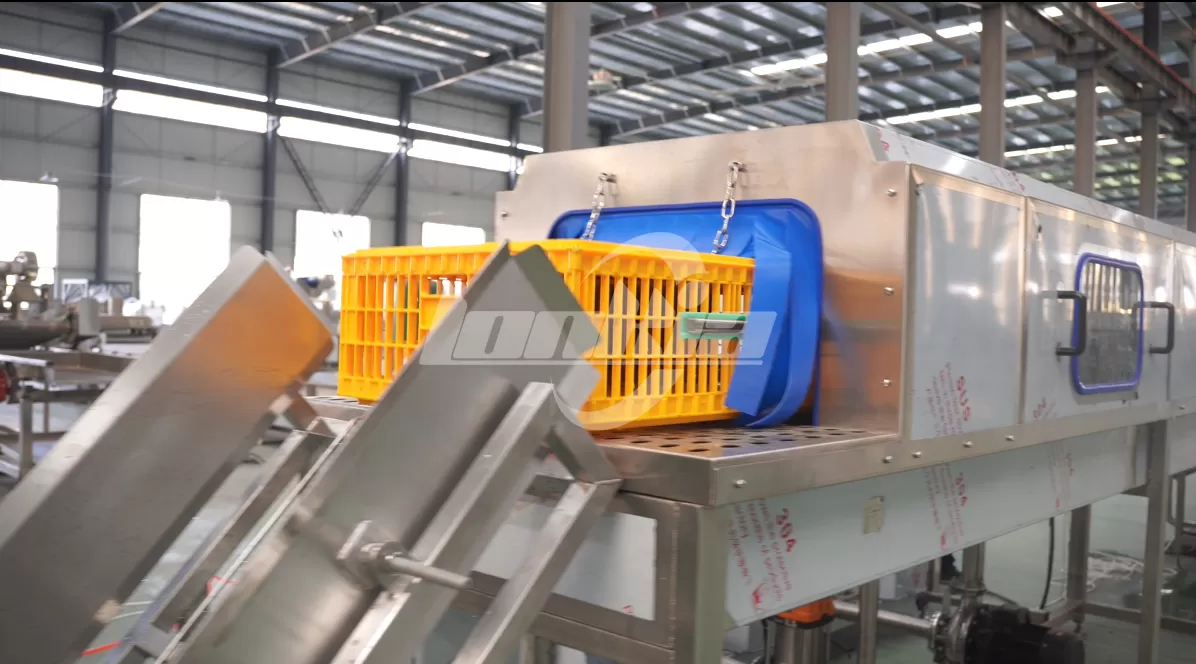
The Hidden Cost of Manual Crate Washing
Manual crate washing may seem affordable, but it's deceptively expensive. Here are the primary cost drivers that many operations overlook:
1. Excessive Water Usage
Manual cleaning methods usually involve hoses or immersion tanks with continuous water flow. Since there's no water recirculation or control mechanism, this leads to tremendous waste. Facilities may use thousands of liters of water daily just to clean a moderate volume of crates. The lack of filtration or reuse means that fresh water is wasted every time, contributing to inflated utility bills and unsustainable consumption.
2. High Detergent Waste
Operators without proper training often overuse detergents, thinking more chemicals mean cleaner crates. In reality, this results in excess chemical runoff, inconsistent sanitation levels, and inflated procurement costs. Overdosing also poses risks to employees and equipment and requires additional rinse cycles to remove residues, further compounding water usage.
3. Labor Intensity and Inconsistency
Manually scrubbing and rinsing crates is not only laborious but also exposes workers to repetitive stress injuries and chemical exposure. The cleaning output per person is extremely low—especially during peak production times. Worse still, the inconsistency in results can cause non-compliance with hygiene regulations, leading to potential product recalls, reputational damage, or even shutdowns.
4. Maintenance of Tools and Work Area
Hoses, brushes, tanks, and drains used in manual cleaning require regular maintenance and cleaning themselves. Drain blockages, biofilm buildup, and chemical spills can create safety hazards and add to indirect costs that many operations fail to budget for.
In summary, the perceived "low cost" of manual washing often masks a range of hidden operational inefficiencies and long-term expenses.
How Crate Washers Reduce Water and Detergent Use
Modern crate washers are engineered to drastically lower resource consumption while maximizing sanitation outcomes. Here's a breakdown of how they accomplish this:
1. Water Recirculation and Filtration Systems
Unlike manual methods, crate washers are equipped with closed-loop systems that reuse and filter water through multiple stages. During the cleaning cycle, rinse water from one stage is redirected for use in the next pre-wash stage. These machines use sediment filters, grease traps, and mesh screens to maintain water clarity and cleanliness. This intelligent design can reduce fresh water input by up to 60%, with high-end models achieving even greater conservation levels.
2. Precision Detergent Dosing
Detergents are dispensed using automated pumps that are pre-programmed to release precise amounts based on the load, soil level, and wash program. This ensures that you're not overusing expensive chemicals, and you’re maintaining proper dilution ratios to meet hygiene standards. Over time, this leads to significant cost reductions and ensures compliance with environmental discharge regulations.
3. Efficient Spray Nozzles and Rotating Arms
State-of-the-art industrial crate washing machines are fitted with high-pressure nozzles that rotate and target all internal and external surfaces of the crate. These nozzles are optimized to minimize water flow while maintaining effective cleaning force, ensuring that less water is used per crate without compromising cleanliness. Adjustable pressure settings allow operators to fine-tune the system for different soil levels.
4. Multi-Zone Cleaning for Targeted Use
Most systems are built with multi-zone cleaning stages, including pre-wash, main wash, rinse, and sometimes disinfection or drying. This staged approach allows each liter of water and each drop of detergent to serve a specific purpose. For instance, pre-wash zones handle loose debris, while main wash zones remove adhered contaminants using optimized water temperatures and chemical dosing. This division minimizes waste and increases overall system efficiency.
5. Smart Controls and Programmed Wash Cycles
Crate washers equipped with programmable logic controllers (PLCs) or smart panels allow facilities to select customized wash cycles depending on the type of crate, contamination level, or production schedule. These smart systems automatically adjust water flow, chemical dosage, and cycle duration, further reducing unnecessary resource use. Additionally, sensors can detect crate presence to avoid running empty cycles, conserving both water and detergent.
By implementing an automatic crate washer, facilities not only enhance their environmental sustainability but also realize measurable cost savings in utilities and consumables within months of installation.
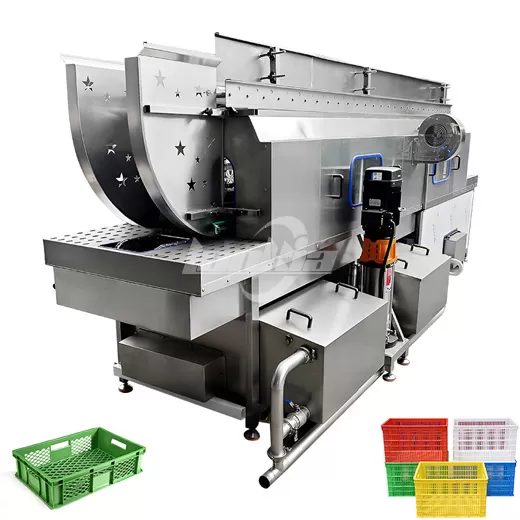
Real-World Example: Cost Savings in Action
In 2023, a mid-sized vegetable packaging facility in Jiangsu, China, transitioned from manual crate washing to a fully automatic tunnel-type crate washer conveyor system. Prior to installation, the company used over 10,000 liters of water and 12 kg of detergent daily for their 1,800–2,000 plastic crates.
After installing a recirculating crate washer with automated dosing and triple-zone washing, the facility reported:
Daily water usage dropped to under 4,000 liters (a 60% reduction)
Detergent consumption fell to 5 kg per day (a 58% reduction)
Cleaning staff requirements went from 4 full-time workers to 1 part-time operator
Cycle times improved from 2–3 minutes per crate to 40–60 seconds per unit
According to the operations manager, the business recovered its investment in just 14 months. Additionally, hygiene audits became easier to pass due to standardized cleaning protocols and automatic reporting logs.
This example demonstrates that significant cost and labor savings are not theoretical—they’re already happening in real factories using real machines.
Choosing the Right Crate Washer Manufacturer
The global market for crate washing machine manufacturers is growing fast. When evaluating options, consider:
Stainless steel construction (for food safety and durability)
Energy-efficient motors and pumps
CIP (Clean-In-Place) compatibility
Availability of spare parts and after-sales service
Experience in your industry
Top-tier suppliers typically offer site assessments, custom builds, and long-term technical support.
Environmental Benefits: Sustainability in Action
Beyond cost savings, crate washers support your facility’s sustainability goals:
Lower water consumption eases local resource strain
Reduced chemical use means less wastewater pollution
Energy-efficient models minimize power usage
Many manufacturers also offer eco-friendly crate washing systems certified by environmental authorities.
Key Features to Look For in a Crate Washing Machine
| Feature | Why It Matters |
|---|---|
| Water recycling tank | Reduces water use and wastewater output |
| Automated dosing pump | Cuts detergent waste and improves consistency |
| Conveyor integration | Supports continuous flow in high-volume operations |
| Multi-zone washing | Improves cleaning efficiency using staged water cycles |
| Stainless steel build | Ensures hygiene and resists corrosion |
| Temperature control | Enhances degreasing and sanitation |
| Modular design | Allows upgrades and maintenance with minimal downtime |
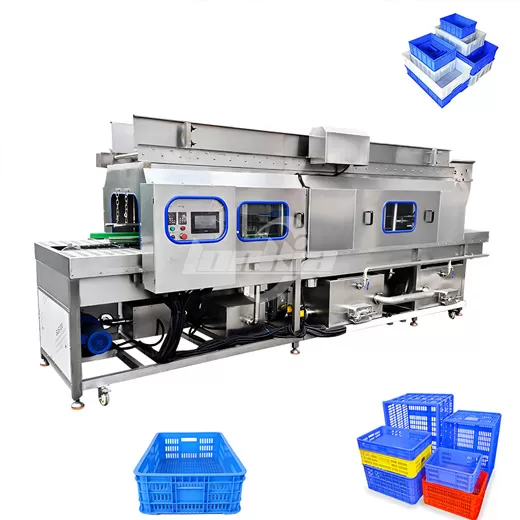
FAQs About Crate Washers
Q1: How much space does a crate washer require?
A tunnel-type washer may need 5–10 meters of floor space. Batch models can fit in tighter environments.
Q2: Can a crate washer handle different sizes and shapes?
Yes. Most systems are adjustable or come with interchangeable guides.
Q3: What’s the expected ROI on a crate washer?
Most facilities see a return within 12–24 months through savings on water, detergent, and labor.
Q4: Is maintenance complicated?
Not at all. Daily filter checks and monthly nozzle cleaning are usually sufficient.
Q5: Are crate washers noisy or disruptive?
Modern systems are designed for quiet operation and can be soundproofed further if needed.
Can a crate washer really cut your water and detergent costs by half? Yes—and in many cases, even more. With smart design, efficient operation, and lower resource consumption, crate washers represent one of the most impactful upgrades for facilities that rely heavily on crate handling.
From the food industry to logistics hubs, investing in a modern industrial crate washing machine can improve your bottom line, enhance sanitation, and support your sustainability initiatives—all while reducing manual labor.
If your current cleaning process is draining your budget and resources, it’s time to make the switch. A smarter, cleaner, and more cost-effective crate washing future is within reach.