
In today’s fast-paced manufacturing environments, especially in sectors like food processing, pharmaceuticals, and chemicals, the need for efficient, sanitary, and sustainable cleaning systems has never been greater. One frequently overlooked bottleneck is the cleaning of reusable plastic or stainless steel buckets—often performed manually with high labor input and inconsistent results.
This is where the automatic washing bucket comes in. These machines are specifically designed to automate the cleaning process, minimize resource waste, and ensure compliance with hygiene standards. But beyond convenience, many facility managers wonder: Can an automatic washing bucket really reduce labor costs and water consumption? This article explores the answer in depth.

What Is an Automatic Washing Bucket?
An automatic washing bucket—also referred to as a bucket washer or pail washer—is a machine that automates the internal and external cleaning of industrial buckets. These systems are commonly used in:
Food and beverage plants (e.g., sauce mixing, dairy transport)
Central kitchens and catering operations
Cosmetics and personal care production
Chemical processing facilities
The machine typically uses high-pressure water jets, rotating brushes, detergent dispensers, and sometimes hot water or steam to clean buckets thoroughly. Many units also feature drying modules to remove residual moisture before reuse or storage.
The True Cost of Manual Bucket Cleaning
To evaluate whether automatic washing saves costs, we must first understand the drawbacks of manual bucket cleaning, which include:
1. High Labor Intensity
Manual cleaning often requires at least one full-time worker, especially if a plant uses dozens or hundreds of buckets per day. Tasks include:
Pre-soaking
Scrubbing interior/exterior
Rinsing multiple times
Sanitizing with chemicals
Drying and stacking
Each of these steps takes time and introduces the risk of human error or inconsistency.
2. Inconsistent Sanitation Results
Manual washing doesn’t guarantee consistent removal of contaminants, especially in hard-to-reach corners or under bucket rims. This is especially problematic in:
Dairy or meat processing
Sauce or syrup production
Pharmaceutical environments
Any residual biofilm or chemical residue can lead to contamination or product recalls.
3. Water and Chemical Waste
Workers may leave faucets running during rinsing or use more chemicals than necessary. There’s little control over:
Water pressure
Duration of use
Temperature
Cleaning agent dosage
This leads to significant overconsumption.
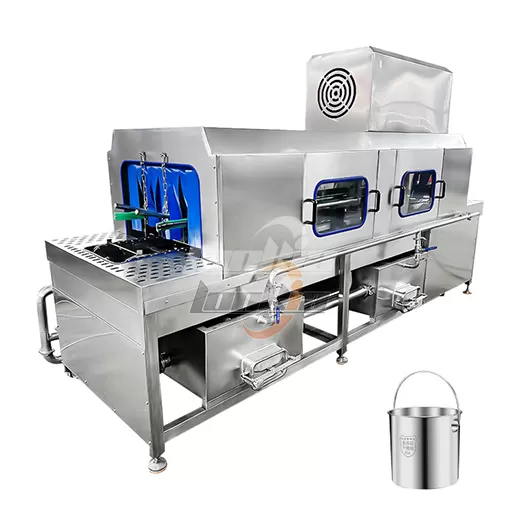
How an Automatic Washing Bucket System Works
1. Loading Stage
Operators load dirty buckets onto a conveyor or rack system. Some models can clean multiple buckets simultaneously.
2. Pre-Rinse & Chemical Injection
Buckets are sprayed with warm water or detergent to loosen residues.
3. High-Pressure Main Wash
Rotating nozzles or spray arms deliver 360-degree high-pressure cleaning, targeting every surface, including bottoms and handles.
4. Sanitizing or Steam Wash (Optional)
Many machines allow steam injection or chemical disinfectant rinse to kill bacteria or viruses.
5. Draining and Drying
Final rinse water is drained. Some machines include hot air blowers or centrifugal dryers to eliminate water droplets.
Key Benefits: Saving Labor and Reducing Waste
1. Labor Cost Savings
One operator can handle multiple cleaning tasks simultaneously, including loading and unloading.
No need for scrubbing, handling chemicals, or manually checking for cleanliness.
Reduces employee fatigue and improves safety by avoiding exposure to hot water and cleaning agents.
Example: A facility washing 200 buckets/day can save over 20 labor hours/week, translating to thousands in annual savings.
2. Reduced Water Usage
Automatic machines use recycled rinse water, with filters and tanks capturing and reusing clean water.
Timed spray cycles and nozzle efficiency reduce unnecessary flow.
Machines are often equipped with flow meters and shutoff sensors to avoid overflow.
Some systems report up to 70% reduction in water consumption compared to manual cleaning.
3. Lower Chemical Consumption
Exact detergent dosages are controlled by pumps or dispensers.
Avoids operator overuse or accidental mixing of incompatible substances.
Less chemical runoff, aiding sustainability and reducing treatment costs.
4. Faster Cycle Times
Modern bucket washers clean and dry 5–20 buckets per cycle in just 3–10 minutes, depending on the level of soiling. This means buckets can be turned over more quickly, eliminating production bottlenecks.
5. Improved Hygiene Compliance
Ensures consistent sanitation at HACCP or GMP standards.
Reduces risk of contamination due to human oversight.
Ideal for cleanroom or allergen-sensitive environments.
What to Look for When Choosing an Automatic Washing Bucket Machine
When evaluating systems, consider the following:
| Feature | Why It Matters |
|---|---|
| Capacity (buckets/hour) | Match your daily throughput requirements |
| Material Compatibility | Ensure compatibility with plastic, stainless steel, or food-grade buckets |
| Water Recycling System | For reduced water waste and operating costs |
| Adjustable Nozzle Pressure | To clean a variety of soils (grease, starch, protein) |
| Automation Level | Fully automatic models reduce operator touchpoints |
| Drying Module | Speeds up production flow by eliminating air-drying time |
| Footprint and Mobility | Ensure it fits your facility layout and can be relocated if needed |
Cost Considerations and ROI
While an automatic washing bucket system represents a significant upfront investment (typically ranging from $5,000 to $25,000+, depending on capacity and features), the return on investment is often achieved within 12–24 months due to:
Labor savings
Water and chemical reduction
Reduced downtime
Improved product safety
Industries That Benefit Most
Food Processing Plants: Especially dairy, meat, condiments, or sauces
Central Kitchens and Catering Services: Frequent cleaning cycles
Pharmaceutical and Biotech: Sanitary-critical workflows
Chemical Factories: Handling corrosive or residue-heavy materials
FAQs: Automatic Washing Bucket Systems
Q1: Can it clean different bucket sizes?
Yes. Most machines are adjustable or can accommodate multiple standard sizes. Custom fixtures are also available.
Q2: Does it require special plumbing?
It depends on the model. Some plug-and-play systems work with standard industrial water lines; others need steam or high-pressure water inlets.
Q3: Is it suitable for sticky or high-fat residues?
Absolutely. Look for models with hot water pre-rinse and high PSI jets to handle oils, starch, or protein residues effectively.
Q4: How often should the machine be maintained?
Most systems require minimal maintenance—just filter cleaning, nozzle checks, and occasional descaling.
Investing in an automatic washing bucket machine is more than just an upgrade—it's a strategic decision to reduce labor costs, save water, improve hygiene, and streamline production. As environmental regulations tighten and labor becomes more expensive, automation is no longer a luxury—it's a necessity.
Whether you're scaling your factory or simply looking to eliminate inefficiencies, this one machine can make a noticeable difference across your entire operation.