
1.Why Retort Processing Matters in Modern Food Manufacturing
What sets retort apart is its ability to sterilize sealed food packages using high heat and pressure, destroying even the most heat-resistant pathogens like Clostridium botulinum. Unlike refrigeration or freezing, it doesn’t require a cold chain, making it ideal for export, disaster relief, military rations, and consumer convenience.
we’ll walk through the science, process, benefits, equipment, and future of retort food processing, helping manufacturers, engineers, and procurement professionals understand why it remains one of the most reliable and scalable thermal processing methods available today.
2. What Is Retort Food Processing?
Retort food processing is a thermal sterilization method in which food sealed inside a container—such as a pouch, can, or jar—is heated to temperatures typically between 115°C to 130°C (240°F to 266°F) under pressurized conditions for a specified period. The goal is to destroy all vegetative bacteria and spores that can cause spoilage or foodborne illness, making the product shelf-stable for up to two years or more.
Unlike hot-fill or pasteurization, retort processing achieves commercial sterility, a standard that ensures food safety without refrigeration. The process is carefully controlled and validated to meet FDA, USDA, and international food safety guidelines.
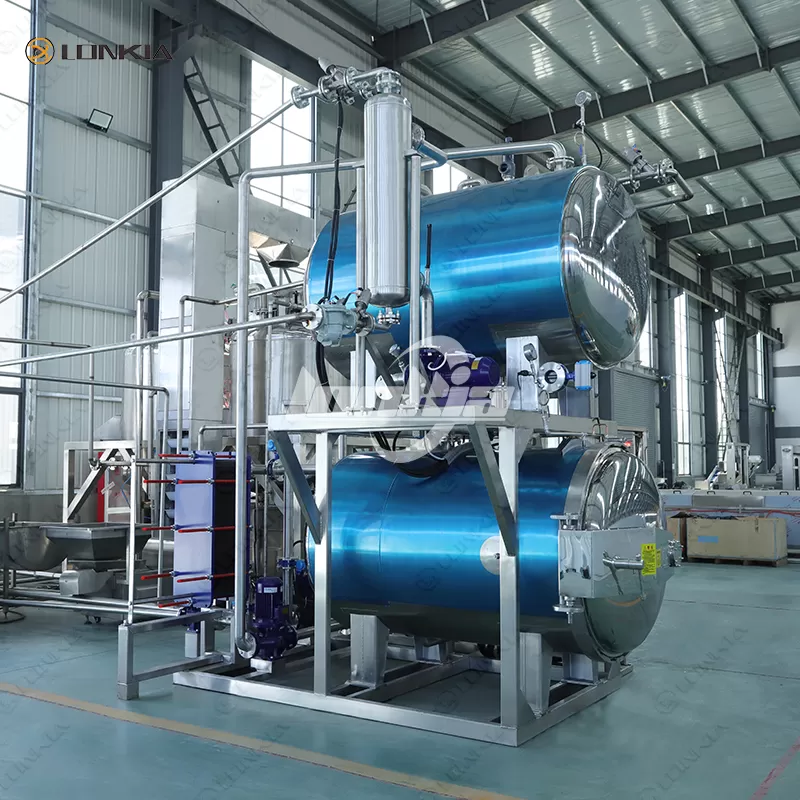
The name "retort" comes from the industrial pressure vessel used to heat food products. These vessels may operate using steam, water immersion, water spray, or a combination, depending on the product type and packaging.
3. Key Components of a Retort Processing System
Modern retort processing systems are complex, fully integrated machines built for efficiency, consistency, and regulatory compliance. A typical retort system includes the following components:
a. Retort Chambers
These are high-pressure vessels made from stainless steel, designed to withstand elevated temperatures and pressures. They can be:
Static: Ideal for solid or viscous foods where gentle treatment is required.
Rotary: Best for liquid-based or particulate products, improving heat distribution through agitation.
Water spray or immersion types: Used for flexible packaging like pouches or trays.
b. Control Panels & Monitoring Systems
Automation plays a critical role in maintaining temperature, pressure, and time parameters. Modern retorts are equipped with:
PLCs (Programmable Logic Controllers)
SCADA systems for remote monitoring
Temperature sensors and pressure gauges
Data logging to meet regulatory traceability requirements
c. Cooling Systems
After sterilization, products are rapidly cooled to avoid overprocessing and maintain quality. Cooling is typically done using water sprays or immersion, with temperature differentials carefully controlled to prevent packaging distortion.
d. Conveying & Loading Systems
Retorts are often connected to automated loading/unloading systems, conveyors, and retort baskets for high-throughput operations.
e. Compatible Packaging Materials
Common packaging formats include:
Metal cans
Glass jars
Retort pouches
Plastic trays and bowls
Each requires specific retort conditions to avoid package deformation or seal failure.
4. Step-by-Step: How the Retort Process Works
A standard retort sterilization cycle includes several carefully regulated phases:
Step 1: Loading and Sealing
Food is filled into containers under hygienic conditions and sealed hermetically. This step is critical to prevent post-processing contamination.
Step 2: Preheating (Optional)
Some systems preheat products to reduce come-up time and improve processing efficiency.
Step 3: Come-Up Time (CUT)
The temperature inside the retort is raised to the target processing level. The F₀ value (a standardized sterilization time at 121.1°C) begins to accumulate after this point.
Step 4: Holding/Sterilization
The product is held at the target temperature for a specified duration. This ensures complete microbial kill, including heat-resistant spores.
Step 5: Pressure Compensation
In systems using flexible packaging, air pressure is applied to prevent bursting or deformation.
Step 6: Cooling
Water is sprayed or circulated through the chamber to reduce product temperature rapidly. This phase is crucial for product quality and packaging integrity.
Step 7: Unloading and Inspection
After cooling, products are removed and checked for:
Seal integrity
Container deformation
Batch documentation and traceability
5. Benefits of Retort Food Processing
Retort processing is a well-established solution with broad advantages for food manufacturers, distributors, and end consumers:
a. Extended Shelf Life Without Preservatives
Properly retorted products remain stable for 12 to 24 months or more at room temperature. This eliminates the need for artificial preservatives or refrigeration.
b. Ensures Microbial Safety
The high-temperature conditions destroy pathogens like:
Clostridium botulinum (botulism risk)
Listeria monocytogenes
Salmonella spp.
Yeasts and molds
This is especially important for low-acid foods like meat, vegetables, or dairy-based products.
c. Wide Packaging Compatibility
Retort processing works with various formats, including eco-friendly flexible pouches that reduce weight, storage, and shipping costs.
d. Cost Efficiency in Distribution
Shelf-stable products avoid cold chain logistics, reducing transportation and storage expenses significantly—especially for exports and military or humanitarian use.
e. Consumer Convenience
Retorted foods are typically ready-to-eat (RTE) or require only reheating, offering convenience for busy households, outdoor activities, and travel.

6. Comparison with Other Preservation Methods
To understand retort's position in the thermal processing landscape, consider how it compares to other methods:
| Method | Target Microbes | Shelf Stability | Cold Chain Needed | Typical Applications |
|---|---|---|---|---|
| Retort | Bacteria + Spores | 12–24 months | No | RTE meals, soups, pet food |
| Aseptic | Bacteria only (pre-fill) | 6–12 months | No | UHT milk, juices, soups |
| Pasteurization | Vegetative bacteria | 7–30 days | Yes | Dairy, juices, chilled sauces |
| Hot-fill | Acidic foods (pH < 4.5) | 3–6 months | No | Jams, sauces, juices |
| Freezing | All microbes (inhibited) | 6–12 months | Yes | Frozen meals, seafood, vegetables |
Retort processing strikes a balance between safety, shelf life, and supply chain flexibility. It is especially advantageous for low-acid foods, which cannot be safely preserved by hot-fill or pasteurization alone.
7. Common Applications in the Food Industry
The versatility of retort processing supports a wide range of product categories:
a. Ready-to-Eat (RTE) Meals
Curries, stews, pasta dishes, and rice bowls
Used by meal kit companies, airline caterers, and military suppliers
b. Baby Food
Sterile purées in pouches or jars
Critical for safety, shelf stability, and convenience
c. Soups, Sauces, and Gravies
Cream-based and low-acid formulations benefit most
Flexibility in flavor and texture retention
d. Pet Food
Wet dog and cat food in cans or pouches
High-volume production, strict safety needs
e. Institutional & Emergency Use
Government reserves, disaster relief kits, space and field rations
Portability and shelf life are vital
8. Choosing the Right Retort Equipment
Selecting the right retort machine is essential to achieving product safety, quality, and operational efficiency. The choice depends on several factors, including your production volume, packaging format, and energy requirements.
Batch vs Continuous Retorts
Batch Retorts
Best for medium production volumes and product variety. Each batch is sterilized independently. Easier to validate and control.Continuous Retorts
Ideal for high-output operations. Products are sterilized in a constant flow, improving throughput and reducing cycle times.
Horizontal vs Vertical Retorts
Horizontal Retorts
Common in canned food processing; allow easier loading of baskets and trays.Vertical Retorts
Space-saving; often used for glass jars or pouch-style packaging.
Selection Criteria
Type of food (low-acid vs high-acid)
Packaging material (metal, plastic, pouch)
Desired throughput (units/hour)
Automation level (manual vs robotic handling)
Energy consumption and available utilities
Cost Considerations
While capital investment is significant, retort systems typically offer high ROI due to:
Long shelf life (fewer losses from spoilage)
No refrigeration costs
Streamlined distribution
Minimal need for preservatives or additives
Further reading: Commercial Sterilization Methods: Which Is Best for Your Food Products?
9. Retort Pouch Technology: A Modern Alternative to Cans
Retort pouches—sometimes called soft cans—are increasingly replacing rigid metal packaging, especially for global brands targeting younger or eco-conscious consumers.
Structure of a Retort Pouch
A retort pouch typically consists of 3–4 laminated layers:
Polyester (PET) for strength and printability
Aluminum foil for oxygen and light barrier
Nylon or polypropylene (PP) for heat sealability and flexibility
This structure allows the pouch to withstand temperatures up to 130°C while maintaining shape and integrity.
Benefits
Lightweight and compact
Lower transport and storage costs
Faster heating and cooling times
Custom shapes and easy-open features
More eco-friendly than metal cans
Considerations
More sensitive to pressure imbalance during retorting
Requires special retort trays or racks
Seal integrity must be carefully controlled
Many companies now use retortable stand-up pouches with spouts for ready soups, baby food, or even wet pet food.
10. Regulatory Compliance and Safety Standards
Because retort food processing deals with shelf-stable foods and potential pathogens like C. botulinum, strict compliance is essential.
Key Compliance Requirements
HACCP (Hazard Analysis and Critical Control Points)
FDA Low-Acid Canned Food (LACF) Regulations
USDA FSIS standards for meat and poultry products
EU Food Safety Regulations (e.g., EC 852/2004)
F₀ Value Validation
F₀ represents the lethality of a thermal process. A value of 3.0 means the process is equivalent to holding the product at 121.1°C for 3 minutes. Each product must have:
A validated thermal process
Documented heat distribution and penetration data
Scheduled process filings with relevant authorities
Recordkeeping
Retort operators must log:
Temperature and pressure data
Time intervals
Deviations and corrective actions
Equipment calibration records
11. Challenges and Solutions in Retort Food Processing
Despite its advantages, retort processing presents engineering and operational challenges. Fortunately, modern solutions mitigate most of them.
a. Uneven Heat Distribution
Improper loading, air pockets, or poor agitation can cause hot or cold spots.
Solution: Use rotary retorts or ensure tight temperature mapping using thermocouples.
b. Packaging Deformation or Seal Failure
High heat and pressure can warp or burst packaging.
Solution: Apply counterpressure during cooling, select retortable materials, and test seal strength regularly.
c. Overprocessing and Nutrient Loss
Excessive heat can degrade flavors or textures.
Solution: Optimize F₀ values and cool rapidly post-sterilization.
d. High Energy & Water Consumption
Steam and water use can be resource-intensive.
Solution: Install energy recovery systems and switch to water spray retorts, which are more efficient than immersion types.
e. Complexity of Operation
Multivariable controls, safety monitoring, and recordkeeping require skilled staff.
Solution: Invest in operator training, SOPs, and automated monitoring systems.
12. Future Trends in Retort Processing Technology
The retort industry continues to evolve to meet environmental, efficiency, and consumer demands.
a. Smart Retorts and IoT Integration
Modern systems can transmit data on:
Batch status
Anomalies and alerts
Predictive maintenance
This improves traceability and reduces downtime.
b. AI-Based Process Optimization
Artificial intelligence can recommend:
Shorter sterilization times
Better loading patterns
Energy reduction strategies
c. Hybrid Systems
Some manufacturers are integrating:
Microwave-assisted thermal sterilization (MATS)
Pressure-assisted thermal sterilization (PATS)
These technologies promise shorter processing times and better product quality.
d. Sustainable Packaging
Increased demand for recyclable and biodegradable pouches is pushing manufacturers to innovate retort-compatible materials that meet both safety and eco-regulations.
13. Conclusion: The Enduring Value of Retort in a Shelf-Stable World
From war rations to gourmet ready meals, retort food processing has proven its value across centuries of food preservation innovation. In today’s world—where supply chains stretch globally and consumer lifestyles demand convenience—retort offers unmatched versatility and safety.
For manufacturers, it provides:
Long-term product stability
Reduced need for preservatives
Access to broader markets
For consumers, it delivers:
Ready-to-eat, shelf-stable foods
Assurance of microbial safety
Convenience without sacrificing nutrition
And as technology advances, retort systems will become smarter, more efficient, and more sustainable—keeping this legacy technology at the forefront of modern food processing.
14. FAQs: Common Questions About Retort Food Processing
Q1: What foods should not be retort processed?
Foods with extreme viscosity or very low moisture may not heat uniformly, risking incomplete sterilization. Products with dairy or egg may suffer from quality loss if not carefully formulated.
Q2: Does retort processing destroy nutrients?
Some heat-sensitive vitamins like Vitamin C may degrade, but proteins, carbs, and most minerals remain stable. Quick cooling and optimized F₀ values help preserve nutrients.
Q3: Is retort the same as pressure cooking?
Similar in principle, but retort is a commercial sterilization process under strict validation, while pressure cooking is a household method with no regulatory compliance.
Q4: Can I use retort processing for flexible pouches?
Yes—retort pouches are a growing trend. They must be specially designed to withstand pressure and temperature during the cycle.
Q5: How long does retort processing take?
Depending on product type and packaging, a retort cycle can take anywhere from 25 to 90 minutes, including come-up time, holding, and cooling.
Q6: Are retort foods considered “clean label”?
Yes. Because they require no artificial preservatives, retorted foods can be marketed as clean-label, natural, or additive-free—if formulated properly.