
In today’s highly competitive food industry, ensuring product safety and extended shelf life is no longer optional—it is a necessity. Consumers demand convenient, ready-to-eat, and packaged foods that are not only tasty but also safe to consume over a longer period. At the same time, food manufacturers face strict international regulations, rising distribution distances, and an urgent need to minimize food waste.
This is where commercial sterilization comes into play. As a core technology in modern food processing, commercial sterilization eliminates harmful microorganisms, stabilizes food quality, and helps companies confidently bring their products to both local and global markets.
However, not all sterilization methods are created equal. Different types of food, packaging materials, and production scales require different approaches. From water spray retort machines to tunnel sterilizers, choosing the right technology can make the difference between maintaining natural flavor and nutrients—or risking product recalls and consumer dissatisfaction.
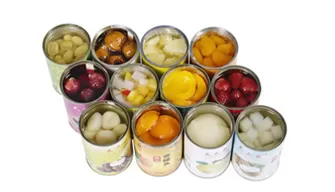
1. What Is Commercial Sterilization?
Commercial sterilization refers to the process of applying controlled heat, steam, or other sterilizing techniques to packaged food products in order to destroy pathogenic microorganisms and spoilage-causing bacteria. Unlike simple pasteurization, which only targets certain harmful organisms at relatively lower temperatures, commercial sterilization ensures that foods remain safe and stable under normal storage conditions—without refrigeration—for months or even years.
Key Characteristics of Commercial Sterilization:
Temperature & Pressure Control: Typically involves heating food to 110–135 °C under pressurized conditions, ensuring complete inactivation of microbes.
Target Microorganisms: Eliminates bacteria such as Clostridium botulinum, which can survive mild treatments.
Application Range: Canned foods, bottled sauces, dairy products, ready-to-eat meals, soft pouches, and more.
Packaging Compatibility: Works with a variety of packaging formats—metal cans, glass jars, flexible pouches, or plastic containers.
Why It Matters:
Food Safety: Prevents foodborne illness and meets international compliance standards (FDA, EU, Codex).
Shelf Life Extension: Enables long-distance transportation and international export.
Cost Efficiency: Reduces food waste and supports large-scale production.
Consumer Confidence: Reinforces brand reputation by delivering consistent, safe, and high-quality products.
In short, commercial sterilization is the backbone of modern food processing, bridging the gap between industrial efficiency and consumer trust.
2. Why Commercial Sterilization Is Essential in the Food Industry
In the modern food industry, commercial sterilization is not just a technical process—it is a critical requirement for ensuring food safety, quality, and market competitiveness. Several key factors highlight why investing in reliable sterilization methods is indispensable for food manufacturers.
3.1 Ensuring Food Safety and Regulatory Compliance
Foodborne illnesses are a serious concern worldwide. Pathogenic microorganisms, such as Clostridium botulinum, Salmonella, and Listeria monocytogenes, can survive inadequate processing, posing significant health risks.
Commercial sterilization effectively eliminates these harmful organisms, ensuring that products meet strict regulatory standards. Compliance with agencies such as the FDA, USDA, EFSA, and Codex Alimentarius is essential not only for domestic sales but also for export markets, where safety certification is mandatory.
2.2 Extending Shelf Life for Modern Distribution Needs
Today’s food supply chains often span countries and continents. Freshness and stability are critical for ready-to-eat meals, canned foods, and beverages.
Through precise thermal and pressure control, commercial sterilization extends the shelf life of products without the need for chemical preservatives, enabling manufacturers to:
Reduce spoilage and waste
Distribute products to distant markets
Maintain consistent quality over time
2.3 Protecting Brand Reputation and Consumer Trust
Consumers increasingly prioritize food safety, nutritional quality, and taste consistency. A single recall due to insufficient sterilization can severely damage a brand.
By implementing commercial sterilization, food companies can:
Guarantee microbial safety
Preserve the intended flavor, texture, and color of products
Strengthen consumer confidence and loyalty
2.4 Supporting Industrial Efficiency and Large-Scale Production
Commercial sterilization is designed for industrial-scale operations, making it possible to process high volumes efficiently. Equipment such as water spray retort machines, tunnel sterilizers, and vertical continuous retorts (as offered by Lonkia) enables automated production with precise temperature and pressure control.
This allows manufacturers to:
Increase throughput while maintaining quality
Optimize energy use and reduce operational costs
Adapt to various packaging types without compromising sterilization effectiveness
Summary:
Commercial sterilization is a cornerstone of the food industry. It ensures safety, compliance, shelf life, and consumer trust, while enabling manufacturers to operate efficiently at scale. Without effective sterilization, even high-quality ingredients cannot guarantee a safe, marketable product.
3. Key Commercial Sterilization Methods in the Food Industry
Choosing the right commercial sterilization method depends on your food type, packaging, production scale, and desired shelf life. Based on the equipment offered by Lonkia, the following methods are widely used in modern food processing.
3.1 Water Spray Retort Sterilization
Water spray retort machines use high-temperature water or steam sprayed directly onto packaged food, ensuring even heat penetration.
Applications:
Sauces, condiments, ready-to-eat meals
Soft pouch and bottle packaging
Advantages:
Rapid and uniform sterilization
Compatible with multiple packaging types
PLC-controlled automation for consistent results
Considerations:
Requires precise temperature monitoring to prevent overcooking
Not ideal for highly delicate products that are heat-sensitive
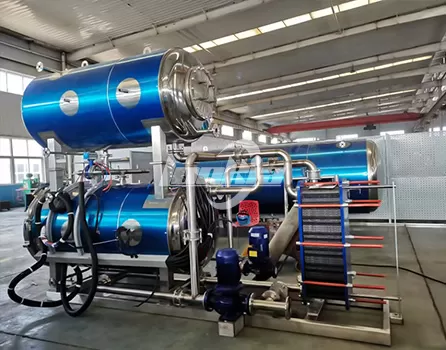
3.2 Steam Retort Sterilization
Steam retort sterilization applies high-pressure saturated steam in a stationary or batch system, effectively killing microorganisms.
Applications:
Canned vegetables, fruits, soups
Glass jar and metal can packaging
Advantages:
Mature and reliable process
Excellent microbial safety
Suitable for solid and semi-solid products
Considerations:
High energy consumption
Slower processing compared to continuous methods
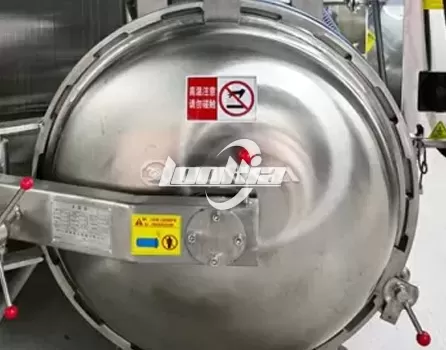
3.3 Rotary Water Spray Retort
Rotary retorts rotate the food packages while spraying hot water, ensuring even heating of solid-liquid mixtures and preventing product settling.
Applications:
Multi-component products like eight-treasure porridge or fruit-cereal mixes
Products containing chunks or particulates
Advantages:
Uniform heat distribution
Maintains product appearance and texture
Reduces localized overcooking
Considerations:
Higher equipment cost
Requires regular maintenance of rotating components
3.4 Vertical Continuous Retort
Vertical continuous retorts are designed for high-volume, automated production, with vertical loading and unloading of pouches or trays.
Applications:
Bagged meals, boxed ready-to-eat products
Foods requiring continuous high-throughput processing
Advantages:
Energy-efficient with heat recovery systems
High processing speed
Suitable for automated production lines
Considerations:
Initial investment higher than batch systems
Requires trained operators for optimal performance
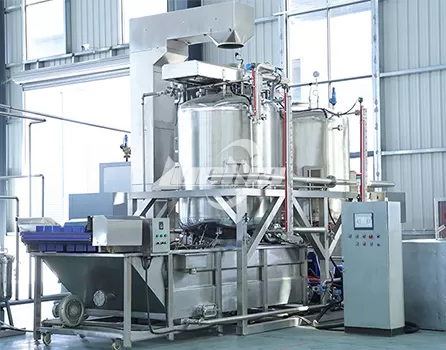
3.5 Water Bath Pasteurization (Low-Temperature Sterilizer)
Water bath sterilizers use gentle, low-temperature heat, similar to pasteurization, to reduce microbial load while preserving flavor and nutrients.
Applications:
Dairy products, yogurt, juice
Products sensitive to high temperatures
Advantages:
Preserves natural taste and nutrients
Energy-efficient
Simple operation with PLC temperature control
Considerations:
Shorter shelf life compared to high-temperature sterilization
Not suitable for high-risk canned products
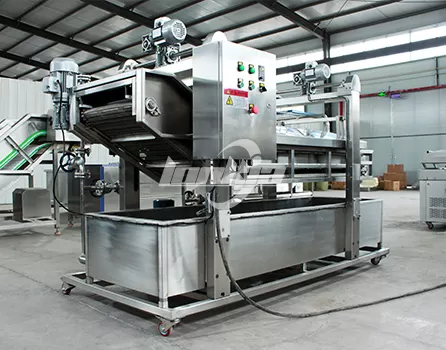
3.6 Tunnel Sterilizer
Tunnel sterilizers are continuous conveyor-based systems that apply hot water or steam as products pass through a controlled tunnel.
Applications:
Bottled beverages, canned foods, pouches
Large-scale industrial production lines
Advantages:
High efficiency and throughput
Precise temperature control for uniform sterilization
Ideal for export-level production requiring long shelf life
Considerations:
Significant floor space required
High initial setup cost
Summary:
Each sterilization method offered by Lonkia is designed to meet specific food types, packaging, and production requirements. From gentle low-temperature water bath systems to high-capacity continuous tunnel sterilizers, manufacturers can select the optimal method to ensure safety, preserve quality, and achieve operational efficiency.
4. Commercial Sterilization vs Pasteurization
While both commercial sterilization and pasteurization aim to ensure food safety, their applications and outcomes differ significantly:
| Feature | Commercial Sterilization | Pasteurization |
|---|---|---|
| Temperature | 110–135 °C (high temperature under pressure) | 60–85 °C (mild heating) |
| Target | All pathogenic microbes, including Clostridium botulinum | Most pathogens, not all spores |
| Shelf Life | Months to years without refrigeration | Short-term, usually refrigerated |
| Application | Canned foods, ready-to-eat meals, sauces, beverages | Milk, juice, yogurt, beer |
| Impact on Flavor/Nutrients | Slight to moderate | Minimal, preserves natural taste |
Key Takeaway:
Commercial sterilization is essential for products requiring long shelf life, high microbial safety, and compatibility with varied packaging, whereas pasteurization is suitable for fresh or refrigerated products that prioritize nutrient and flavor retention. Selecting the right method depends on product type, distribution needs, and regulatory compliance.
5. How to Choose the Right Sterilization Method for Your Food Products
Selecting the optimal commercial sterilization method involves evaluating several key factors:
5.1 Food Type and Composition
Solid vs liquid vs particulate products
Acidic vs low-acid foods (low-acid foods require higher sterilization temperature and pressure)
5.2 Packaging Material
Metal cans, glass jars, flexible pouches, or plastic bottles
Each packaging type interacts differently with heat and pressure
5.3 Production Scale and Throughput
Batch vs continuous sterilization
High-volume production lines benefit from vertical continuous or tunnel retorts
5.4 Shelf Life Requirements
Long-term storage for export markets demands high-temperature sterilization
Short-term refrigerated products can rely on low-temperature pasteurization or water bath sterilization
5.5 Cost and ROI Considerations
Equipment cost, energy consumption, and maintenance
Automated systems (e.g., continuous retorts, tunnel sterilizers) offer higher efficiency and labor savings
Example Scenarios:
Fruit Juice Export: UHT or aseptic processing preserves flavor, extends shelf life, and meets international standards.
Canned Meat or Soup: Rotary water spray or steam retort ensures even heating and microbial safety.
Bagged Yogurt: Low-temperature water bath sterilization maintains probiotics and flavor.
6. Cost and ROI Analysis of Commercial Sterilization Methods
Understanding costs and return on investment (ROI) is crucial for choosing the right equipment:
| Method | Equipment Cost | Energy Consumption | Maintenance | Productivity |
|---|---|---|---|---|
| Water Spray Retort | Medium | Moderate | Moderate | Medium |
| Steam Retort | Low–Medium | High | Low | Medium |
| Rotary Water Spray | Medium–High | Moderate | Medium–High | Medium |
| Vertical Continuous Retort | High | Low–Moderate | Medium | High |
| Water Bath Sterilizer | Low | Low | Low | Low–Medium |
| Tunnel Sterilizer | High | Moderate | Medium | High |
Insights:
Automated systems reduce labor costs and improve throughput.
Energy-efficient designs, such as heat-recovery continuous retorts, lower long-term operational expenses.
ROI improves when equipment selection matches product type, volume, and distribution needs.
7. Regulatory Standards and Compliance
Food manufacturers must adhere to international regulations when applying commercial sterilization:
FDA (USA): 21 CFR Part 113 for low-acid canned foods
USDA: HACCP compliance for meat and poultry products
EFSA (Europe): Microbiological safety and traceability requirements
Codex Alimentarius: Guidelines for thermal processing of foods
Why It Matters:
Non-compliance can lead to recalls, fines, and market exclusion.
Modern commercial sterilization equipment, such as Lonkia retorts, often comes with PLC control, automated record-keeping, and validated sterilization cycles, helping manufacturers meet regulatory standards.
8. Future Trends in Commercial Sterilization Technology
The commercial sterilization landscape is evolving rapidly, with several key trends:
8.1 Energy Efficiency and Sustainability
Heat recovery systems and optimized water usage reduce energy consumption.
Sustainable sterilization minimizes environmental impact and lowers operational costs.
8.2 Automation and Digital Control
PLC and SCADA systems allow real-time monitoring, precise temperature control, and predictive maintenance.
Data logging supports traceability and compliance.
8.3 Flexible and Gentle Processing
Emerging methods like high-pressure processing (HPP), microwave sterilization, and cold plasma offer microbial safety while preserving nutrients and flavor.
Flexible systems allow adaptation to diverse packaging and product types.
8.4 Global Market Expansion
Export-driven industries demand sterilization methods that ensure long shelf life, consistency, and regulatory compliance across countries.
9. Conclusion
Commercial sterilization is the backbone of modern food production, bridging the gap between food safety, product quality, and operational efficiency. By understanding the advantages, limitations, and applications of different methods—especially those reflected in Lonkia’s equipment lineup—manufacturers can:
Choose the most suitable sterilization method for each product type
Ensure regulatory compliance and consumer safety
Optimize production efficiency and reduce operational costs
Maintain flavor, texture, and nutritional value for competitive advantage
Whether you produce canned goods, ready-to-eat meals, beverages, or dairy products, selecting the right commercial sterilization method is crucial. Investing in advanced, automated, and adaptable equipment not only secures product safety but also positions your brand for long-term market success.