
Freezing has long been one of the most reliable methods to preserve food. It extends shelf life, reduces waste, and makes global food trade possible. Yet, not all freezing methods are created equal. For food manufacturers, one of the most common questions is whether to invest in an IQF machine (Individual Quick Freezing) or continue with more conventional approaches such as blast freezers or cold storage.
At first glance, both options achieve the same result—frozen food. But the way they freeze, the quality of the end product, and the cost of production are very different. Traditional freezers are often less expensive upfront, but they may compromise on product texture and integrity. Meanwhile, IQF machines are designed to freeze each piece individually, ensuring higher quality and market value, but they require a larger initial investment.
Choosing between the two is not just a technical decision—it’s a strategic business move. The wrong choice could mean higher production costs, wasted product, or reduced competitiveness in the frozen food market.
How Freezing Affects Product Quality
To understand why the debate between IQF machines and traditional freezing methods matters, it’s essential to look at what happens to food during freezing.
When food is frozen, water inside the product forms ice crystals. The size and shape of these ice crystals determine whether the food retains its natural texture after thawing.
Slow freezing (typical of traditional methods) produces larger ice crystals that rupture cell walls. As a result, when the food is thawed, it may release water, lose firmness, and appear mushy.
Rapid freezing (as with IQF machines) generates smaller ice crystals, which cause less damage to the cellular structure. This means the food maintains its original bite, juiciness, and appearance.
Nutritional value is also at stake. While freezing does not dramatically reduce nutrients, the damage caused by large ice crystals can lead to loss of vitamins and minerals through drip loss during thawing. Additionally, color and flavor stability are improved with faster freezing. For example, green vegetables like peas and spinach retain their bright color and crisp texture far better under IQF freezing compared to slow, static freezing.
IQF Machine Explained
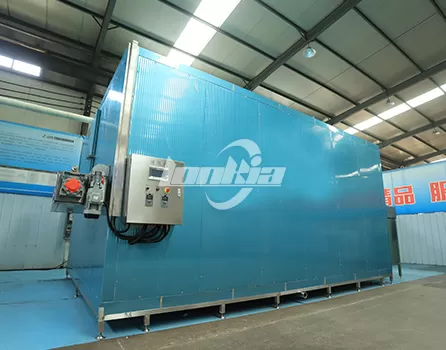
So what exactly is an IQF machine? The term stands for Individual Quick Freezing, and it refers to equipment designed to freeze each piece of food separately. Instead of clumping together in large blocks—as often happens with traditional freezing—IQF machines ensure that every pea, shrimp, or berry is frozen on its own.
How It Works
IQF machines use extremely cold air that circulates at high velocity to freeze products rapidly. Depending on the design, food may be placed on a perforated belt where cold air flows from below and above, creating a fluidized effect. This “air suspension” ensures the product does not stick together and freezes evenly from all sides.
Key Features of IQF Machines
Speed: Products are typically frozen within minutes, preserving freshness.
Uniformity: Even irregularly shaped items like diced vegetables or shrimp are frozen consistently.
Non-clumping: Each piece remains separate, which is critical for consumer convenience and industrial food applications.
Versatility: IQF machines can handle a wide range of products, including fruits, vegetables, seafood, poultry, meat portions, pasta, and even prepared meals.
Common Designs
There are several types of IQF machines available:
Fluidized bed freezers: Best for small, lightweight products like peas, corn, and diced carrots.
Spiral IQF freezers: Suitable for larger throughput and more delicate items like shrimp or cut fruits.
Impingement freezers: Use high-velocity air jets for ultra-fast freezing, ideal for thin products such as fillets.
By freezing products individually, IQF machines help manufacturers deliver foods that look, taste, and feel fresh—even months after freezing. This is why IQF has become the industry standard for high-quality frozen foods.
Traditional Freezing Methods
Before IQF machines became widespread, most frozen food manufacturers relied on traditional freezing systems. These methods are still in use today, especially in smaller facilities or in cases where product quality is not the top priority. The most common types include:
1. Blast Freezing
This method exposes food to cold air (–30°C to –40°C) in a chamber, usually with fans circulating the air. Products are often placed on trays, stacked in racks, and left to freeze over several hours.
Advantages: Low equipment cost, relatively simple to operate.
Disadvantages: Slow freezing leads to larger ice crystals and greater texture damage. Products also tend to clump together, which complicates later use.
2. Plate Freezing
Here, food items are pressed between very cold metal plates. Heat is removed by conduction, and freezing times are faster than in blast freezers. Plate freezing is widely used for fish fillets, meat blocks, and packaged products.
Advantages: Energy-efficient for block products, good for bulk freezing.
Disadvantages: Not suitable for delicate or irregularly shaped items, as pressure can deform them.
3. Static or Cold Storage Freezing
In some cases, products are placed in standard cold rooms until frozen. This is the slowest and least controlled method.
Advantages: Minimal capital investment.
Disadvantages: Extremely slow freezing, severe product quality loss, not viable for modern large-scale production.
Overall, traditional freezing methods are cost-effective at the outset but quality-compromising in the long term. They may be sufficient for bulk ingredients or products where appearance and texture are less critical, but they struggle to meet today’s consumer demand for fresh-tasting, high-quality frozen foods.
IQF Machine vs. Traditional Freezing: Comparison in Practice
When deciding between an IQF machine and traditional freezing, manufacturers must evaluate not only equipment cost but also product quality, production efficiency, and market positioning. Below are the most important factors of comparison.
1. Product Quality and Consumer Perception
IQF Freezing: Maintains original shape, texture, and flavor. Perfect for products that need to look attractive on shelves or retain bite after cooking (e.g., peas, berries, shrimp).
Traditional Freezing: Often results in clumped, watery, or mushy products. While acceptable for low-grade processing, it lowers consumer appeal.
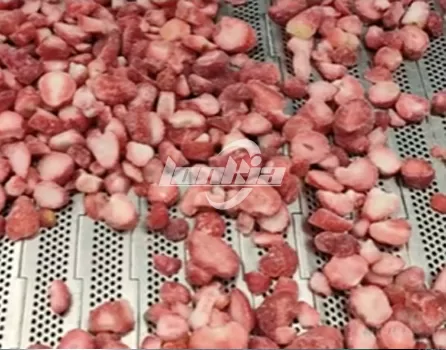
Example: Frozen strawberries from a traditional blast freezer often thaw into a soggy mass. IQF strawberries, on the other hand, remain firm and separate, making them ideal for smoothies or bakery use.
2. Efficiency and Throughput
IQF Machines: Can freeze tons of product per hour while maintaining uniformity. Automated conveyor systems reduce manual handling.
Traditional Systems: Require more time, labor, and storage space. Throughput is limited, and inefficiencies increase with larger volumes.
3. Versatility
IQF Machines: Handle a wide range of foods, from seafood and vegetables to prepared meals and pasta. Product changeovers are easier, making them suitable for diversified product lines.
Traditional Freezers: More limited, often best for block products or bulk storage.
4. Cost Considerations
IQF Freezing: Higher capital investment, but lower long-term costs due to reduced waste, higher product value, and better energy efficiency in modern systems.
Traditional Freezing: Lower upfront cost but higher hidden costs from product loss, lower yield, and reduced competitiveness in premium markets.
5. Market Positioning
IQF Freezing: Aligns with premium frozen food categories—where consumers expect natural texture, color, and taste.
Traditional Freezing: Better suited for bulk, commodity, or low-price products where quality is less critical.
Practical Factors to Consider When Choosing Between IQF and Traditional Freezing
For food manufacturers, the decision is rarely as simple as “IQF is better.” Each facility has its own priorities, constraints, and market goals. Below are the key factors to evaluate when deciding which system makes the most sense for your production line.
1. Product Characteristics
Different foods respond differently to freezing:
Best suited for IQF: Small, individual items like peas, corn, berries, shrimp, diced vegetables, pasta, dumplings, and ready meals. These products benefit most from fast freezing and separation.
Possible with traditional freezing: Block or bulk products such as meat, fish fillets, butter, or bakery dough. Since these do not require individual separation, block freezing may be acceptable.
Understanding the physical nature of your product (size, shape, water content, surface sensitivity) is the first step toward choosing the right freezing method.
2. Production Capacity and Scale
High-volume operations: Facilities producing several tons per day gain efficiency and cost savings from IQF systems, especially when targeting export or premium markets.
Low-volume operations: Smaller plants with limited throughput may not justify the upfront investment of IQF machinery and may stick with blast or plate freezing for cost control.
That said, manufacturers should also account for future scalability. If production demand is expected to grow, investing in an IQF system early may prevent costly retrofits later.
3. Quality Standards and Market Requirements
If your customers demand premium quality—supermarkets, international buyers, or brands marketing “farm fresh” and “natural” frozen foods—an IQF machine is practically essential. Meeting high quality standards not only improves customer satisfaction but also allows you to charge higher prices.
On the other hand, if your market is primarily bulk foodservice or low-cost commodity distribution, traditional freezing may still serve its purpose.
4. Energy Efficiency and Sustainability
While IQF machines require significant power to achieve rapid freezing, modern designs incorporate heat recovery systems, advanced insulation, and optimized airflow. This makes them more efficient per kilogram of frozen product compared to outdated blast freezers.
Moreover, IQF systems tend to reduce waste and rejects, which indirectly lowers energy and resource usage. For manufacturers focused on sustainability and certifications (ISO, HACCP, BRC), IQF systems align better with long-term goals.
5. Investment and ROI
Cost remains a deciding factor for many manufacturers. IQF systems demand higher capital investment, but the return comes from:
Reduced product loss during freezing and thawing
Higher product value in premium markets
Longer shelf life and consistent quality
Lower labor costs due to automation
A careful ROI analysis should weigh these benefits against the upfront cost. Many facilities find that IQF machines pay for themselves within a few years when targeted at the right markets.
Choosing the Right Freezing Path for Your Products
When comparing an IQF machine vs. traditional freezing, the choice ultimately depends on your product range, production scale, and market positioning.
If your goal is premium quality, strong export competitiveness, and long-term growth, investing in an IQF machine is the clear choice. It protects product integrity, enhances flavor and texture, and allows you to serve high-value markets where consumer expectations are non-negotiable.
If your business serves commodity markets with bulk products where quality is secondary to price, traditional freezing may still have its place, especially as a low-cost entry point.
However, consumer demand is shifting toward better quality frozen foods. As buyers become more discerning, investing in IQF technology is increasingly less an option and more a necessity for staying competitive.
In other words, IQF machines don’t just freeze food—they future-proof your business.