
In the fast-paced world of industrial logistics, food processing, and pharmaceutical manufacturing, the plastic pallet is the unsung hero that keeps supply chains moving. However, maintaining the hygiene of hundreds or thousands of pallets daily presents a massive operational challenge.
Historically, industrial cleaning has been a resource-heavy process. Traditional "run-to-waste" washing setups consume staggering amounts of fresh water, require immense thermal energy to heat that water, and generate high volumes of chemical-laden wastewater that incur steep municipal effluent surcharges.
Enter the modern pallet washing machine equipped with an advanced water recycling system. This is no longer merely an eco-friendly upgrade; as environmental regulations tighten and utility costs soar in 2026, it is a critical financial necessity.
But how exactly does a machine take heavily soiled water—contaminated with grease, dirt, and debris—and make it clean enough to reuse continuously? This comprehensive engineering guide explains the mechanics, filtration stages, and thermal dynamics of water recycling in automated pallet washing machines.
1. The High Cost of Industrial Cleaning: Why Water Recycling is Essential
To understand the value of a recycling system, we must first look at the hidden costs of a standard, non-recycling pallet washer.
When a facility utilizes a direct-to-drain system, it pays for the same drop of water three separate times:
Intake Costs: Purchasing thousands of gallons of fresh municipal water every shift.
Energy Costs: Using industrial boilers (gas or electric) to heat that incoming cold water (typically around 15°C) up to the mandatory sanitization temperature of 60°C to 80°C.
Disposal Costs: Paying premium sewage and wastewater treatment fees to discharge the hot, chemically treated effluent back into the municipal grid.
By integrating a closed-loop or semi-closed-loop water recycling system, a high-capacity pallet washing machine can reduce fresh water consumption by up to 85%, while capturing and reusing the massive thermal energy already present in the heated water.
2. Core Mechanics: How a Standard Pallet Washing Machine Works
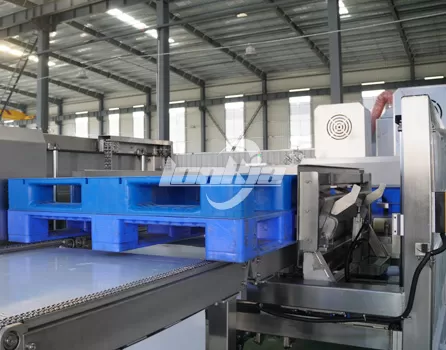
Before diving into the recycling mechanisms, it is essential to understand the basic workflow of an automated inline pallet washing machine. As soiled plastic pallets travel via a motorized conveyor through the stainless steel tunnel, they pass through four distinct zones:
Phase 1: Pre-wash: Heavy volumes of recycled, medium-temperature water are sprayed to strip away loose debris, dirt, and large food particles.
Phase 2: Main Wash: This is the core cleaning zone. Water heated to roughly 60°C, combined with alkaline detergents, is blasted through strategically angled high-pressure nozzles at 5 to 10 bar (70 to 145 psi) to emulsify stubborn fats and scrub the intricate honeycomb structures of the plastic pallets.
Phase 3: Final Rinse: A crucial sanitizing step using pure, fresh water (often heated to 85°C) to rinse away all chemical detergent residues and ensure the pallet meets HACCP food safety standards.
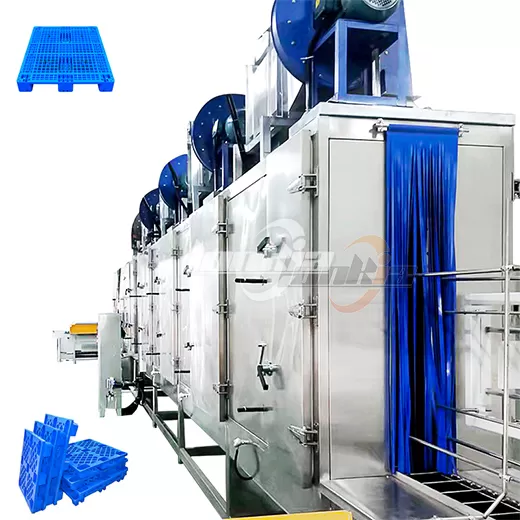
Phase 4: Drying: High-velocity air blowers strip residual moisture from the pallets, preventing bacterial growth during storage.
3. The Anatomy of a Water Recycling System (Deep Dive)
If the water from the "Main Wash" and "Pre-wash" phases is to be reused without clogging the high-pressure nozzles or spreading contamination, it must undergo aggressive, multi-stage mechanical and chemical filtration.
Stage 1: Coarse Mechanical Filtration
As gravity pulls the soiled water down from the washing tunnel into the holding tanks, it first passes through static coarse filter trays or drawer screens (typically 2mm to 3mm mesh). This primary defense layer catches large physical contaminants like warehouse splinters, plastic stretch wrap remnants, and large food chunks.
Stage 2: Fine Filtration and Rotary Drum Screens
Relying on static screens alone is insufficient, as they blind (clog) quickly, requiring constant manual cleaning. Advanced pallet washing machines utilize motorized rotary drum screens or self-cleaning parabolic filters. As the drum rotates, a stationary scraper blade continuously removes microscopic particulate matter (down to 300-500 microns) and discharges it into an external waste bin. This ensures the water circulating back to the main pumps is free of abrasive solids that could damage the pump impellers or clog the spray nozzles.
Stage 3: Oil Skimmers and Fat Separation
In the meat, dairy, and bakery industries, pallets are frequently coated in organic fats. If fats are repeatedly cycled through a high-pressure pump, they emulsify into the water, ruining its cleaning efficacy. Recycling systems in these sectors feature integrated oil skimmers (disk or belt types) or gravity-based grease traps. These devices exploit the difference in specific gravity, continuously scraping floating oils off the surface of the wash tank before the water is drawn back into the system.
Stage 4: Automated Chemical Titration
Because the water is being reused, the concentration of the cleaning detergent naturally dilutes as fresh water is introduced and chemicals react with organic soils. Modern recycling systems feature automated conductivity sensors. These probes monitor the chemical strength of the wash water in real-time. When the concentration drops below a precise setpoint, an automated dosing pump injects exact micro-doses of detergent, eliminating human error and preventing chemical waste.
4. The "Cascade System": The Secret to Water and Thermal Efficiency
The true engineering marvel of a modern pallet washing machine is the Cascade System (also known as a counter-flow or reverse-flow system). This is where water recycling reaches its maximum efficiency.
How Reverse Water Flow Works
In a cascade design, water moves in the opposite direction of the pallets.
The Entry Point: Clean, fresh municipal water is only introduced at the very end of the machine, during the Final Rinse phase.
The First Cascade: Once this pristine water rinses the pallet, it does not go down the drain. Instead, it falls into a collection tray and is gravity-fed backward into the Main Wash tank. This continuously replenishes the main wash tank with clean water, naturally displacing the dirtiest water over a weir plate.
The Second Cascade: The overflow from the Main Wash tank then cascades backward one more time into the Pre-wash tank, where it is used to blast away heavy, loose dirt.
Through this intelligent routing, a single drop of water performs three distinct cleaning tasks before it is finally discharged to the drain.
Thermal Energy Recovery (Saving the Steam Bill)
The cascade system is not just recycling water; it is recycling heat. The fresh water introduced at the final rinse is usually heated to 80°C+ for sanitization. When this water cascades back into the Main Wash tank, it carries that massive thermal energy with it.
Instead of drawing cold 15°C municipal water into the main tank and using immense amounts of electricity or steam to heat it to 60°C, the main tank is constantly topped up with pre-heated 80°C water from the rinse zone. The machine's internal heating elements only need to maintain the temperature, rather than heating it from scratch. This thermal recovery process routinely slashes energy consumption for heating by 40% to 60%.
5. Overcoming the Hygiene Dilemma: Is Recycled Water Safe?
The most common objection to water recycling in pallet washing comes from Quality Assurance (QA) departments: “If we are washing pallets with dirty water, aren’t we just redistributing bacteria?”
This is a valid concern, especially in high-care environments like meat processing or pharmaceutical logistics. However, modern recycling systems are engineered to exceed stringent hygiene standards (such as BRC, IFS, and FDA regulations) by relying on thermal and chemical sterilization, rather than simply fresh water volume.
Maintaining Thermal Sanitation (60°C - 80°C Parameters)
In industrial washing, temperature is the ultimate equalizer. Even if the recycled water in the "Main Wash" tank contains suspended organic matter, the water is continuously heated and maintained between 60°C and 65°C. At these temperatures, combined with heavy alkaline detergents (pH 11-13), the cellular walls of vegetative bacteria (like Salmonella, E. coli, and Listeria) are rapidly destroyed.
Furthermore, the "Final Rinse" phase—the last liquid to touch the pallet before it exits the machine—always utilizes 100% fresh municipal water heated to 80°C to 85°C. This critical step ensures thermal disinfection and completely removes any detergent residue left from the recycled wash water.
ATP Swab Testing and HACCP Compliance
To prove that recycled water systems work, facilities rely on ATP (Adenosine Triphosphate) swab testing. ATP is a molecule found in all living cells (including bacteria and food residue). After a pallet exits the drying phase, a QA technician swabs the intricate ribs and corners of the plastic pallet and inserts the swab into a luminometer.
A high-quality pallet washing machine with a properly functioning filtration and cascade system will consistently produce ATP scores well below the acceptable thresholds required for HACCP (Hazard Analysis Critical Control Point) compliance, proving that the physical removal of soil and the thermal kill steps are effective, regardless of the water's recycled origin.
6. Calculating the ROI of a Water Recycling Module
When presenting a capital expenditure (CapEx) request for a new pallet washing machine, the addition of a water recycling module often increases the initial purchase price by 15% to 30%. However, the Return on Investment (ROI) is typically realized within 12 to 24 months through aggressive operational savings (OpEx).
Reductions in Water and Wastewater Sewage Fees
Consider a medium-sized facility washing 500 pallets per shift. A standard "run-to-waste" machine might consume 4 liters of fresh water per pallet (2,000 liters/shift). A recycling machine utilizing a cascade system drops this consumption to approximately 0.5 to 0.8 liters per pallet (400 liters/shift)—an 80% reduction.
You must calculate not only the cost of purchasing those 1,600 saved liters of incoming water but also the exorbitant municipal effluent surcharges you avoid by not discharging 1,600 liters of chemically treated, high-temperature wastewater down the drain.
Decreased Energy Consumption for Heating
As discussed in the Cascade System section, heating cold municipal water (15°C) up to wash temperature (60°C) requires massive amounts of steam or electricity. By continuously recirculating the already-hot water and capturing the thermal runoff from the final rinse, a recycling module slashes energy consumption by 40% to 60%. Over a 5-year operating lifespan, the energy savings alone often pay for the entire washing machine.
Chemical Detergent Savings
Every time a non-recycling machine drains a tank, it throws away expensive, active detergent. By filtering and reusing the wash water, the automated dosing system only needs to "top up" the chemical concentration as it naturally depletes, rather than constantly dosing fresh batches of water from scratch. This typically reduces chemical expenditure by 30% to 50%.
7. Maintenance and Troubleshooting of Recycling Systems
A recycling system is only as efficient as its maintenance protocol. Because the water is held in the tanks longer and recirculated, neglecting routine care can lead to mechanical failures and severe hygiene breaches.
Preventing Biofilm Buildup in Tanks
If recycled water is left sitting in a warm, dark tank over the weekend, it becomes the perfect incubator for biofilm—a slimy matrix of bacteria that adheres to stainless steel walls and is incredibly difficult to remove.
Best Practice: The recycling tanks must be completely drained, manually flushed, and sanitized at the end of every production week (or daily, depending on the soil load). Many advanced machines feature automated "Clean-in-Place" (CIP) cycles to flush the internal pipework and nozzles automatically.
Routine Cleaning of Sensors and Filters
Conductivity Probes: The sensors that tell the machine when to add detergent must be cleaned daily. If a layer of fat or scale coats the probe, it will misread the chemical concentration and either overdose (wasting money) or under-dose (compromising hygiene).
Filter Screens: Even automated rotary drum filters require human oversight. The scraper blades must be checked for wear, and the secondary fine-mesh pump protection screens must be manually removed and hosed down daily to prevent pump cavitation.
9. Frequently Asked Questions (FAQs)
Q: How much water does a recycling pallet washer actually save?
A: Depending on the soil level of the pallets and the specific cascade engineering of the machine, a water recycling system typically reduces fresh water consumption by 70% to 85% compared to traditional direct-to-drain washing systems.
Q: How often do you need to completely drain and change the recycled water?
A: This depends heavily on the industry. In highly soiled applications like meat processing or bakeries (where heavy fats and dough are present), the tanks are usually drained and cleaned at the end of every daily shift. In cleaner logistics or pharmaceutical applications, the water may only need to be fully changed every two to three days.
Q: Can water recycling systems handle wooden pallets?
A: It is generally not recommended to wash wooden pallets in automated systems, especially those with recycling modules. Wood is porous, meaning it acts like a sponge, absorbing the contaminated wash water and drastically increasing drying times. Furthermore, wooden pallets shed splinters and sawdust that can quickly overwhelm the mechanical filtration screens and damage the high-pressure pumps. These systems are specifically optimized for hygienic plastic pallets.