
In the complex world of modern food manufacturing, ensuring product safety while maintaining nutritional value and flavor is the ultimate balancing act. If you are exploring how shelf-stable foods—such as canned vegetables, ready-to-eat meals in pouches, and bottled beverages—can sit safely on supermarket shelves for years without refrigeration, the answer lies in one critical piece of thermal processing equipment.
But what is an autoclave precisely, and how does it function within the strict parameters of commercial food production?
1. The Core Definition: What is an Autoclave in Food Processing?
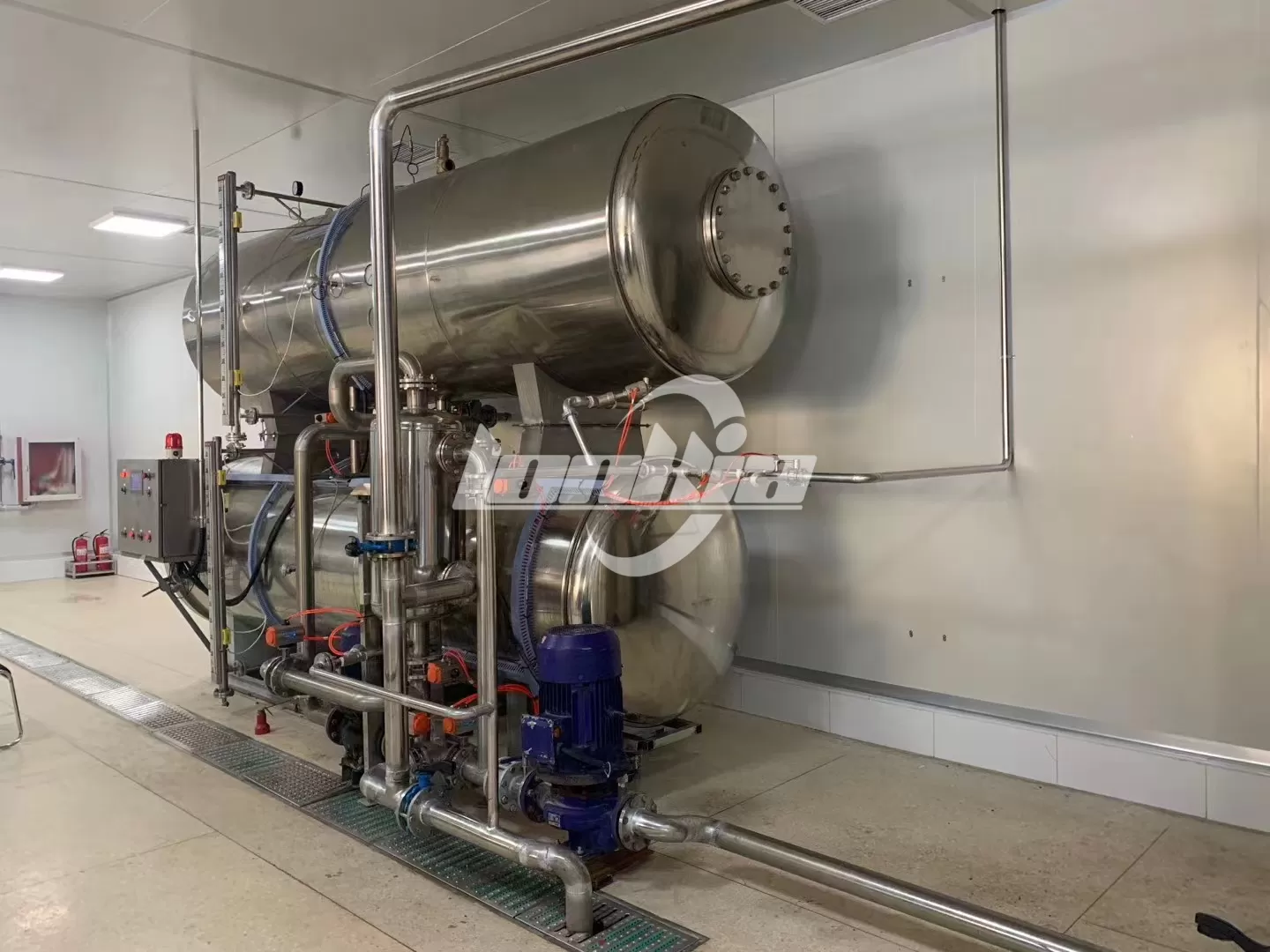
At its most fundamental level, an autoclave is a heavily reinforced, hermetically sealed pressure vessel designed to apply high heat and pressure to products placed inside it. By manipulating atmospheric pressure, an autoclave allows water or steam to reach temperatures well beyond the normal boiling point of 100°C (212°F)—typically operating between 110°C and 135°C in food applications.
Autoclave vs. Retort: Understanding the Terminology
When researching "what is an autoclave," you will frequently encounter the term "retort." In the food and beverage industry, a retort is simply an industrial autoclave specifically engineered for food processing. While the medical and laboratory sectors use the word "autoclave" for sterilizing surgical instruments or petri dishes (usually relying on pure saturated steam), food scientists almost exclusively use the term "retort." Food retorts are distinctly more complex than medical autoclaves. They must handle massive volumes, incorporate specialized agitation mechanisms, and, crucially, utilize "overpressure" (compressed air) to prevent delicate food packaging from bursting during the heating and cooling cycles. For the remainder of this guide, we will use these terms interchangeably, acknowledging that in a food plant, you are working with a retort.
The Fundamental Science of Thermal Processing
The operation of a food autoclave is governed by the principles of thermodynamics. At sea level, water boils at 100°C. However, standard atmospheric pressure cannot generate the heat necessary to destroy highly heat-resistant bacterial spores.
According to Gay-Lussac’s Law of pressurized gases, as the pressure inside the sealed autoclave chamber increases, the temperature of the steam or water inside also increases proportionally. By introducing steam into a sealed vessel and increasing the internal pressure to roughly 15 to 30 psi (pounds per square inch), the environment easily reaches the benchmark sterilization temperature of 121.1°C (250°F). It is this precise combination of time, temperature, and pressure that makes commercial food preservation possible.
2. Why is an Autoclave Essential for Food Manufacturing?
Food spoilage and foodborne illnesses are caused by microorganisms. While freezing pauses bacterial growth and dehydration removes the moisture bacteria need to thrive, autoclaving (thermal processing) is the only method that actively destroys these microorganisms while leaving the food in a moist, ready-to-eat state.
Achieving Commercial Sterility (Targeting Clostridium botulinum)
The primary biological target of any low-acid food autoclave process is the spore-forming bacterium Clostridium botulinum. This pathogen thrives in anaerobic (oxygen-free) environments—such as the inside of a sealed can or vacuum pouch—and produces a deadly neurotoxin that causes botulism.
C. botulinum spores are incredibly resilient and can survive boiling water. To guarantee public safety, food manufacturers must achieve "commercial sterility." This requires subjecting the food to a "12D process" (often called a botulinum cook), which means applying enough heat to reduce the population of C. botulinum spores by 12 decimal logarithms. Practically, this ensures that the probability of a single spore surviving in a container is one in a billion. Only the extreme, pressurized environment of an autoclave can deliver this level of lethality.
Extending Shelf Life Without Artificial Preservatives
Today’s consumers are increasingly demanding "clean label" products free from artificial chemical preservatives like sodium benzoate or nitrites. An autoclave solves this industry challenge perfectly. Because the thermal processing physically neutralizes the biological agents of spoilage (bacteria, yeasts, molds, and natural enzymes), the food becomes inherently stable. The hermetic seal of the packaging prevents re-contamination, allowing high-quality foods to be stored safely at ambient temperatures for anywhere from 12 months to 5 years.
Meeting Strict FDA and USDA Regulations
In jurisdictions worldwide, utilizing an autoclave for low-acid canned foods (LACF) is not optional; it is strictly mandated by law. In the United States, the Food and Drug Administration (FDA) under 21 CFR Part 113, and the United States Department of Agriculture (USDA), require all thermal processing facilities to register their equipment and file a "Scheduled Process."
A Scheduled Process dictates the exact time, temperature, and pressure required for a specific food product in a specific container size, as validated by a recognized Process Authority. Failing to strictly adhere to these validated autoclave parameters can result in immediate product recalls, plant shutdowns, and severe legal consequences.
3. How Does a Food Autoclave Work? The Step-by-Step Process
Operating a food retort is not as simple as turning on an oven. It requires a highly controlled, phased approach to ensure uniform heat distribution and to protect the physical integrity of the food packaging.
Phase 1: Venting and Air Removal
Air is the natural enemy of steam sterilization. Air acts as an excellent thermal insulator; if pockets of cold air remain inside the autoclave chamber, the steam cannot make direct contact with the food containers, resulting in dangerous "cold spots" where bacteria can survive.
In a traditional steam retort, the cycle begins with the "venting" phase. The venting valve is opened wide, and high-pressure steam is aggressively injected into the chamber. This steam actively flushes the atmospheric air out of the vessel. The process moves to the next phase only when sensors confirm that 100% of the air has been evacuated and replaced with pure, saturated steam.
Phase 2: The Heating and Holding Phase (Sterilization)
Once the chamber is purged of air, the vent valves close, and the internal pressure builds, driving the temperature up to the target lethality point (e.g., 121.1°C). Once the core of the food inside the packaging reaches this target, the "Holding Phase" begins. The autoclave maintains this exact temperature and pressure for a predetermined number of minutes—this is the actual sterilization time. Advanced PLCs (Programmable Logic Controllers) constantly monitor the environment, automatically injecting micro-bursts of steam to keep the temperature perfectly stable.
Phase 3: The Critical Cooling Phase
Perhaps the most technically challenging part of the autoclave cycle is cooling. When sterilization is complete, the food inside the packaging is intensely hot, and the internal pressure within the can or pouch is massive. If the pressure inside the autoclave chamber were simply released to the atmosphere, the pressure differential would cause cans to buckle outward, glass jars to shatter, and pouches to violently burst.
To prevent this, the autoclave enters an overpressure cooling phase. Cold water is introduced into the chamber, but simultaneously, compressed air is pumped in to maintain the high pressure inside the vessel. As the food cools, its internal pressure naturally drops. The autoclave controller carefully matches the external chamber pressure to the declining internal packaging pressure until the product is cool enough (usually around 40°C) to be safely removed.
4. Types of Autoclaves (Retorts) Used in the Food Industry
Not all food products are created equal, and therefore, not all autoclaves are the same. Over the decades, engineers have developed various heating mediums to accommodate different packaging types and food viscosities.
Static Steam Retorts
The oldest and most straightforward technology. These autoclaves use pure, saturated steam as the heating medium. They do not typically use overpressure during the heating phase.
Best for: Rigid metal cans (like traditional soup or bean cans) that can physically withstand high internal pressure differentials without deforming.
Drawback: Cannot process flexible pouches or semi-rigid plastics.
Water Immersion Retorts
In this design, the food containers are completely submerged in superheated water. The water is heated either by direct steam injection or through a heat exchanger, and pumps circulate the water aggressively to ensure even temperature distribution. Compressed air is introduced in the headspace of the vessel to provide overpressure.
Best for: Delicate glass jars and heavy loads of flexible packaging. The buoyancy of the water helps protect the packaging from crushing under its own weight.
Water Cascade / Spray Retorts
This highly efficient technology uses a lower volume of water. The water is drawn from the bottom of the vessel, passed through a steam heat exchanger, and then aggressively showered (cascade) or atomized (spray) over the food containers from the top and sides.
Best for: Retort pouches, semi-rigid plastic trays, and bowls. It offers incredibly precise temperature and overpressure control, preventing flexible packaging from wrinkling or bursting. It is also highly energy and water-efficient.
Rotary Retorts
Heat penetrates solid or highly viscous foods (like thick stews, refried beans, or dairy-based sauces) very slowly through natural conduction. To speed up the process and prevent the food closest to the packaging from burning (burn-on), rotary autoclaves physically spin the internal basket holding the food.
Best for: High-viscosity liquids, dairy products, and large industrial cans. The end-over-end rotation forces convection inside the container, drastically reducing the required processing time and improving the final taste and texture of the food.
5. Matching Autoclave Technology with Food Packaging
A critical mistake in food manufacturing is purchasing an autoclave before finalizing the packaging design. The structural integrity of your packaging dictates the type of retort you must use.
Metal Cans and Glass Jars
Tinplate and aluminum cans are rigid. They can generally survive the pressure swings of a basic steam retort. Glass jars, however, face a different challenge: thermal shock. If glass is heated or cooled too rapidly, it will shatter. Therefore, glass requires water immersion or water spray retorts that allow for extremely gradual, controlled temperature ramping and cooling profiles.
Retort Pouches (Flexible Packaging)
The rise of the retort pouch (e.g., ready-to-eat curries, military MREs, pet food) revolutionized the industry, offering a lighter, cheaper alternative to cans with a much faster heat penetration rate. However, pouches have virtually zero structural rigidity. If the pressure inside the pouch exceeds the pressure in the autoclave by even a fraction of a psi, the pouch's seams will stretch and fail. Processing pouches absolutely requires sophisticated water spray or cascade retorts equipped with active, hyper-accurate overpressure control systems.
Semi-Rigid Plastic Trays and Bowls
Often used for microwavable ready-meals or baby food, these containers suffer from "paneling" (caving in) if the overpressure is too high, or "ballooning" (pushing the lid off) if the overpressure is too low. Like flexible pouches, they require the precision of water spray/cascade systems. Furthermore, the racking systems inside the autoclave must be custom-designed to support the specific shape of the tray so that water can circulate freely between every single unit.
6. Common Challenges and Troubleshooting in Food Sterilization
Even with an optimized Scheduled Process, real-world manufacturing environments present continuous challenges. Understanding how to troubleshoot autoclave issues is critical for minimizing product loss and ensuring compliance.
Packaging Deformation (Paneling or Bursting)
The most frequent visual defect post-autoclaving is deformed packaging.
Bursting / Ballooning: If retort pouches split at the seams or the lids of plastic trays blow off, the internal pressure of the food expanded faster than the autoclave's compensating overpressure. This usually happens during the early stages of the cooling phase. Solution: Increase the compressed air overpressure precisely when the cooling water is introduced.
Paneling / Crushing: If cans cave in or pouches become vacuum-sucked tight, the overpressure in the autoclave was too high relative to the internal pressure of the cooling food. Solution: Gradually step down the overpressure in the autoclave to match the declining internal temperature of the product.
Inconsistent Heat Distribution
If your temperature distribution studies fail, or if some batches spoil while others do not, the autoclave is not heating evenly.
Causes: Common culprits include inadequate venting (trapped cold air), blocked water spray nozzles, poor basket loading configurations (packing pouches too tightly without spacer mats), or a malfunctioning circulation pump. Solution: Regularly inspect all nozzles, ensure proper spacing between containers using perforated divider plates, and verify pump pressure.
Organoleptic Changes (Flavor, Color, and Texture Loss)
Over-processing food guarantees safety but ruins the product's organoleptic qualities (taste, color, and texture). Vegetables become mushy, and meats develop a "burnt" or metallic off-flavor due to the Maillard reaction accelerating under high heat. Solution: To maintain quality while hitting the target $F_0$, many processors switch to rotary retorts to speed up heat penetration, or they utilize high-temperature, short-time (HTST) profiles if the packaging allows it.
7. FAQs
Q: Can an autoclave be used for all types of food?
A: No. Autoclaves (retorts) are specifically designed for low-acid foods (foods with a pH greater than 4.6 and water activity above 0.85), such as meats, vegetables, and dairy. High-acid foods (like tomatoes, pickles, or fruit juices) naturally inhibit C. botulinum spores and only require milder pasteurization techniques, usually at temperatures below 100°C.
Q: What is the difference between pasteurization and autoclaving?
A: Pasteurization is a milder heat treatment (typically under 100°C) designed to kill vegetative pathogenic bacteria (like Salmonella or E. coli) and extend refrigerated shelf life. Autoclaving (commercial sterilization) uses high pressure to reach temperatures above 121°C to destroy highly resistant bacterial spores (like C. botulinum), allowing the food to be stored safely at room temperature for years.
Q: How long does the food autoclaving process typically take?
A: There is no universal time. The cycle depends entirely on the specific food matrix, the size and shape of the packaging, and the target $F_0$ value. A small pouch of watery soup might reach commercial sterility in 25 minutes, while a massive institutional-sized can of dense refried beans might require 120 minutes or more to ensure heat fully penetrates to the core.