
1. Raw Mango Variability and Its Impact on Peeling
1.1 Fruit Maturity and Variety
Mangoes come in multiple varieties, each with different fiber content, skin thickness, and ripening characteristics. Alphonso, Kent, and Carabao varieties behave differently during peeling: some skins are thinner and easier to remove, while others are fibrous and sticky, increasing the risk of pulp loss.
1.2 Damage and Quality Issues
Mechanical injury, sap burn, or microbial contamination during harvesting and transport can make peeling more challenging. A damaged fruit often results in higher wastage or irregular peeling.
Customer Concern:
They want to know which peeling technology or machine settings can handle variability in fruit quality and reduce loss.
2. Labor and Efficiency Challenges
Manual peeling is slow, inconsistent, and costly. Even semi-automatic systems can struggle to meet industrial-scale production requirements.
Key pain points:
High labor dependency and training requirements
Slow peeling rates in high-volume factories
Inconsistent removal, leaving residual skin or cutting into pulp
How a modern mango peeling machine addresses this:
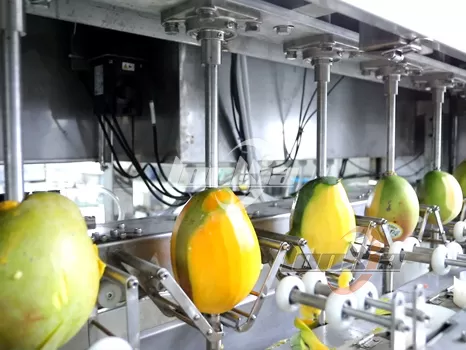
Automated peeling mechanisms (rotary drums, steam-assisted peeling, or abrasive peeling) maintain consistent performance
Adjustable settings accommodate different fruit sizes and ripeness levels
Continuous operation reduces downtime and increases throughput
3. Yield Optimization and Waste Reduction
Fruit loss during peeling is a major economic concern. Customers want peeling solutions that minimize waste while ensuring the skin is fully removed.
Strategies for higher yield:
Precision control: Machines with adjustable peeling depth reduce pulp loss
Variety-specific settings: Certain machines allow operators to set different parameters for thick-skinned or thin-skinned varieties
Integrated sorting and grading: Removing damaged or undersized fruit before peeling prevents unnecessary loss
By optimizing peeling parameters, factories can significantly improve the overall output of high-quality mango pulp or slices.
4. Hygiene and Food Safety Considerations
The peeling stage is also a critical point for contamination control. Mango skin can carry dust, pesticides, and microbes, making hygienic design essential.
Key considerations for processors:
Stainless steel contact surfaces (SS304 or SS316) for corrosion resistance
Smooth surfaces and sanitary welds to eliminate food traps
Easy-to-clean modules for daily sanitation
Integration with washing and sanitization steps to reduce microbial load
Ensuring hygiene at the peeling stage helps factories meet regulatory requirements such as HACCP, ISO 22000, or export market standards.
5. Machine Maintenance and Operational Reliability
Frequent breakdowns or difficult maintenance can negate the benefits of automation. Customers are concerned with:
Downtime and repair costs
Wear and tear on blades or peeling drums
Availability of spare parts and ease of maintenance
Best practices:
Select machines with modular and easy-to-access components
Establish preventive maintenance schedules
Monitor key performance indicators (throughput, loss rate, machine vibration) to anticipate failures
Reliable machines reduce operational interruptions and keep production consistent.
6. Investment Considerations
Investing in a mango peeling machine is not just about purchasing equipment; it also involves evaluating ROI, operational cost, and long-term scalability.
Factors to consider:
Energy and water consumption per ton of mango processed
Labor reduction and efficiency improvements
Compatibility with future production line expansions
Flexibility to handle multiple varieties and product types
A carefully selected peeling machine aligns with both current production goals and future scalability.
7. Choosing the Right Mango Peeling Technology
Several peeling methods are available for industrial mango processing:
Rotary Drum Peeling – Uses abrasion to remove skin; suitable for firm mangoes
Steam-Assisted Peeling (Flash Steam) – Efficient for thick-skinned or fibrous varieties; improves yield and reduces labor
Knife or Blade Peeling – Often semi-automatic; allows precision but lower throughput
Customer Priority:
They need guidance on which peeling method matches their raw material, production scale, and hygiene requirements.