
In modern fruit processing, grading is no longer a simple sorting step—it is a critical control point that directly influences product consistency, market value, and operational efficiency. As consumer expectations for uniform size, appearance, and quality continue to rise, processors are under increasing pressure to deliver standardized products at scale.
Fruit grading equipment plays a central role in meeting these expectations. When correctly selected and integrated, it helps processing lines operate smoothly, reduces reliance on manual labor, and ensures that fruit is classified according to objective, repeatable criteria. When poorly matched to the production line, however, grading equipment often becomes a bottleneck—limiting throughput, increasing fruit damage, and driving up long-term costs.
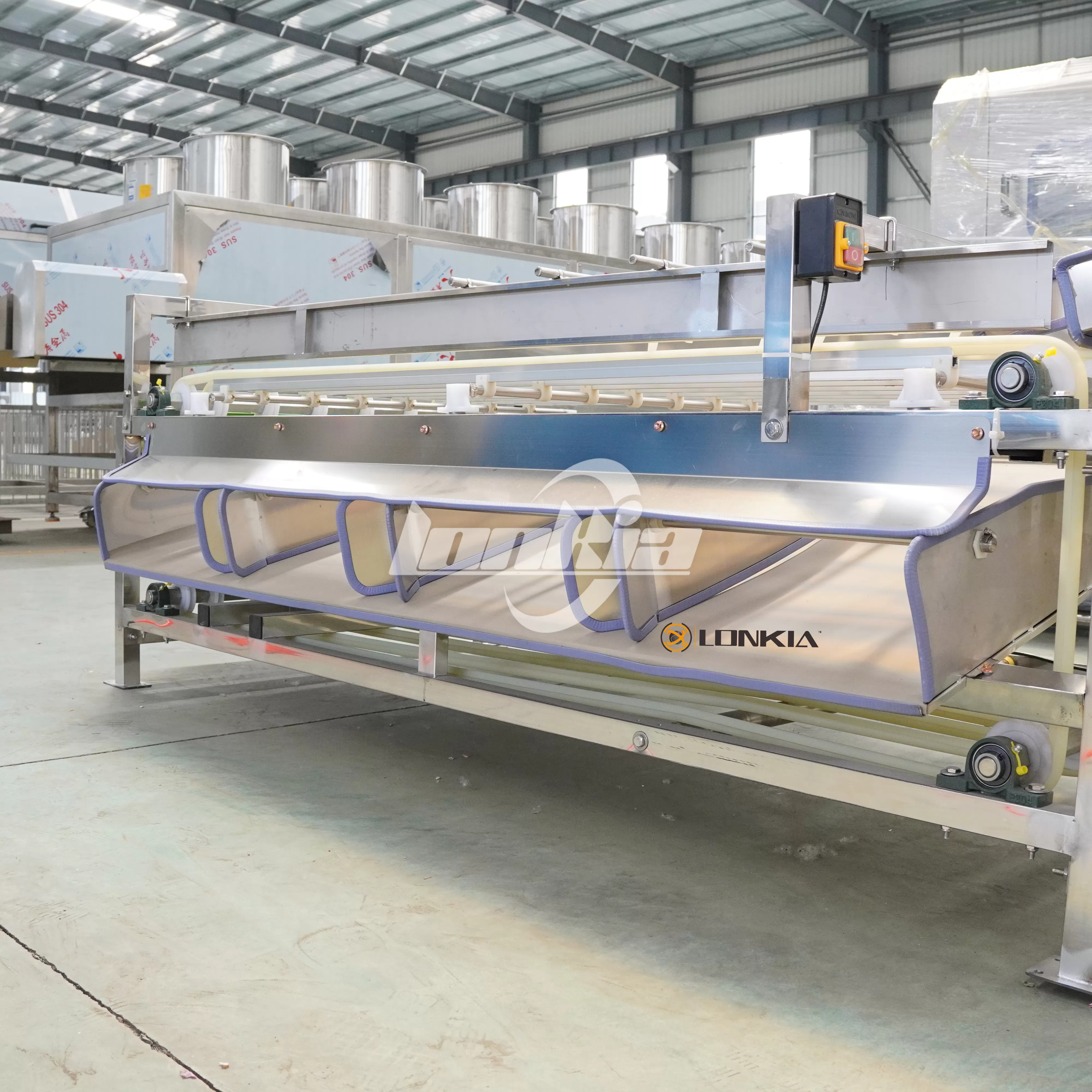
1. Understanding Fruit Grading Equipment: Functions and Core Value
1.1 What Is Fruit Grading Equipment?
Fruit grading equipment refers to machinery designed to classify fruit into predefined categories based on measurable attributes such as weight, size, shape, color, and external quality. It is typically positioned after washing and drying stages and before packaging or further processing.
Unlike basic sorting, which may only separate fruit by rough size or remove obvious defects, grading aims to create consistent, market-ready groups that align with commercial standards. These standards may be defined by retailers, export regulations, or internal quality benchmarks.
In a complete processing line, fruit grading equipment acts as a coordination point. Its output determines packaging formats, carton weights, pallet configuration, and even pricing strategies. For this reason, its performance affects not just grading accuracy, but the efficiency of the entire downstream operation.
1.2 Key Functions of Fruit Grading Equipment
Modern fruit grading equipment can perform one or multiple grading functions, depending on its design and configuration:
Weight-based grading
Fruit is classified according to precise weight ranges, often using individual carriers or load cells. This method is widely used when consistent net weight is critical for packaging or export compliance.Size-based grading
Grading is performed based on diameter, length, or volume. This is common for fruits where visual uniformity is important, such as apples, oranges, and pears.Appearance and quality grading
Advanced systems use cameras and sensors to detect color variation, surface defects, and shape irregularities. This allows processors to separate premium-grade fruit from lower-grade or processing-grade output.Multi-parameter grading
Some systems combine weight, size, and visual inspection to create more refined grading categories. This approach supports higher-value segmentation but also introduces greater system complexity.
Each function adds value, but also increases technical requirements and cost. Understanding which grading parameters are essential—and which are optional—is a key step in selecting appropriate equipment.
1.3 How Fruit Grading Equipment Impacts the Entire Processing Line
The influence of fruit grading equipment extends far beyond the grading stage itself. Its performance affects several critical aspects of processing operations:
Throughput stability
Grading speed must align with upstream washing and downstream packaging. A mismatch can lead to congestion, idle time, or excessive buffering.Labor efficiency
Well-designed grading systems reduce manual sorting and rework, allowing labor to be reallocated to higher-value tasks.Product integrity
Gentle handling mechanisms help minimize bruising and surface damage, preserving shelf life and reducing waste.Operational predictability
Consistent grading output enables better production planning, inventory management, and order fulfillment.
Because of these interdependencies, fruit grading equipment should never be selected in isolation. It must be evaluated as an integrated component of the processing line as a whole.
2. Start with Your Processing Line: Define Your Real Requirements
Before comparing technologies or specifications, it is essential to clearly define your actual operational requirements. Many selection errors stem from starting with equipment features instead of production realities.
2.1 Types of Fruits You Process
Different fruits behave very differently during grading. Factors such as size variability, skin sensitivity, surface texture, and shape consistency all influence equipment suitability.
For example:
Apples and pears typically require gentle handling to avoid bruising.
Citrus fruits can tolerate higher throughput but often demand precise size grading.
Soft fruits or irregularly shaped produce may require customized carriers or reduced speeds.
A system optimized for one fruit type may perform poorly with another. If your operation processes multiple fruit varieties, flexibility and adjustability become critical considerations.
2.2 Production Capacity and Throughput Requirements
Production volume is one of the most decisive factors in equipment selection. Key questions include:
What is your average and peak hourly throughput?
Is production seasonal or continuous?
How much buffer capacity is required to manage fluctuations?
Under-specifying capacity can quickly create bottlenecks, while over-specifying can lead to unnecessary capital and operating costs. The goal is not maximum speed, but stable, sustainable throughput that matches the rest of the line.
2.3 Current and Future Expansion Plans
Fruit processing facilities rarely remain static. Market growth, new contracts, or additional fruit varieties may require higher capacity or more grading categories in the future.
When selecting fruit grading equipment, it is important to assess:
Whether the system allows modular expansion
If software and control systems can support additional grading parameters
How easily the equipment can be integrated into a longer or more complex line
Planning for reasonable expansion at the outset often proves more cost-effective than replacing equipment prematurely.
3. Main Types of Fruit Grading Equipment and When to Use Them
Understanding the main categories of fruit grading equipment helps narrow down suitable options and avoid unnecessary complexity.
3.1 Weight-Based Fruit Grading Equipment
Weight-based grading systems classify fruit using individual weighing mechanisms, often combined with carriers that isolate each fruit during measurement.
When it is suitable:
When precise weight consistency is required
When packaging specifications are weight-driven
When fruit size varies significantly but weight is the primary criterion
Key considerations:
Accuracy and calibration stability
Speed versus precision trade-offs
Maintenance requirements of weighing components
3.2 Size-Based Fruit Grading Equipment
Size-based grading relies on physical or optical measurement of fruit dimensions. Common designs include roller, belt, or screen-based systems.
When it is suitable:
When visual uniformity is critical
When size standards are clearly defined by the market
When high throughput is needed with moderate precision
Key considerations:
Sensitivity to fruit shape irregularities
Adjustment range for different size categories
Risk of fruit rotation or misalignment affecting accuracy
3.3 Optical and Vision-Based Fruit Grading Equipment
Optical grading systems use cameras and lighting to evaluate external characteristics such as color, blemishes, and shape.
When it is suitable:
When quality differentiation adds commercial value
When labor-intensive visual inspection needs to be reduced
When consistent lighting and controlled environments can be maintained
Key considerations:
Sensitivity to environmental conditions
Data processing and system tuning requirements
Operator training and ongoing system calibration
3.4 Combined Grading Systems
Combined systems integrate multiple grading methods into a single platform, allowing simultaneous classification by weight, size, and appearance.
When it is suitable:
When product segmentation is complex
When premium and standard grades must be clearly separated
When long-term operational flexibility is a priority
Key considerations:
System complexity versus operational benefit
Higher initial investment and technical support needs
Alignment with actual market requirements
4. Key Technical Factors to Evaluate Before Choosing Fruit Grading Equipment
Once the general type of fruit grading equipment has been identified, a deeper technical evaluation becomes essential. At this stage, decision-makers should move beyond headline specifications and focus on how the equipment will perform consistently under real operating conditions.
4.1 Grading Accuracy and Consistency
Accuracy is often presented as a single percentage figure, but in practice, consistency over time is far more important. A grading system that performs well during initial testing but drifts due to wear, vibration, or environmental changes can create long-term quality issues.
Key aspects to assess include:
Stability of measurement over extended operating hours
Sensitivity to fruit positioning and orientation
Frequency and ease of calibration
Reliable fruit grading equipment maintains predictable output across different shifts, operators, and production batches, ensuring that grading standards remain consistent throughout the season.
4.2 Handling Method and Fruit Protection
Mechanical handling is one of the primary sources of fruit damage in processing lines. Even small impacts or friction points can lead to bruising, which may not be immediately visible but can shorten shelf life.
When evaluating handling design, consider:
Whether fruit is supported individually or in bulk
The number of transfer points and drop heights
Materials used at contact surfaces
Well-designed fruit grading equipment balances throughput with gentle handling, minimizing damage without sacrificing productivity.
4.3 Automation Level and Control System
The level of automation directly affects labor requirements, operational flexibility, and error rates. Fully automated systems can reduce manual intervention but may require higher technical competence for setup and troubleshooting.
Important questions include:
How intuitive is the operator interface?
Can grading parameters be adjusted quickly between batches?
Does the system provide diagnostic data or performance logs?
A practical automation level aligns with the skills of the operating team and the complexity of the processing environment.
4.4 Cleaning, Maintenance, and Hygiene Design
Food safety and hygiene are non-negotiable in fruit processing. Equipment that is difficult to clean or maintain often leads to longer downtime and increased compliance risks.
Evaluate:
Accessibility of key components for cleaning
Use of hygienic design principles such as smooth surfaces and minimal crevices
Frequency of routine maintenance tasks
Fruit grading equipment that is designed with sanitation in mind supports both regulatory compliance and operational efficiency.
5. Integration with the Existing Processing Line
Even high-performing fruit grading equipment can underdeliver if it is poorly integrated into the broader processing line. Integration should be assessed early in the selection process.
5.1 Space and Layout Constraints
Physical layout is often underestimated during equipment selection. Limited floor space, ceiling height, or existing structural features can restrict installation options.
Key considerations include:
Overall equipment footprint and orientation
Straight-line versus loop or multi-lane configurations
Access space for operators and maintenance
Early layout planning helps avoid costly modifications later.
5.2 Compatibility with Upstream and Downstream Equipment
Fruit grading equipment must operate in harmony with washing, drying, sorting, and packaging systems.
Potential integration issues include:
Mismatched conveyor heights or speeds
Inconsistent product spacing
Accumulation or starvation points
Smooth integration reduces stoppages and preserves fruit flow continuity.
5.3 Electrical, Power, and Utility Requirements
Different grading technologies place different demands on utilities.
Assess:
Power supply capacity and voltage compatibility
Compressed air or water requirements
Control system communication with existing automation
Ensuring compatibility with local standards and infrastructure prevents delays during commissioning.
6. Total Cost of Ownership: Looking Beyond the Purchase Price
Focusing solely on initial purchase price often leads to misleading comparisons. Total cost of ownership provides a more accurate basis for decision-making.
6.1 Initial Investment vs Long-Term Operating Cost
Long-term costs may include:
Energy consumption
Replacement of wear parts
Software updates or system recalibration
Fruit grading equipment with slightly higher upfront cost may offer lower operating expenses over its service life.
6.2 Downtime, Reliability, and Operational Risk
Unplanned downtime can disrupt deliveries and damage customer relationships. Reliability should therefore be a primary evaluation criterion.
Consider:
Mean time between failures
Availability of spare parts
Complexity of troubleshooting
Stable performance often outweighs marginal gains in speed or precision.
6.3 Return on Investment in Real Scenarios
ROI should be calculated based on tangible operational improvements, such as:
Reduced labor input
Lower fruit damage and waste
Improved consistency and market acceptance
Different operation sizes will experience different payback periods, making context-specific evaluation essential.
7. Common Mistakes When Choosing Fruit Grading Equipment
Several recurring mistakes can undermine otherwise sound investment decisions:
Overemphasis on purchase price without considering long-term performance
Ignoring fruit-specific handling requirements, leading to quality loss
Underestimating future capacity needs, resulting in early obsolescence
Adopting advanced technology without operational readiness, increasing complexity without clear benefit
Avoiding these pitfalls requires a disciplined, requirement-driven approach rather than a feature-driven one.
8. Choosing Fruit Grading Equipment That Truly Fits Your Line
Selecting the right fruit grading equipment is not about finding the most advanced system on the market, but about identifying the solution that best aligns with your processing reality. Fruit type, production volume, facility layout, labor structure, and long-term goals all shape what “right” means in a given context.
By focusing on functional requirements, integration, and total cost of ownership—and by avoiding common selection pitfalls—processors can make informed decisions that support consistent quality, operational efficiency, and sustainable growth.
In the end, fruit grading equipment delivers the greatest value not when it showcases technology, but when it quietly and reliably supports the entire processing line.