
1. Why Bin Cleaning Has Become a Critical Process, Not a Side Task
In modern food processing facilities, bins are no longer simple containers. They are continuously circulating assets that directly interact with raw materials, semi-finished products, and production environments. As production speeds increase and hygiene standards become stricter, the condition of bins has a direct impact on food safety, audit outcomes, and operational stability.
Traditionally, bin cleaning was treated as a low-priority, labor-driven task. However, inconsistent cleaning quality, hidden residue buildup, and human-dependent processes have made this approach increasingly risky. Bin washers emerged to address this gap by transforming bin cleaning into a controlled, repeatable, and auditable process that aligns with modern food safety expectations.
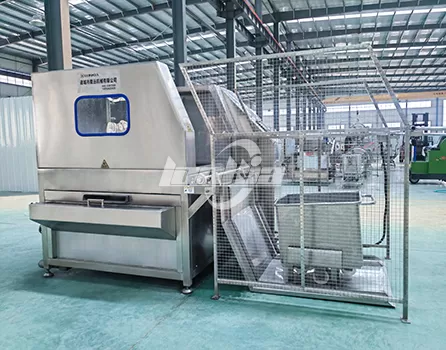
2. The Real Position of Bin Washers Inside the Production Flow
In a functioning food processing facility, bins move across multiple zones: receiving, preparation, processing, buffering, and sometimes storage. A bin washer typically sits at a boundary point between “contaminated” and “clean” zones, acting as a physical and procedural gatekeeper.
This placement is strategic. By forcing all bins to pass through a standardized washing step before re-entering production, facilities reduce the risk of cross-contamination and eliminate informal shortcuts. When integrated correctly, bin washers help enforce process discipline, ensuring that hygiene standards are maintained even during peak production or staffing fluctuations.
3. What Bin Washers Actually Control Beyond Visible Cleanliness
One of the most misunderstood aspects of bin washers is their role in managing invisible hygiene risks. In food processing, residues such as sugars, starches, fats, and proteins often remain after emptying bins. These residues may not be obvious but can quickly become breeding grounds for microorganisms.
Bin washers are designed to address these risks systematically. By applying consistent cleaning logic to every bin, they reduce variability that manual methods cannot control. This consistency is essential for facilities that aim to pass routine inspections, meet internal quality benchmarks, and maintain predictable hygiene performance over long production cycles.
4. Managing Daily Variability in Bin Condition
In real factory conditions, no two bins arrive at the washing station in the same state. Some may contain heavy residue, others excess moisture, and some only light contamination. A practical bin washer must be able to handle this variability without slowing down production or requiring constant operator adjustment.
Effective bin washers help standardize outcomes despite inconsistent inputs. They reduce the likelihood of bins returning to production with lingering residue, excessive water, or odor issues. Over time, this predictability reduces downstream hygiene incidents and limits the need for re-cleaning or manual intervention.
5. Operational Efficiency from a Production Management Perspective
From a management standpoint, the value of bin washers is not measured only in cleaning speed. It is measured in how reliably they support uninterrupted production. When clean bins are always available at the right time, production lines experience fewer stoppages, fewer workarounds, and less dependency on emergency labor.
Bin washers contribute to efficiency by removing uncertainty. They help production planners rely on a stable supply of clean containers, which is especially important in facilities operating multiple shifts or handling high product turnover. This reliability often has a greater operational impact than marginal gains in throughput alone.
6. Labor Interaction, Standardization, and Risk Reduction
Even automated facilities rely on operators to supervise equipment, manage exceptions, and maintain hygiene routines. Bin washers that are designed for straightforward operation reduce dependence on individual experience levels and minimize the risk of procedural errors.
Standardized washing processes simplify training, reduce operator fatigue, and help maintain consistent hygiene performance across shifts. This is particularly valuable in facilities facing labor turnover or seasonal staffing, where consistency can otherwise be difficult to maintain.
7. The Role of Bin Washers in Audit Readiness and Compliance
Food safety audits increasingly focus on process control rather than isolated cleaning events. Bin washers support this shift by making container hygiene measurable and repeatable. Their presence demonstrates that bin cleaning is a defined process, not an ad hoc activity.
For quality and compliance teams, this structured approach simplifies documentation, internal inspections, and corrective action tracking. Clean bins become a controlled input to production, reducing audit findings related to sanitation gaps or inconsistent practices.
8.Bin Washers as Infrastructure for Hygiene Stability
In modern food processing facilities, bin washers are not merely cleaning machines. They are infrastructure components that support hygiene stability, process discipline, and operational confidence. Their real value lies in how they reduce variability, manage risk, and support long-term production reliability.
When viewed through this lens, bin washers become a strategic investment—one that helps facilities move from reactive cleaning to proactive hygiene control in an increasingly demanding food processing environment.