
Potatoes are among the most widely processed vegetables in the global food industry. From French fries and chips to mashed and dehydrated flakes, potato-based products are produced in almost every region and require specialized machinery for consistent quality and efficiency. Modern potato processing machines form an integrated line that handles washing, peeling, cutting, blanching, frying, cooling, and packaging — all under strict hygiene and quality control standards.
Why a Dedicated Potato Processing Line Pays Off
Many processors begin with individual machines — a peeler here, a slicer there — but as production expands, the need for a dedicated processing line becomes clear. Integrating machines into a continuous, automated flow reduces manual handling, contamination risk, and production time.
Key advantages include:
Consistent product quality: Automation ensures uniform washing, peeling depth, slice thickness, and frying temperature.
Reduced labor dependency: Automated conveyors and sensors minimize human contact and improve safety.
Higher yield and less waste: Proper grading and controlled peeling can reduce raw material loss by up to 5–8%.
Traceability and compliance: PLC-based systems log temperatures, times, and critical control data, supporting HACCP and ISO 22000 documentation.
Energy and water savings: Centralized systems can recycle blanching water and recover heat from fryers.
A modern processing line is not just about automation; it is about creating a controlled, traceable, and efficient system that consistently meets consumer and regulatory expectations.
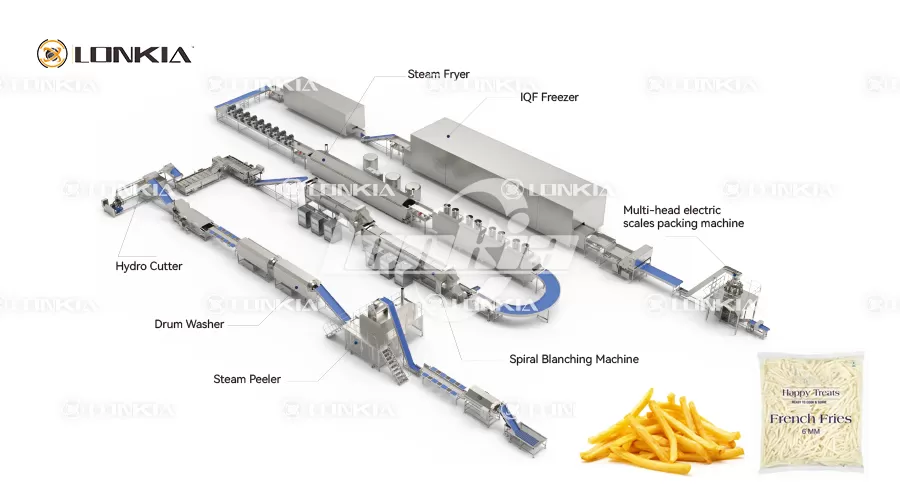
Typical Potato Products and Production Flows
Before selecting machines, it’s essential to define the target product — each requires slightly different processes and machine configurations.
| Product Type | Key Processing Stages | Typical Capacity Range |
|---|---|---|
| French fries | Washing → Peeling → Cutting → Blanching → Frying → De-oiling → Freezing → Packing | 100–5,000 kg/h |
| Potato chips (crisps) | Washing → Peeling → Slicing → Washing → Frying → De-oiling → Seasoning → Packing | 100–3,000 kg/h |
| Dehydrated flakes | Washing → Peeling → Cooking → Mashing → Drying → Milling → Packing | 200–2,000 kg/h |
| Frozen diced potatoes | Washing → Peeling → Dicing → Blanching → Cooling → IQF Freezing → Packing | 300–3,000 kg/h |
Understanding your end product helps determine which modules you need, how they should connect, and what level of automation fits your capacity and budget.
Core Machines and Their Functions
A complete potato processing line consists of several interlinked stages. Below are the main machine categories, their functions, and design considerations.
1. Washing and Grading Machines
The first step is removing soil, stones, and debris from raw potatoes.
Dry brushing machines remove loose soil before washing.
Bubble or drum washing machines use water agitation to clean thoroughly.
Grading conveyors sort potatoes by size, removing undersized or oversized pieces.
Design considerations:
Stainless steel (SUS304 or 316) construction for food contact areas.
Adjustable water flow and rotation speed.
Optional mud filtration and water recycling systems to reduce consumption.
Typical problems: excessive water turbidity or damage to potato skins due to aggressive brushes.
Maintenance tip: clean nozzles and replace worn brushes periodically to maintain cleaning efficiency.
2. Peeling Machines
Peeling affects both product quality and yield. Industrial lines use three main types:
Abrasive peelers: use rotating carborundum rollers to gently abrade the surface — ideal for fries and chips.
Steam peelers: expose potatoes to high-pressure steam for a few seconds, then cool rapidly; skin is removed by a rubber roller or air jet. This method achieves higher yield and smoother surfaces.
Knife peelers: used for high-value or delicate products that require precise peeling with minimal flesh loss.
Key parameters: peeling time, drum speed, pressure (for steam peelers), and skin removal ratio.
Maintenance tips:
Regularly replace abrasive rollers.
Inspect seals and pressure valves on steam peelers for leaks.
Calibrate peeling timers to balance efficiency and product loss.
3. Cutting and Slicing Machines
After peeling, potatoes are cut into the required shapes — strips, slices, cubes, or shreds.
Main cutting systems:
Strip cutters: for French fries; can produce various cross-sections (e.g., 7×7 mm, 9×9 mm, crinkle-cut).
Disc slicers: for chips; use high-speed rotating blades to produce uniform slices.
Dicing machines: for cubes used in salads, frozen mixes, or soups.
Key specs:
Cutting speed and blade sharpness directly affect shape uniformity.
Some models include starch removal rinsing immediately after cutting to prevent sticking and browning.
Maintenance notes: blades must be replaced regularly; alignment of feed hoppers ensures consistent cut size.
Common issue: excessive starch buildup leading to poor slicing — solved by using a secondary washing step.
4. Post-Cutting Washing and Starch Removal
This stage rinses away free starch released during cutting. Removing surface starch improves color and prevents slices from sticking together during frying.
Machine type:
Bubble washing or vibrating rinsing machines with circulating water.
Optional ozone sterilization or UV disinfection units to reduce microbial load.
Best practices:
Keep water temperature below 25°C to avoid partial cooking.
Replace or filter water regularly to maintain clarity.
Maintain laminar water flow to prevent mechanical damage.
5. Blanching and Pre-Treatment Systems
Blanching is crucial for controlling enzyme activity, color, and texture.
It partially cooks the potato, reduces sugar content, and prepares it for frying or freezing.
Machine options:
Hot water blanchers with temperature-controlled tanks (60–90°C).
Steam blanchers for lower water usage and better energy control.
Process parameters:
Temperature and dwell time depend on product thickness.
Example: 85°C for 3 minutes for 9×9 mm French fries.
Technical tips:
Include recirculation and filtration systems to remove starch particles.
Ensure automatic temperature logging for food safety documentation.
6. Drying and Moisture Control
Before frying or freezing, excess surface water must be removed to ensure crisp texture and stable oil temperature.
Equipment types:
Air knife dryers: blow high-velocity air to remove surface water.
Centrifugal dryers: spin products at high speed to extract moisture.
Performance indicators:
Drying efficiency (percentage of water removed).
Air temperature and velocity uniformity.
Maintenance advice:
Clean filters regularly to maintain airflow.
Inspect bearings and motor alignment to prevent vibration-related wear.
7. Frying Systems (for Chips and Fries)
This is the most energy-intensive and quality-critical stage.
Frying determines product color, oil content, and crunchiness.
Fryer categories:
Batch fryers: suitable for small-scale or specialty products.
Continuous fryers: used in large industrial plants; maintain stable oil temperature and flow.
Key design features:
Oil filtration and circulation system to maintain oil quality.
Automatic temperature control with PID systems.
De-oiling conveyor or centrifugal unit post-frying.
Safety & maintenance:
Regular oil analysis (TPM or FFA tests).
Clean heat exchangers to prevent carbon buildup.
Schedule periodic inspection of pumps and conveyors.
8. Cooling, Freezing, and Packing Systems
After frying or blanching, potatoes must be quickly cooled or frozen to maintain texture and prevent microbial growth. Cooling stabilizes moisture and prepares products for packaging or cold storage.
Cooling equipment:
Vibrating cooling conveyors: circulate ambient or chilled air while removing surface oil.
Hydraulic coolers: for high-capacity lines, using chilled water to bring temperature down rapidly.
Spiral or tunnel freezers (IQF): for individually quick frozen fries or diced potatoes, ensuring free-flowing products with no clumping.
Key parameters:
Air temperature: typically -35°C to -40°C for IQF systems.
Retention time: 10–20 minutes depending on product size and thickness.
Airflow pattern and belt speed consistency directly affect freezing uniformity.
Maintenance focus:
Regular defrosting to avoid ice buildup.
Check belt tension and alignment in spiral freezers.
Clean evaporator fins to maintain energy efficiency.
Once cooled or frozen, products move to automatic weighing and packing machines.
Modern systems include:
Multihead weighers with precision sensors.
Nitrogen flushing for extended shelf life.
Integrated metal detectors and X-ray systems for final quality control.
Hygiene, Sanitation, and Food Safety Design
Hygiene is a cornerstone of potato processing. Since the products often have high moisture and starch, residues can encourage bacterial growth if not cleaned properly.
Design principles for hygienic equipment:
Open-frame structures: allow full access during cleaning.
Sloped surfaces: prevent water accumulation.
Quick-release belts and covers: for fast disassembly.
Stainless steel (SUS304/316) contact parts: resist corrosion and ensure compliance with food standards.
Cleaning practices:
CIP (Clean-in-Place) systems in blanchers, fryers, and pipelines reduce manual cleaning effort.
Use alkaline detergents to remove oil and starch, followed by acid rinses for scale removal.
Sanitize with peracetic acid or chlorine-free disinfectants to avoid residue contamination.
Daily checklist for operators:
Remove and rinse removable guards and trays.
Flush CIP circuits before and after detergent cycles.
Inspect for starch buildup on nozzles and conveyors.
Record cleaning verification data for traceability.
Maintaining a consistent hygiene routine not only ensures product safety but also extends machine lifespan by reducing corrosion and mechanical wear.
Maintenance and Common Troubleshooting
Proper maintenance ensures your processing line operates smoothly with minimal downtime. Below are the most frequent issues in potato processing and their solutions:
| Problem | Likely Cause | Maintenance Action |
|---|---|---|
| Uneven peeling | Worn abrasive rollers or incorrect pressure | Replace rollers; check drum speed calibration |
| Over-browning during frying | High sugar content or oil degradation | Check blanching temperature; replace or filter oil |
| Inconsistent cutting sizes | Dull blades or misaligned feed chute | Sharpen/replace blades; realign hopper |
| Blocked nozzles in washers | Starch sediment accumulation | Flush system; add filtration stage |
| Freezing clumps in IQF systems | Poor air distribution or high humidity | Clean fans; check defrost schedule |
Preventive maintenance recommendations:
Lubricate bearings and conveyors weekly.
Inspect electrical wiring and control panels monthly.
Calibrate temperature and pressure sensors quarterly.
Schedule full machine inspections twice a year.
Documentation and tracking:
Maintain digital maintenance logs to record downtime, part replacements, and inspection results. These data help identify patterns and plan predictive maintenance, reducing unplanned stoppages.
Selecting the Right Configuration for Your Operation
Choosing the correct potato processing machines depends on your product range, capacity, and desired automation level.
Small and medium-sized processors (100–500 kg/h):
Prefer compact, semi-automatic systems.
Focus on easy cleaning and flexible operation for multiple products.
Recommended setup: washer → peeler → cutter → fryer → manual packing.
Large-scale industrial plants (1–5 tons/h):
Require fully automated lines with real-time control and CIP systems.
Emphasis on energy recovery and integrated quality control modules.
Recommended setup: grading → washing → steam peeling → cutting → blanching → frying/freezing → weighing → packing.
Custom engineering:
Lonkia offer modular lines, allowing gradual upgrades as demand grows — ideal for processors scaling from regional to international markets.