
In modern food, beverage, and liquid packaging facilities, an industrial bottle washer plays a critical role in ensuring product safety, line efficiency, and regulatory compliance. Whether bottles are used for beverages, dairy products, sauces, or chemical liquids, inadequate cleaning at this stage can compromise the entire production process.
Many buyers focus on headline specifications such as washing speed or machine size, but these metrics alone do not determine real-world performance. An industrial bottle washer that is poorly matched to bottle type, contamination level, or line speed often leads to persistent issues, including:
Inconsistent cleaning results and hygiene risks
Excessive water, energy, or chemical consumption
Frequent line stoppages and manual intervention
Difficulty passing food safety audits
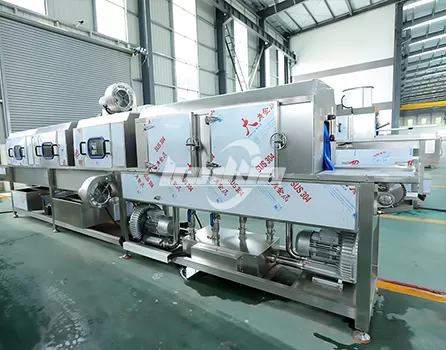
Production Requirements You Must Define Before Evaluating Features
Before comparing technical specifications, it is essential to clearly define your production requirements. The effectiveness of an industrial bottle washer depends not only on the machine itself but also on how well it aligns with your bottles, products, and production line.
1.1 Bottle Types, Sizes, and Materials
Bottle diversity has a significant impact on washer performance and feature selection.
- Bottle materials
Glass bottles typically tolerate higher washing temperatures and stronger chemicals, while PET and HDPE bottles require more controlled conditions to prevent deformation or surface damage. - Bottle shapes and dimensions
Round bottles are easier to clean uniformly, whereas square or irregular shapes demand more sophisticated spray coverage. An industrial bottle washer should accommodate height and diameter variations without compromising cleaning effectiveness. - Neck and opening design
Narrow-neck bottles require precise internal spray alignment to ensure complete internal cleaning. This is a critical feature often overlooked during initial equipment evaluation.
Machines with adjustable guides, variable spray angles, and flexible bottle handling systems provide greater versatility, especially for plants processing multiple bottle formats.
1.2 Contamination Level and Cleaning Objectives
Not all bottles require the same level of cleaning. Understanding the nature of contamination helps determine which industrial bottle washer features are truly necessary.
- New bottles may contain dust, packaging residues, or light oils from manufacturing.
- Returnable or reused bottles often require removal of labels, adhesives, sugars, fats, or microbiological contaminants.
It is also important to distinguish between cleaning and sanitizing. While cleaning removes visible and invisible residues, sanitizing or disinfecting reduces microbial load. An industrial bottle washer should be configured according to the actual hygiene objectives of the product and market requirements.
1.3 Line Speed and Throughput Targets
The washing stage must align with the overall production rhythm.
- Bottles per hour (BPH) capacity should match or slightly exceed the filling line speed.
- Peak throughput during high-demand periods must be considered, not just average production rates.
If an industrial bottle washer cannot consistently keep pace with the line, it becomes a bottleneck that limits daily output and increases labor costs. Features such as variable-speed conveyors and buffer integration help maintain stable line performance.
Core Cleaning Performance Features of an Industrial Bottle Washer
Cleaning performance is the primary function of any industrial bottle washer. The following features directly influence how effectively bottles are cleaned under real production conditions.
2.1 Washing Stages and Process Configuration
High-performance industrial bottle washers typically use multiple washing stages, each designed to address a specific cleaning function.
Common stages include:
- Pre-rinse to remove loose debris
- Main wash using hot water and detergents
- Intermediate rinse to remove chemical residues
- Final rinse with fresh or treated water
Multi-stage configurations improve cleaning consistency and reduce cross-contamination. The ability to adjust or bypass certain stages provides flexibility for different bottle conditions.
2.2 Spray System Design and Coverage
Spray system design is one of the most critical features of an industrial bottle washer.
Key aspects include:
- Nozzle placement and angle to ensure full internal and external coverage
- Spray pressure control to balance cleaning force and bottle protection
- Dedicated internal and external washing circuits
Poor spray coverage often results in “shadow areas” where residues remain. Advanced washers use optimized nozzle layouts and rotating or oscillating spray systems to eliminate these dead zones.
2.3 Temperature and Chemical Control
Temperature and chemical concentration play a major role in cleaning effectiveness.
- Hot water improves removal of oils, sugars, and protein residues.
- Precise chemical dosing prevents under-cleaning or excessive chemical use.
- Different bottle materials require different temperature and chemical limits.
An industrial bottle washer with accurate temperature sensors and automated dosing systems ensures consistent results while protecting bottle integrity.
Hygiene, Safety, and Compliance Features
Beyond cleaning performance, hygiene and regulatory compliance are non-negotiable in modern production environments.
3.1 Material Selection and Hygienic Design
A professional industrial bottle washer should be constructed from food-grade stainless steel, typically SUS304 or SUS316, depending on corrosion and chemical exposure.
Hygienic design features include:
- Smooth, polished surfaces
- Fully welded seams
- Sloped surfaces for effective drainage
- No hidden cavities where contaminants can accumulate
These design elements reduce microbial risk and simplify cleaning procedures.
3.2 CIP Compatibility and Ease of Cleaning
Clean-In-Place (CIP) capability allows the washer itself to be cleaned and sanitized without disassembly.
CIP-compatible industrial bottle washers:
- Reduce downtime
- Minimize manual cleaning
- Improve overall hygiene consistency
Ease of access to critical components also improves routine inspection and maintenance efficiency.
3.3 Compliance with Food and Beverage Standards
An industrial bottle washer must meet relevant international standards, such as HACCP principles, FDA requirements, or CE certification. Compliance is especially important for processors supplying export markets or multinational brands.
Machines designed with compliance in mind simplify audits and reduce regulatory risk.
Efficiency and Resource-Saving Features
Beyond cleaning performance and hygiene, an industrial bottle washer must operate efficiently over thousands of production hours each year. Resource consumption directly affects operating costs, sustainability goals, and long-term profitability.
4.1 Water Consumption and Recycling Systems
Water usage is one of the most closely examined parameters when evaluating an industrial bottle washer, but headline figures can be misleading without understanding the underlying design.
Key efficiency features include:
- Multi-stage water reuse, where relatively clean rinse water is reused in earlier washing stages
- Filtration systems that remove particles and residues before recirculation
- Flow control valves that adjust water volume based on bottle load
An industrial bottle washer with an intelligent water recycling system can significantly reduce fresh water consumption while maintaining consistent cleaning quality.
4.2 Energy Efficiency and Heat Recovery
Heating water is a major source of energy consumption in bottle washing operations.
High-efficiency industrial bottle washers often include:
- Heat exchangers that recover thermal energy from hot discharge water
- Insulated washing chambers to minimize heat loss
- Optimized heating cycles that avoid unnecessary temperature fluctuations
Over the lifespan of the equipment, energy-efficient features frequently deliver greater cost savings than marginal differences in purchase price.
4.3 Chemical Usage Optimization
Excessive use of detergents and sanitizers not only increases operating costs but can also lead to environmental and compliance concerns.
Advanced industrial bottle washers use:
- Automatic chemical dosing systems
- Real-time monitoring of concentration levels
- Alarm functions to prevent overdosing or underdosing
These features ensure stable cleaning results while minimizing chemical waste.
Automation and Integration Capabilities
As production lines become faster and more complex, automation and integration have become defining features of a modern industrial bottle washer.
5.1 Automation Level and Control Systems
A well-designed industrial bottle washer should offer a robust control platform, typically based on PLC systems.
Important automation features include:
- Touchscreen HMI with intuitive parameter settings
- Recipe management for different bottle types
- Data logging for quality control and traceability
Automation reduces operator dependency and ensures repeatable cleaning performance across shifts.
5.2 Integration with Bottling and Filling Lines
The industrial bottle washer must operate in harmony with upstream and downstream equipment.
Critical integration considerations include:
- Conveyor compatibility and speed synchronization
- Smooth bottle infeed and discharge to prevent jams
- Communication with fillers, cappers, and labeling machines
Poor integration can cause frequent stoppages that negate the benefits of even the most advanced washer.
5.3 Flexibility for Future Expansion
Production requirements rarely remain static. An industrial bottle washer should be able to adapt to future changes.
Flexible features include:
- Modular construction for capacity upgrades
- Adjustable bottle handling components
- Software-based parameter expansion
This flexibility protects the initial investment and supports long-term growth.
Maintenance, Reliability, and Long-Term Performance
Reliability is often the deciding factor in whether an industrial bottle washer delivers true value over time.
6.1 Ease of Maintenance and Access
Maintenance-friendly design reduces downtime and labor costs.
Key features include:
- Tool-free access to critical components
- Clearly labeled service points
- Simplified replacement of wear parts such as nozzles and seals
An industrial bottle washer that is difficult to maintain will eventually impact line availability.
6.2 Build Quality and Component Selection
Component quality directly affects machine lifespan.
High-quality industrial bottle washers typically use:
- Industrial-grade pumps and motors
- Reliable valves and sensors from established suppliers
- Corrosion-resistant materials in high-exposure zones
These choices may increase initial cost but significantly improve long-term reliability.
6.3 After-Sales Support and Spare Parts Availability
Even the best-designed industrial bottle washer requires ongoing support.
Buyers should evaluate:
- Availability of spare parts
- Technical support response time
- Training and documentation quality
Strong after-sales support reduces operational risk and extends equipment life.
Common Mistakes Buyers Make When Evaluating Industrial Bottle Washer Features
Understanding common mistakes helps buyers avoid costly decisions.
- Prioritizing washing speed over cleaning effectiveness
- Overlooking bottle variability and future product changes
- Being misled by low water consumption claims without understanding process design
- Ignoring maintenance complexity and support capability
A balanced evaluation of all key features leads to more sustainable outcomes.
How to Prioritize Features Based on Your Application
Different industries place different emphasis on industrial bottle washer features.
- Beverage plants prioritize throughput, hygiene, and integration
- Dairy and sensitive products focus on sanitation and temperature control
- Food sauces and condiments require strong residue removal and flexible cleaning cycles
- Chemical and non-food applications emphasize material compatibility and safety
Aligning feature priorities with application requirements ensures optimal performance.