
Commercial carrot processing today demands far more than a few standalone machines. Food companies must meet strict hygiene standards, ensure consistent product quality, maximize yield, reduce labor, and maintain operational efficiency. A turnkey carrot processing line solves these challenges by offering a fully integrated system—from raw carrot intake to washing, peeling, cutting, drying, and packaging—engineered to work together as one seamless workflow.
Turnkey systems are especially valuable for processors targeting:
large-scale carrot cutting or slicing
ready-to-eat carrot sticks
IQF diced or julienne carrots
dehydrated carrot flakes or granules
packaged fresh-cut vegetables for retail
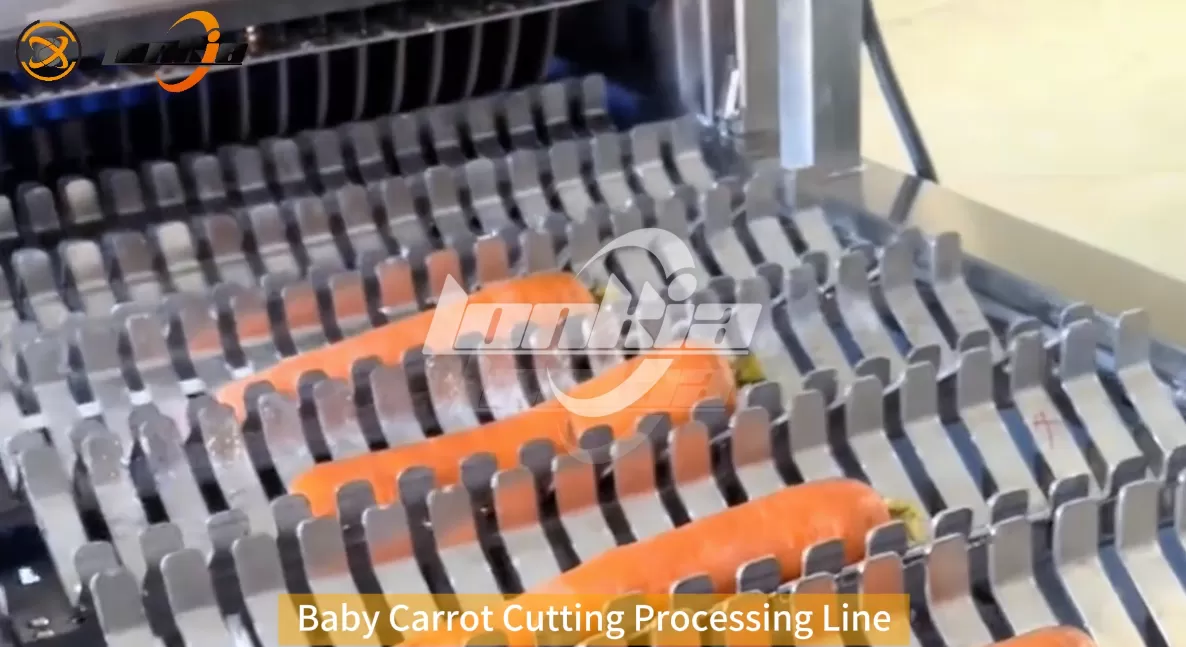
1. Raw Material Handling: Receiving, Sorting & Grading
A turnkey line begins with efficient raw carrot intake and sorting. Even at this early stage, equipment design directly influences product quality and downstream yield.
Receiving Hopper & Conveyor Feeding
Fresh carrots typically arrive in bulk crates or bins. A receiving hopper with a belt conveyor offers:
steady and controlled feeding
reduced manual handling
prevention of clogs and accumulation
consistent throughput for the washing section
Variable-speed drives allow the operator to match feeding rates with the rest of the line.
Pre-cleaning & Stone Removal
Before full washing, processors often remove stones, soil lumps, and debris. Common equipment includes:
dry debris removal rollers
air-separation blowers
water float tanks (hydro separators)
Removing heavy foreign material protects washing tanks, peeling machines, and cutting blades from damage.
Optical Sorting & Manual Trimming Tables
Optical sorters can detect:
size deviations
misshapen carrots
surface defects
rot or mold
For mid-sized processors, a stainless steel manual inspection table with LED lighting remains cost-effective and ensures foreign objects are removed before washing.
2. Washing Systems — Ensuring Clean, Residue-free Carrots
Washing is one of the most important steps in carrot processing, as soil, pesticides, and field debris must be thoroughly removed.
Bubble Washing Machine
A bubble washer uses high-pressure air injected through perforated pipes. The turbulence lifts dirt from carrot surfaces while being gentle enough to prevent bruising. Advantages:
efficient soil removal
adjustable agitation intensity
continuous feeding and discharge
sanitary, easy-to-clean design
Drum Washer / Rotary Washer
For carrots with heavy soil attachments, a drum washer provides:
long retention time
abrasion effect for deep cleaning
high-volume cleaning capacity
Its internal screw helps gently move carrots forward while spray bars rinse away loosened dirt.
High-Pressure Spray Tunnel
After immersion washing, a spray tunnel provides final cleaning using:
multi-angle jets
adjustable pressure
filtered circulating water
This ensures no contaminants remain before peeling.
3. Peeling Technology — Abrasive vs. Steam Peeling
Peeling dramatically affects product appearance, texture, and yield. Processors typically choose between:
Abrasive Peeling Machines
Abrasive peelers use carborundum rollers or plates to remove carrot skin. Key benefits:
lower capital cost
adjustable peeling rate
continuous operation
suitable for fresh-cut and diced carrot processing
However, abrasive peeling removes a small amount of flesh, reducing yield compared to steam technology.
Steam Peeling Systems
Steam peeling releases carrot skin using high-pressure steam followed by a rapid pressure drop.
Advantages:
extremely high yield
minimal flesh loss
smooth product surface
ideal for premium or ready-to-eat applications
Though more expensive, steam systems lead to significant long-term savings for processors with high daily throughput.
For a complementary perspective, refer to Steam Peeler vs Abrasive Peeler: Which One Should You Choose?
4. Cutting & Size Reduction — Sticks, Cubes, Slices, and More
Once peeled, carrots move to cutting equipment. Different markets require specific shapes:
Carrot sticks for snacks, food service, and ready-to-eat packs
Slices for canning and dehydrated products
Cubes (diced) for frozen or dehydrated applications
Julienne strips for mixed vegetables
Crinkle cuts for premium visual appeal
Multi-Functional Vegetable Cutting Machines
Modern cutters offer interchangeable blades for various shapes. Features include:
high-speed, consistent cuts
smooth surfaces to reduce microbial risks
accurate sizing for standardized product weight
stainless steel design for hygiene
These machines maintain uniformity across large volumes—critical for IQF freezing or packaging.
Specialized Dicers & Strip Cutters
Industrial dicers produce precise cubes (3–25 mm) for soup mixes, frozen blends, and ready meals. Strip cutters generate julienne formats popular in fresh vegetable packs.
Quality Control After Cutting
Optical sorters or vibrating screens help remove:
off-spec pieces
too-small particles
broken carrot ends
This ensures consistent product quality before thermal or packaging steps.
5. Blanching — Color Retention & Enzyme Control
Blanching is essential for products destined for freezing, drying, or canning.
Why Blanch Carrots?
Blanching:
inactivates enzymes that cause discoloration
stabilizes texture during storage
reduces microbial load
enhances color vibrancy
prepares carrots for IQF freezing
Typical Blanching Equipment
hot water blanchers
steam tunnel blanchers
continuous belt blanchers
Temperature and dwell time depend on cut size and product type.
6. Cooling & Dewatering
After blanching, carrots must be cooled quickly. Common equipment includes:
ice-water cooling tanks
air-drying conveyors
centrifugal dewaterers
Rapid cooling preserves color and texture while reducing microbial risk.
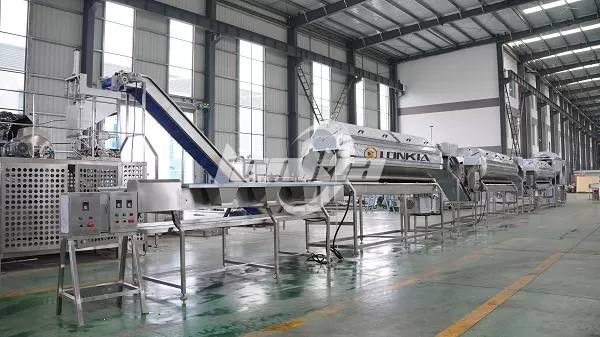
7. Drying & Dehydration Systems — Preparing Carrots for Long Shelf Life
Depending on the final product—fresh-cut, frozen, or dehydrated—drying requirements vary.
Air Drying for Fresh-cut Carrots
For ready-to-eat carrot sticks, slices, or salad mixes, drying aims to remove surface moisture.
Typical equipment includes:
air knife dryers
vibratory air-drying conveyors
belt air dryers with adjustable airflow
Benefits:
reduces microbial growth
prevents water pooling in packaging
improves MAP (modified atmosphere packaging) stability
Belt Dryers for Dehydrated Products
When producing dehydrated carrot flakes, powders, or granules, multi-layer belt dryers are used.
Key features:
controlled airflow and temperature
multi-stage drying zones
moisture monitoring systems
uniform heat distribution
This ensures consistent dehydration without scorching or case-hardening.
Fluid Bed Dryers for Granular or Diced Carrots
Fluidized drying helps:
maintain product shape
achieve uniform moisture removal
reduce thermal damage
increase throughput
Widely used in mid–large scale dehydrated carrot factories.
8. Freezing Solutions — IQF for Long-term Storage
For frozen carrot cubes, sticks, or slices, Individual Quick Freezing (IQF) is the industry standard.
Fluidized IQF Freezers
These systems circulate cold air around individual pieces, preventing clumping.
Advantages:
maintains piece integrity
superb color retention
fast freeze times
high yield and consistency
Spiral Freezers
Spiral systems are used when processing large volumes with limited floor space.
Benefits:
long residence time
compact footprint
high-capacity continuous operation
Both types integrate directly with upstream cooling and downstream packaging machinery.
9. Packaging Systems — From VFFS to MAP
Packaging is the final step in a turnkey carrot processing line, influencing shelf life, appearance, and distribution.
Vertical Form-Fill-Seal (VFFS) Machines
Suitable for:
diced carrots
sliced carrots
dehydrated carrot products
frozen IQF pieces
Key features:
high-speed pouch production
accurate multi-head weighing
continuous packaging for consistent throughput
MAP Packaging for Fresh-cut Carrots
Modified Atmosphere Packaging is ideal for fresh-cut carrot sticks and ready-to-eat packs.
Capabilities:
gas flushing (O₂ reduction / CO₂ balance)
extended shelf life
tamper-evident sealing
retail-friendly clear pouches
Cartoning & Case Packing
For large-volume operations, secondary packaging ensures logistic efficiency.
Automation options:
robotic case packers
tray formers
palletizers
These systems help processors scale with minimal manpower.
10. Designing a Complete Turnkey Carrot Processing Line
Each facility requires a customized layout to maximize space, energy, and production goals.
Capacity Planning
Daily throughput determines:
washing tank size
peeler quantity
dryer capacity
number of packaging lanes
Example capacities:
500–2000 kg/h small–medium processors
5–10 tons/h large-scale factories
Hygienic Plant Layout
A good layout prevents cross-contamination through:
raw vs. clean zone separation
CIP-compatible equipment
smooth material flow
washable floor and drainage design
food-grade stainless steel
Utility Requirements
A turnkey line must calculate:
steam consumption
water circulation needs
compressed air
refrigeration load
electrical power distribution
Correct utility design avoids bottlenecks and energy waste.
Staff Workflow & Safety
Efficient lines consider:
ergonomic operator positions
maintenance access zones
safety guards and emergency stops
minimal heavy lifting
11. FAQ — Turnkey Carrot Processing Systems
Q1: What is a turnkey carrot processing line?
A complete system that integrates washing, peeling, cutting, drying, packaging, and automation under one engineered workflow.
Q2: How do I choose between abrasive and steam peeling?
Abrasive: lower cost, suitable for fresh-cut
Steam: higher yield, ideal for premium or large-scale production
Q3: How much space do I need for a full processing line?
Typically 200–800 m², depending on capacity and layout.
Q4: What is the typical water consumption?
Most lines use recycling filtration systems, reducing water use by 30–60%.
Q5: Can the line produce multiple carrot formats?
Yes. With modular cutting machines, processors can produce:
sticks
slices
julienne
cubes
crinkle cuts
Q6: What certifications do the machines comply with?
Most high-quality lines follow CE, ISO, FDA, and HACCP standards.