
The global demand for crate washing machines is evolving rapidly. With industries such as food processing, agriculture, logistics, and retail relying heavily on reusable crates, the need for cleaner, faster, and more sustainable washing solutions has never been greater. Businesses are no longer satisfied with machines that simply clean crates; they now expect equipment that is smarter, more energy-efficient, and integrated into larger production and logistics systems.
1. Why Future Trends Matter
Traditionally, crate washing machines were seen as auxiliary equipment—necessary for hygiene, but not central to business strategy. Today, that perception has changed. Several factors are driving innovation:
Food safety regulations are becoming stricter worldwide.
Sustainability goals push industries to save water, reduce chemicals, and cut carbon emissions.
Labor shortages and rising wages increase the need for automation.
High crate circulation volumes in global supply chains demand more efficient systems.
Understanding where crate washing technology is heading allows businesses to future-proof their operations and avoid costly upgrades later.
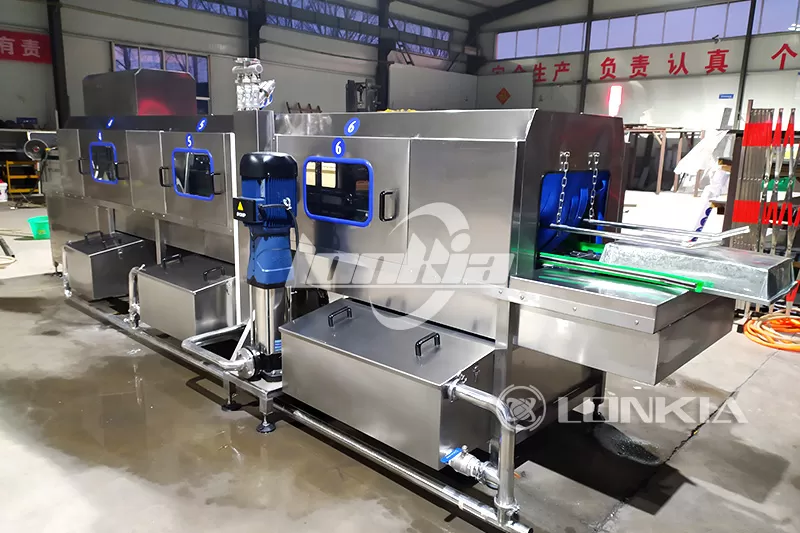
2. Key Future Trends in Crate Washing Machines
2.1 Advanced Automation and Robotics
Future crate washing machines will increasingly adopt automation and robotics. Instead of relying on manual loading and unloading, robotic arms and automated conveyors will streamline crate handling.
Automated sorting: Machines will detect crate size, shape, and contamination level, adjusting wash cycles accordingly.
Self-adjusting wash parameters: Sensors will monitor dirt levels and optimize water pressure, detergent dosage, and cycle time.
Integration with robotics: Robotic stacking and de-stacking reduce human involvement, improving speed and workplace safety.
Impact:
Higher throughput with fewer workers.
Reduced risk of crate damage from manual handling.
Seamless integration into Industry 4.0 production lines.
2.2 Sustainability and Eco-Friendly Design
As industries pursue green manufacturing, crate washing machines will place even greater emphasis on reducing environmental impact.
Water recycling systems will reuse up to 80–90% of process water.
Energy recovery systems will capture and reuse heat from rinse cycles.
Eco-friendly detergents will replace aggressive chemicals.
Modular systems will allow operators to scale capacity without waste.
Impact:
Lower operational costs.
Easier compliance with corporate sustainability and ESG commitments.
Reduced environmental footprint for industries with high crate turnover.
2.3 Digitalization and Smart Monitoring (IoT)
IoT-enabled crate washing machines will provide real-time data monitoring and predictive analytics.
Data tracking: Monitor water usage, energy consumption, and cleaning cycles.
Predictive maintenance: Sensors detect wear and tear before breakdowns occur.
Cloud connectivity: Managers can access machine performance dashboards remotely.
Traceability: Crates can be tagged with RFID or QR codes, linking each wash cycle to hygiene documentation.
Impact:
Optimized resource usage.
Reduced downtime due to proactive maintenance.
Stronger compliance evidence for audits.
2.4 Higher Hygiene Standards and Compliance
Food and beverage sectors face increasingly stringent hygiene regulations. Future crate washers will integrate more advanced sanitization technologies:
UV-C disinfection as an additional sanitizing stage.
Ozone-based sanitizers replacing or supplementing chemical agents.
Automated validation systems that record proof of sanitization for audit purposes.
Impact:
Stronger assurance of compliance with HACCP, FDA, and EU standards.
Reduced reliance on manual hygiene inspections.
Increased consumer trust in product safety.
2.5 Modular and Flexible System Designs
Not all businesses require the same throughput. Future crate washing solutions will be modular and adaptable:
Expandable modules: Businesses can add pre-wash, drying, or sanitizing units as needed.
Compact designs: For small-scale operations like catering or regional distribution centers.
Customizable layouts: Fit into existing production facilities without major redesign.
Impact:
Lower upfront costs for SMEs.
Ability to scale capacity with business growth.
Tailored solutions that fit diverse industries.
2.6 Integration with Circular Economy and Reusable Packaging
As industries shift toward reusable packaging and circular economy models, crate washers will play an even more central role.
Reusable Transport Items (RTIs) like crates, trays, and pallets will dominate supply chains.
Crate washers will be required in centralized washing hubs serving multiple companies.
Partnerships may emerge between logistics providers and washing service companies.
Impact:
Lower packaging waste and disposal costs.
Stronger collaboration across industries (food, retail, pharma).
Opportunities for service-based business models.
2.7 Service-Oriented Business Models (Washing-as-a-Service)
Instead of investing heavily in equipment, some businesses may prefer subscription-based crate washing services.
Leasing models: Pay a monthly fee for machine use.
Service outsourcing: Crates are collected, washed in centralized hubs, and redistributed.
Performance contracts: Suppliers guarantee hygiene outcomes rather than just selling machines.
Impact:
Reduced upfront investment for small and medium enterprises (SMEs).
More predictable operational expenses.
Higher adoption rates of advanced washing technology.
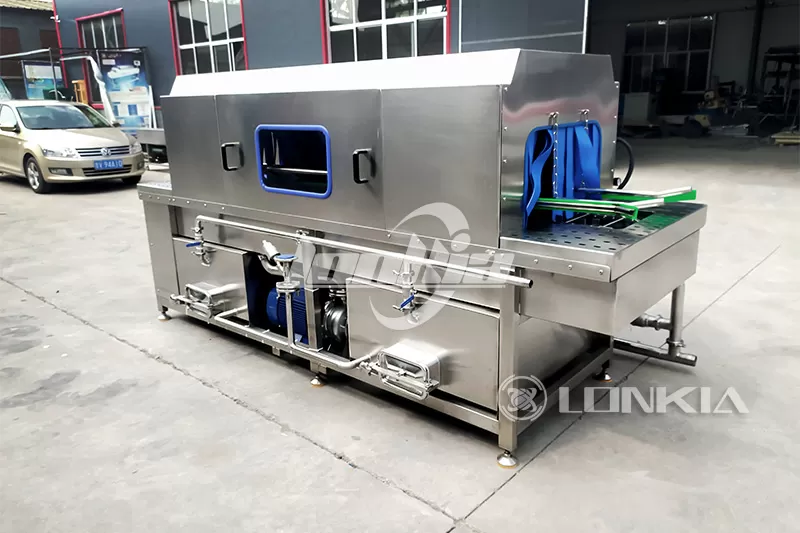
3. Industry Examples of Future Adoption
Food Processors: Will benefit from automation and advanced sanitization to meet stricter regulations.
Agriculture & Farms: Modular crate washers with soil-handling capabilities will be more common.
Retail & Logistics: Centralized washing hubs may serve entire distribution networks.
Pharmaceutical & Healthcare: Rising need for sterile, traceable washing systems for reusable containers.
The future of crate washing machines lies in automation, sustainability, smart monitoring, modular design, and new service models. These trends are driven by the increasing demands of global supply chains, stricter hygiene regulations, and the push toward greener operations.For businesses, this means crate washing machines will no longer be seen as “supporting equipment” but as strategic assets that safeguard product quality, reduce costs, and align with future sustainability goals.Companies that adopt these innovations early will be better positioned to remain competitive, comply with evolving regulations, and meet the expectations of customers and regulators alike.
If you are considering upgrading or investing in crate washing technology, now is the time to explore future-ready solutions that combine efficiency, compliance, and sustainability.