
In industrial banana processing, peeling is far more than a simple pre-processing step — it’s the foundation that determines the overall product yield, texture, color, and food safety. Whether bananas are destined for chips, puree, baby food, or freeze-dried snacks, the quality of peeling directly influences both productivity and profitability.
Today, two main technologies dominate the banana peeling process: steam peeling and mechanical peeling. Each has its distinct advantages and operational challenges. Steam peeling utilizes high-pressure steam to loosen and remove banana skins rapidly and hygienically, while mechanical peeling relies on physical friction, blades, or brushes to strip off the skin.
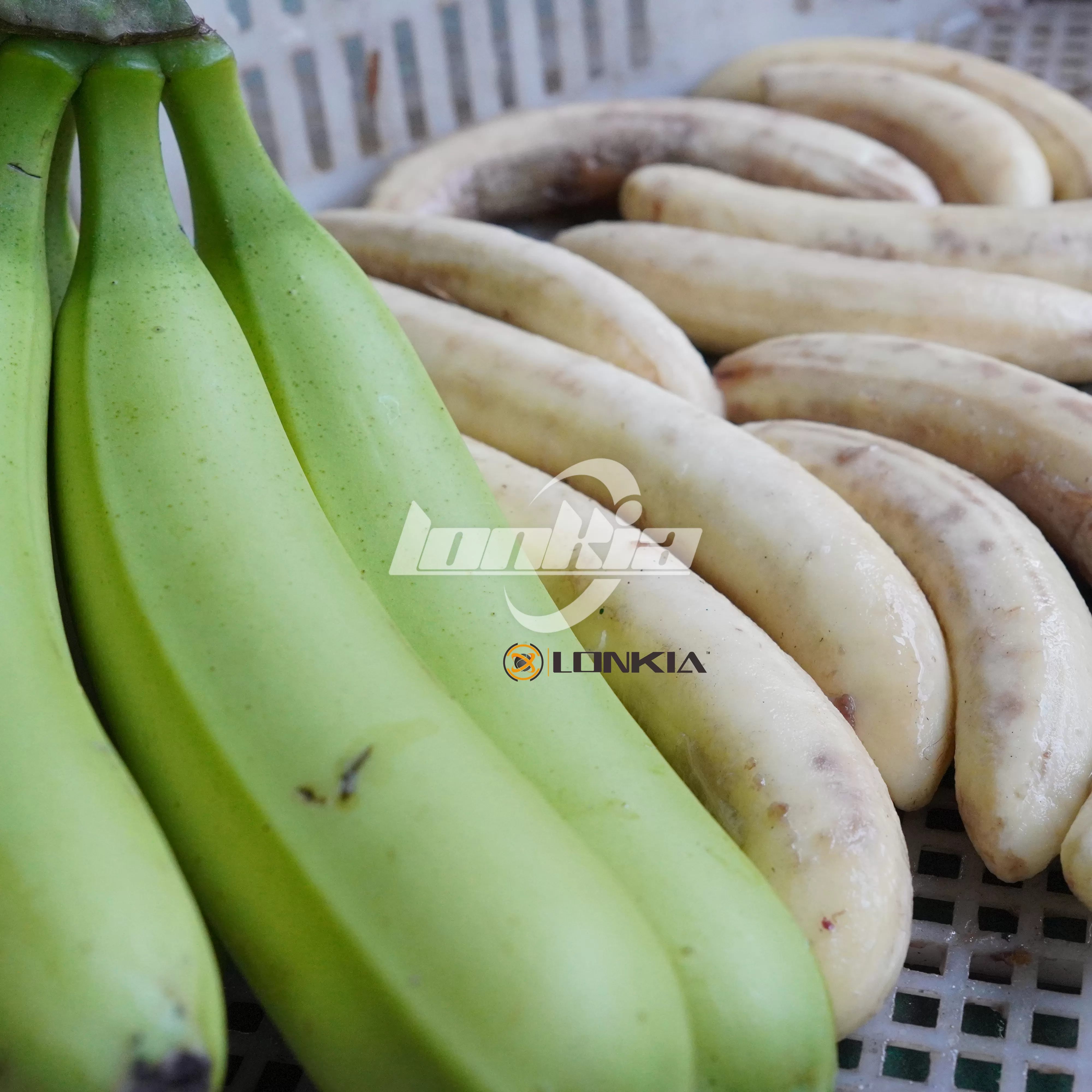
1. Industrial Requirements for Banana Peeling
Why Banana Peeling Matters in Food Processing
Peeling bananas at an industrial scale isn’t just about removing the skin — it’s about achieving consistency, minimal flesh loss, and high-quality raw material for subsequent processes such as slicing, frying, or blending. The peel adheres closely to the banana flesh, and its texture varies by ripeness, making efficient peeling a technical challenge.
Inconsistent peeling can lead to significant production losses. For instance, if 5% of the banana flesh is unintentionally removed during peeling in a 10-ton-per-hour factory, that’s 500 kg of usable material wasted per hour. Beyond yield, peeling also affects downstream processing — poorly peeled fruit can cause clogging in slicers, contamination during frying, or uneven drying.
Therefore, choosing the right banana peeler machine is not merely a matter of automation level — it directly impacts product quality, energy use, and long-term profitability.
Key Factors to Consider When Choosing a Peeling Technology
When comparing steam banana peelers and mechanical banana peelers, industrial buyers must evaluate multiple performance dimensions:
Processing Capacity (kg/h): Does the machine handle your current and future throughput requirements?
Peeling Yield and Waste Ratio: How much flesh is lost per batch?
Hygiene and Food Safety: Does the system meet HACCP, FDA, or EU standards for food-grade cleanliness?
Energy and Water Consumption: How efficiently does it use utilities such as steam, electricity, and water?
Operational Simplicity and Maintenance: How easy is it to clean, disassemble, and service?
Durability and Reliability: Does the system withstand long shifts and varied fruit conditions?
Total Cost of Ownership (TCO): Beyond initial cost, consider labor, maintenance, and waste over several years.
A well-optimized banana peeling line should combine high throughput, low waste, superior hygiene, and energy efficiency — a balance that’s not always easy to achieve. Let’s now explore how each technology performs across these parameters.
2. Steam Banana Peeling: How It Works and Why It’s Gaining Popularity
How Steam Peeling Works
Steam peeling uses high-pressure, high-temperature steam to loosen the banana skin without damaging the fruit’s surface. Bananas are first loaded into a sealed chamber. Steam is injected at controlled pressure (typically 6–10 bar) for several seconds. The heat rapidly expands the air and moisture under the banana skin, breaking the bond between peel and pulp.
When the chamber is depressurized, the skin bursts and detaches naturally. Residual peel fragments are removed using water jets, air blowers, or gentle brushes. The result is a clean, smooth, and minimally damaged banana surface — ideal for downstream processes like slicing, blending, or freezing.
Equipment Types and Process Flow
Modern industrial steam banana peelers come in two main designs:
Batch-type steam peelers: Bananas are loaded in batches into a pressure chamber. After steaming, the chamber vents rapidly, and the loosened skins are rinsed away. This model suits medium-scale operations.
Continuous rotary steam peelers: A rotating drum continuously feeds bananas through a controlled steam zone, achieving uninterrupted operation for high-capacity factories.
A typical steam peeling line includes:
Feeding conveyor
Steam chamber
Venting and peel removal system (water or air)
Cooling and inspection conveyor
Waste collection unit
This continuous and closed-loop design minimizes manual handling, enhancing hygiene and consistency.
Advantages of Steam Peeling
Steam peeling offers several measurable benefits that explain its growing adoption in modern banana processing plants:
Exceptional Peeling Efficiency:
Steam penetration uniformly loosens the skin, achieving peeling rates above 95–98% even for irregular or overripe bananas.Superior Hygiene:
The high-temperature steam inherently sterilizes the fruit surface, reducing microbial load and eliminating pesticide residues — a major compliance advantage under modern food safety standards.Minimal Product Loss:
Since steam only affects the peel layer, the underlying flesh remains intact, preserving yield and texture.Labor and Time Savings:
Fully automated systems eliminate manual peeling, reducing labor costs and ergonomic strain.Versatility:
Steam peelers handle a wide range of banana sizes and ripeness levels without frequent mechanical adjustments.Environmental Benefits:
Steam systems recycle condensate and minimize water usage compared to prolonged mechanical washing or brushing.
Limitations of Steam Peeling
Despite its advantages, steam banana peeling has several considerations:
High Initial Investment: Steam systems require pressure vessels, boilers, and condensate recovery — significant capital costs for small-scale processors.
Energy Demand: Continuous steam generation consumes considerable fuel or electricity.
Process Control Sensitivity: Overexposure to steam can partially cook bananas, altering texture and flavor; precise time–temperature control is critical.
Maintenance of Steam Lines: Valves, gaskets, and pressure controls require periodic inspection to maintain efficiency and safety.
In summary, steam peeling is a premium, high-performance solution best suited for medium to large factories seeking top-tier hygiene and efficiency.
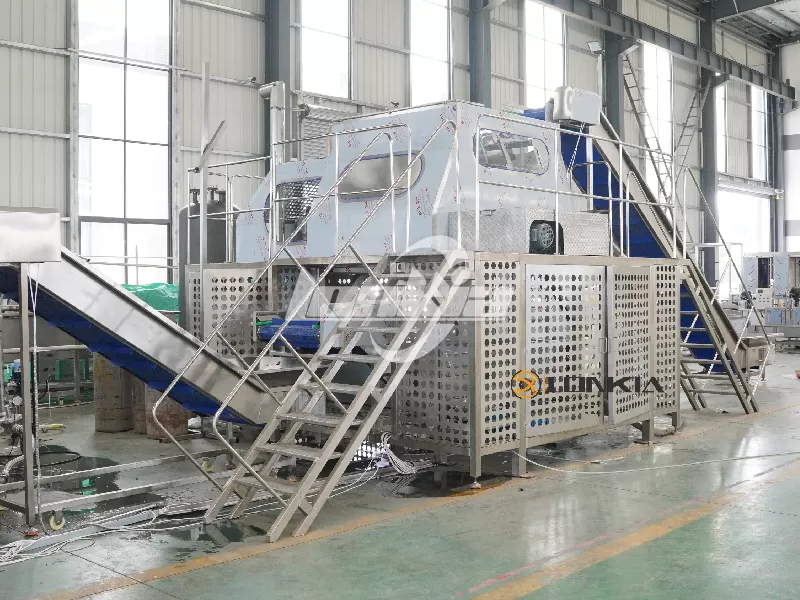
3. Mechanical Banana Peeling: How It Works and Where It Fits Best
Working Principle
Mechanical banana peelers rely on physical action — friction, abrasion, or cutting — to remove the skin. The most common types include:
Rotary drum peelers with abrasive surfaces
Knife or blade-based peelers for precise cuts
Brush-type peelers that use rotating bristles to rub off the skin
Bananas are fed into the system, where rotating parts scrape or cut the peel away. The peeled fruits are then rinsed and sorted for downstream use.
Equipment Types and Typical Setup
A standard mechanical banana peeling system includes:
Infeed and alignment conveyor
Cutting or friction module
Water spray for skin removal
Inspection and sorting conveyor
Waste discharge section
Mechanical peelers are easier to install — they require no pressure vessels or steam boilers — making them a practical option for smaller food processors or regions with limited energy infrastructure.
Advantages of Mechanical Peeling
Lower Initial Cost:
The equipment and setup are significantly cheaper than steam-based systems, offering a faster payback for new factories.Simpler Operation and Maintenance:
No high-pressure systems or boilers to maintain. Operators can quickly clean and replace worn parts.Lower Energy Consumption:
Running on electricity and water only, mechanical peelers often have lower energy costs per ton.Compact and Flexible:
Ideal for small-batch production, pilot plants, or multi-fruit lines (bananas, mangoes, kiwis).Easier Integration:
Mechanical peelers can fit into existing processing lines without significant redesign.
Limitations of Mechanical Peeling
Higher Product Loss:
Physical abrasion can remove part of the banana flesh, increasing waste. Losses typically range from 5–10% depending on setup.Lower Hygiene:
Continuous mechanical contact with food surfaces increases microbial risk if cleaning (CIP) is not frequent.Inconsistent Results:
Peeling performance varies with banana size, curvature, and ripeness. Unripe or overripe fruits may cause clogging or partial peeling.Maintenance Downtime:
Brushes, blades, and rollers wear out and require periodic replacement to maintain efficiency.
Despite these downsides, mechanical peelers remain a cost-effective, entry-level option for small to medium processors prioritizing flexibility and budget.
4. Steam vs. Mechanical Banana Peeling: Detailed Performance Comparison
While both steam and mechanical banana peelers can effectively remove banana skins, their real-world performance diverges significantly when we evaluate efficiency, hygiene, operating costs, and product quality. Below is a category-by-category breakdown designed for plant engineers and purchasing teams evaluating industrial banana peeling systems.
4.1 Throughput and Efficiency
Steam peeling systems generally outperform mechanical systems in high-capacity environments. Continuous rotary steam peelers can process up to 5–10 tons per hour, depending on the model and fruit size. Because the process is automated and non-contact, bottlenecks caused by irregular banana shapes are minimal.
By contrast, mechanical peelers often max out around 2–3 tons per hour. Throughput is limited by the friction or cutting mechanism and by frequent cleaning intervals. Moreover, mechanical systems tend to produce more rejects — unpeeled or partially peeled bananas — requiring reprocessing or manual finishing.
Verdict:
For large-scale production lines where consistency and throughput matter most, steam banana peelers offer significantly higher operational efficiency.
4.2 Product Quality and Yield
In banana processing, yield equals profit. The amount of edible fruit recovered after peeling directly impacts factory margins.
Steam peelers typically achieve flesh loss below 2%, since steam loosens the peel without cutting into the pulp. The gentle process preserves the banana’s natural shape, color, and texture — a critical factor for products like frozen banana slices or premium banana puree.
Mechanical peelers, on the other hand, often remove 5–10% of the fruit flesh, depending on blade sharpness and peel thickness. This not only reduces yield but can also affect appearance, as abrasion marks may appear on the fruit surface.
Verdict:
For applications that require intact fruit and minimal waste, steam peeling provides a clear yield advantage.
4.3 Hygiene and Food Safety
Food hygiene is a non-negotiable standard in modern banana processing facilities. Steam peeling delivers a decisive advantage in this area.
The high-temperature steam (120–180°C) kills bacteria, mold spores, and pesticide residues present on the peel. The process occurs in a closed, pressurized system, minimizing airborne contamination. Additionally, the short exposure time ensures the fruit’s surface remains microbiologically clean without affecting internal quality.
Mechanical peelers, in contrast, rely on physical contact — blades, brushes, and rollers all touch the fruit. These components can harbor residues and microbial growth if not cleaned properly. Frequent CIP (clean-in-place) procedures are required, but even then, achieving sterilization-level hygiene is difficult.
Verdict:
From a food safety perspective, steam banana peelers are far more hygienic and compliant with HACCP and FDA standards.
4.4 Energy Consumption and Operating Costs
At first glance, steam systems appear energy-intensive, as they require boilers or steam generators. However, when scaled properly and optimized with condensate recovery, energy cost per kilogram of peeled fruit can be lower than expected — particularly in high-volume operations.
Mechanical peelers consume less energy overall, relying mainly on motors and water sprays. Yet they can generate more waste and require more frequent maintenance, leading to indirect operating costs.
Here’s a simplified comparison example:
| Parameter | Steam Peeler | Mechanical Peeler |
|---|---|---|
| Energy Source | Steam (fuel/electric) | Electricity |
| Energy Cost (per ton) | Moderate (with recovery) | Low |
| Maintenance Frequency | Medium | High |
| Labor Requirement | Low | Medium |
| Flesh Waste | 1–2% | 5–10% |
Verdict:
While mechanical peelers have lower upfront costs and energy bills, steam systems often win in total cost of ownership (TCO) after 1–2 years of operation due to higher yield and lower labor costs.
4.5 Maintenance, Downtime, and Reliability
Mechanical systems involve many moving parts — blades, brushes, belts — all subject to wear and frequent adjustment. Downtime for cleaning or parts replacement can account for 5–10% of total production time.
Steam systems, being mostly sealed and automated, have fewer wear points. Routine maintenance focuses on valves, seals, and sensors rather than mechanical friction components. Moreover, because steam peelers operate in cleaner environments, contamination-related downtime is reduced.
Verdict:
Steam peelers offer superior reliability for continuous, high-throughput banana processing.
4.6 Adaptability to Different Banana Types
Bananas vary by size, ripeness, and peel adhesion. Steam systems adapt well to this variability — steam penetrates evenly regardless of peel toughness. Mechanical systems, however, may struggle with overripe bananas (too soft) or under-ripe ones (too tough), requiring constant adjustments to roller pressure or blade spacing.
Verdict:
For processors dealing with variable raw materials, steam peeling provides better flexibility.
5. Choosing the Right Banana Peeling Solution
5.1 Decision Framework
When selecting between steam and mechanical peeling, consider these factors:
| Criteria | Ideal for Steam Peeling | Ideal for Mechanical Peeling |
|---|---|---|
| Production scale | > 5 tons/hour | < 3 tons/hour |
| Hygiene requirements | HACCP / export-grade | Local market |
| Budget availability | High initial capital | Low to medium |
| Utility access | Steam or boiler available | Electricity only |
| Labor cost sensitivity | High | Moderate |
| Product type | Chips, puree, frozen | Small-batch or mixed fruit |
In short:
Choose steam for long-term efficiency, export-grade hygiene, and high-volume processing.
Choose mechanical for cost-sensitive operations or where steam infrastructure is unavailable.
5.2 10-Point Implementation Checklist
Confirm available utilities (steam, water, electricity).
Assess target throughput and scalability.
Evaluate fruit variability (size, ripeness, texture).
Analyze yield loss and current waste cost.
Review hygiene standards (HACCP, ISO, FDA).
Estimate installation space and workflow integration.
Plan for operator training and safety protocols.
Evaluate after-sales service and spare part availability.
Calculate TCO and ROI using a 2–3 year horizon.
Conduct pilot testing before full-scale rollout.
6. Frequently Asked Questions (FAQ)
Q1: Does steam peeling cook the bananas?
No. Steam exposure is brief (usually <10 seconds). Proper control ensures only the peel softens while the pulp remains raw and intact.
Q2: Can mechanical peelers achieve export-grade hygiene?
Possible, but challenging. It requires strict cleaning schedules and stainless-steel contact parts compliant with food-grade standards.
Q3: Can I combine steam and mechanical peeling?
Yes. Many factories now pre-treat bananas with low-pressure steam, followed by a mechanical brushing stage for optimal results.
Q4: How can I calculate ROI for switching to steam peeling?
ROI = (Annual Savings from Labor + Yield Increase – Energy Cost) ÷ Total Investment. Most payback periods range between 12–24 months.
Q5: What maintenance is critical for long-term reliability?
For steam peelers: inspect valves, gaskets, and pressure controls regularly.
For mechanical peelers: replace worn brushes/blades and ensure daily CIP cleaning.