
In the food processing and logistics industries, the cleaning of crates is often overlooked, yet it is one of the processes with the highest hidden costs. Many companies that rely on manual cleaning consume large amounts of water daily, yet struggle to quantify these costs. So, exactly how much water can a professional crate cleaning machine save? The answer not only relates to costs but also directly impacts production efficiency and equipment selection.
Why Is Manual Cleaning So Water-Intensive?
In traditional cleaning methods, workers typically use hoses to repeatedly rinse or soak the crates. This approach presents several obvious issues:
- Water flow cannot be precisely controlled and is often left running continuously
- Repeated rinsing leads to severe water waste
- Cleaning standards are inconsistent, requiring multiple repetitions
In practice, manually cleaning a single crate often requires 10–15 liters of water, which cannot be recycled, resulting in a continuous rise in overall water costs.
Core Water-Saving Principles of Crate Cleaning Machines
Compared to manual methods, the water-saving capabilities of automated equipment stem from systematic design rather than single-function optimization.
1. Multi-Stage Water Recirculation System
The plastic crate washing machine typically employs a pre-wash + main wash + rinse structure, with water from different stages being utilized in a tiered manner. For example:
- Rinse water is recirculated back to the pre-wash stage
- Main wash water is reused
This tiered utilization model reduces the amount of fresh water required, significantly lowering consumption.
2. Filtration + Recirculation System
Modern equipment features built-in multi-stage filtration systems, including:
- Coarse filtration (removes debris)
- Fine filtration (removes grease particles)
The treated water can be reused repeatedly, reducing the need for frequent water changes.
3. High-Pressure Spraying Replaces High-Flow Rinsing
Crate cleaning machines utilize high-pressure nozzles:
- Precise coverage of both the interior and exterior of crates
- Improved cleaning efficiency
- Reduced water consumption per unit
By substituting flow rate with pressure, better cleaning results are achieved using less water.
Actual Water-Saving Effects: How Much Can Costs Be Reduced?
Based on industry data and equipment operating logic:
- Water consumption can be reduced by 60%–80%
- Some systems can minimize the need for fresh water replenishment
- While simultaneously reducing wastewater discharge and treatment costs
For example, with a recirculation system, water resources can be reused across multiple cleaning stages, significantly reducing overall consumption.
👉 In other words:
A cleaning process that originally required several tons of water daily can reduce consumption by more than half through an automatic crate washer machine.
Key Factors Affecting Water-Saving Performance
Not all crate washer machines deliver the same water-saving results; customers should consider the following when selecting a model:
- Whether it features a recirculation system: Equipment without recirculation capabilities has limited water-saving potential.
- Spray system design: Nozzle angles and pressure stability directly impact water usage efficiency.
- Cleaning stage configuration: Multi-stage cleaning is more water-efficient and effective than single-stage cleaning.
- Control system precision: Automatically controls water volume and cleaning duration to prevent waste.
How to Choose a More Water-Efficient Crate Washing Machine?
From the perspective of actual customer use, we recommend focusing on:
- Whether it supports water recirculation and filtration
- Whether it features a multi-stage washing structure
- Whether it supports parameter adjustment (pressure, time)
- Whether the equipment structure is easy to maintain
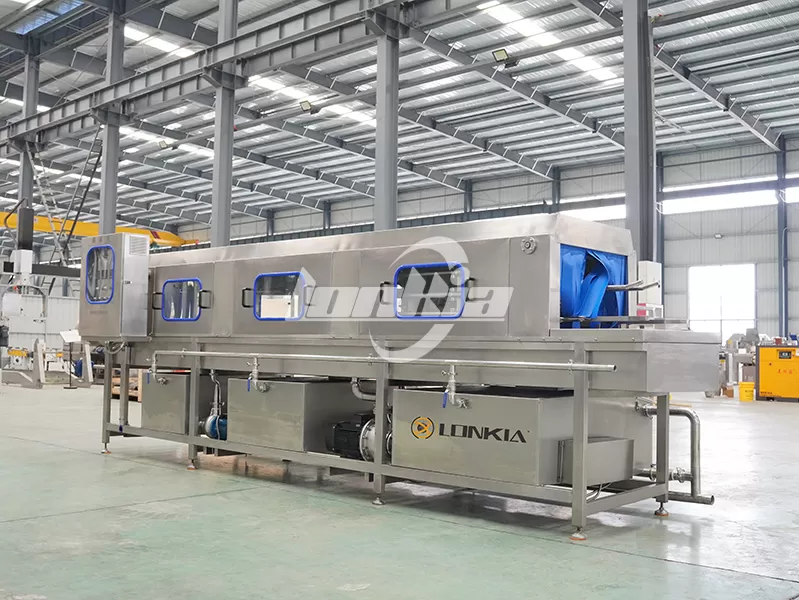
For example, the crate cleaning machines provided by Lonkia utilize structured water recirculation and high-pressure spray designs to effectively control water consumption while ensuring cleaning effectiveness, making them suitable for continuous production scenarios.
Summary: Water Conservation Is Essentially About Reducing Long-Term Costs
The water-saving capability of a crate cleaning machine is not merely about saving a little water, but rather:
- Reducing long-term operating costs
- Improving cleaning consistency
- Reducing human-induced waste
For enterprises that process large volumes of crates daily, this optimization is not an option but a crucial means of enhancing competitiveness.