
In the high-stakes world of industrial food processing, the difference between a thriving operation and a struggling one often boils down to a few percentage points of yield. If you are in the market for a Steam Peeler, you aren’t just buying a pressurized vessel; you are investing in the heart of your production line. Whether you are processing potatoes for French fries, carrots for dehydration, or tomatoes for canning, your choice of peeling technology will dictate your profit margins for the next decade.
However, many procurement managers make the mistake of focusing on the "sticker price" rather than the Total Cost of Ownership (TCO) and Yield Recovery.
Before you sign that purchase order, you need to look beyond the shiny stainless steel. Based on decades of engineering insights, here are the first two critical questions you must ask to ensure you don’t end up with a "profit-eating" machine.
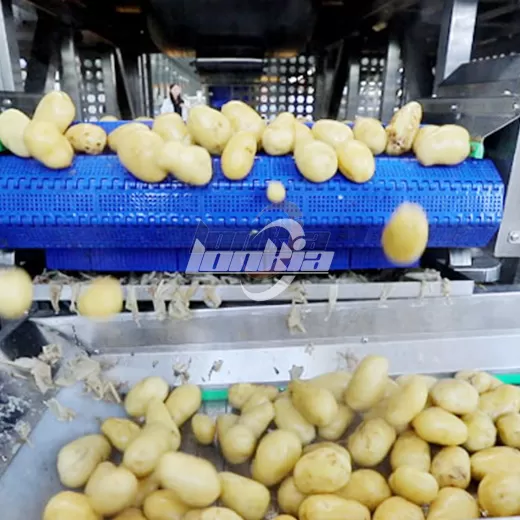
Q1: What is the "True" Peel Loss? (The Science of the Heat Ring)
The most common metric used to sell a Steam Peeler is the peeling percentage. But as an industry professional, you must ask for the True Peel Loss data across various raw material qualities.
The Hidden Enemy: The Heat Ring
When high-pressure steam is introduced into the vessel, the goal is to flash-boil the moisture just under the skin. If the steam technology is inefficient, the heat penetrates too deeply into the flesh of the vegetable. This creates what we call a "Heat Ring"—a layer of cooked starch that is subsequently removed by the dry peeler or washers.
If your Steam Peeler creates a 2mm heat ring instead of a 0.5mm one, the cumulative loss is staggering. For a plant processing 30 tons per hour, a 2% difference in peel loss can equate to over $500,000 in lost raw material annually.
What to ask the manufacturer:
"What is the typical steam-on time for a specific grade of potato?"
"How does the vessel design minimize the depth of the heat ring?"
"Can you provide a ROI calculation based on 1%, 2%, and 5% yield improvements?"
Dynamic Batch Control
A superior Steam Peeler doesn't treat every batch the same. Ask if the system uses intelligent weighing and skin-type sensors. If the machine treats a "thin-skin" summer potato the same as a "thick-skin" winter potato stored in a cellar, you are literally flushing money down the drain.
Q2: Is the Pressure Vessel Engineered for 24/7 Fatigue Life?
A Steam Peeler is a high-pressure environment that undergoes rapid cycles of pressurization and instant decompression—often every 60 to 90 seconds. This is one of the most mechanically demanding environments in any factory.
Material Integrity: 304 vs. 316 vs. Special Alloys
While many manufacturers claim to use "Stainless Steel," the grade and thickness matter immensely.
304 Stainless Steel is the standard, but in environments with high mineral content in the water or acidic product residue, it may succumb to pitting.
316L Stainless Steel or specialized carbon steel with high-grade liners often provides better longevity for the vessel's internal "skin."
Fatigue and Safety Standards
The rapid cycling causes the metal to expand and contract. Over time, poor-quality welds or sub-standard steel will develop micro-fractures.
The Deal-Breaker Questions:
Certification: Does the vessel meet ASME Section VIII (USA) or PED 2014/68/EU (Europe) standards? If a manufacturer cannot provide these certificates, walk away. Safety is non-negotiable.
Cycle Rating: How many cycles is the vessel rated for before a major structural inspection is required? A premium Steam Peeler should be engineered for over 1,000,000 cycles.
Steam Distribution: Does the vessel have internal baffles or a specialized steam inlet to ensure the product is tumbled evenly? Uneven steam distribution leads to "patchy" peeling, requiring expensive manual rework or secondary mechanical peeling.
Q3: Steam Consumption & Recovery – Are You Venting Profits?
The "Steam" in a Steam Peeler is its biggest operational expense. A common mistake is to only look at how fast a machine peels, without calculating how much energy it swallows to get the job done.
The Power of Rapid Exhaust
To achieve a clean separation of the skin from the flesh without deep cooking, the vessel must be depressurized almost instantaneously. This "flash" effect is what pops the skin off.
The Problem: Inefficient valves or poor exhaust design lead to a slow pressure drop, which drags out the cycle and wastes steam.
The Solution: Ask if the machine utilizes high-speed, large-bore exhaust valves. The faster the pressure drop, the less steam is needed per ton of product.
Steam Accumulators and Energy Balancing
Does your factory's steam boiler struggle when the peeler kicks in? A professional setup often includes a Steam Accumulator. This vessel acts as a buffer, storing energy during the "off" part of the cycle and releasing it rapidly when the peeler demands it.
Pro Tip: Ask your supplier if their system can be integrated with a heat recovery unit. Using the exhaust steam to pre-heat wash water can reduce your facility's total energy bill by up to 10-15%.
Q4: Intelligence & Sensor Integration – Is the Machine "Self-Aware"?
In the era of Industry 4.0, a "dumb" machine is a liability. Your Steam Peeler should be the smartest piece of equipment on the line.
Dynamic Weighting and PLC Control
Raw materials are never consistent. One truckload of potatoes might be small and muddy, while the next is large and clean.
The Sensor Factor: A premium system uses load cells to weigh the product inside the vessel in real-time. The PLC (Programmable Logic Controller) then automatically adjusts the steam-on time based on the actual weight, not a pre-set timer.
Recipe Management: Can your operators switch from "Sweet Potato" to "Carrot" at the touch of a button? A sophisticated HMI (Human-Machine Interface) should store dozens of "recipes" to ensure consistency across different shifts.
What to ask the manufacturer:
"Which PLC brand do you use? (e.g., Allen-Bradley, Siemens)"
"Can the system provide real-time data logging for yield analysis?"
"Does it have remote diagnostic capabilities for troubleshooting via the cloud?"
Q5: The Maintenance Reality – What Happens During Downtime?
Every hour your peeler is down, your entire production line stops. For a high-capacity French fry line, downtime can cost upwards of $10,000 per hour.
The "Wear Parts" Checklist
Steam peeling is a violent process. The grit, sand, and constant pressure take a toll. You must know the replacement intervals for:
Door Seals: These are the most common failure point. Are they made of high-grade food-safe elastomers? Can they be changed in 15 minutes, or does it take 4 hours?
Vessel Liners: Does the vessel have replaceable wear liners to protect the main structural shell from abrasion?
Exhaust Valves: These handle high-velocity steam mixed with abrasive peel fragments. Are they built for 24/7 duty?
Tool-less Maintenance & Accessibility
The best designs allow for "Tool-less" inspection of key areas. If your maintenance team has to dismantle half the machine just to check a seal, your OEE (Overall Equipment Effectiveness) will suffer.
The Missing Link: What Happens After the Steam?
A Steam Peeler loosens the skin, but it doesn't always remove it entirely. To achieve a "market-ready" finish, you must consider the Dry Peel Remover (DPR).
By using a dry brush system immediately after the steam vessel, you can remove up to 90% of the skin without using a single drop of water. This not only reduces water consumption but also allows you to collect the "peel waste" as a high-value, dry byproduct for animal feed, turning a waste stream into a secondary revenue stream.
Final Verdict: Buying Results, Not Just Steel
Investing in a Steam Peeler is a decision that will define your plant’s efficiency for the next 15 years. While the initial investment might be higher for a premium system, the ROI is usually realized within the first 12 to 18 months through:
Lower raw material waste (Yield).
Reduced energy and water consumption.
Higher uptime and lower maintenance costs.
Our Recommendation: Before you buy, ask for a trial or a site visit to see the machine in a real production environment. A confident manufacturer will always be happy to show you their "True Peel Loss" in action.
Need a Custom Peeling Solution?
Optimizing a peeling line requires a deep understanding of your specific raw material and capacity needs.
[Contact our engineering team today] for a free Yield Recovery Analysis and let us help you build a more profitable production line.