
Poultry farms and processing facilities deal with one recurring challenge every day: crates heavily contaminated with fat, feathers, manure, and organic residues. These materials are not only visually unpleasant—they create serious hygiene risks, harbor pathogens, accelerate odour buildup, and disrupt workflow efficiency.
High-pressure poultry crate washers have become an essential part of modern poultry operations. They combine mechanical force, targeted water delivery, solids separation, and controlled chemistry to ensure crates return to service hygienic, safe, and compliant.
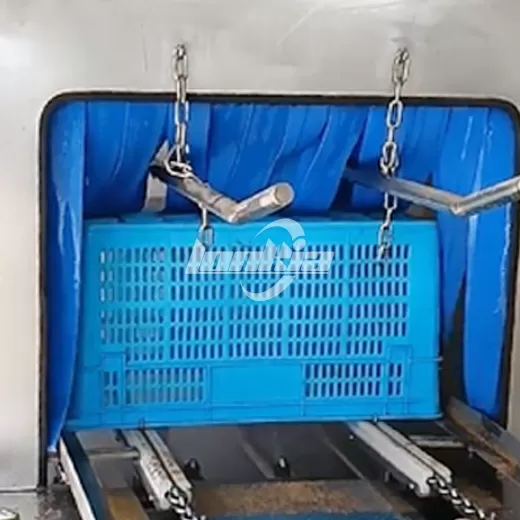
1. Why Effective Crate Washing Matters in Poultry Operations
Crates are used repeatedly for transporting live birds, storing processed poultry, handling carcasses, or supporting internal plant logistics. Because they cycle constantly between clean and dirty zones, the level of hygiene they maintain directly affects animal welfare, product safety, and regulatory compliance.
1.1 Pathogen control and food safety
Poultry crates carry biological contamination from feathers, manure, blood, and residual organic matter. These residues often contain harmful bacteria such as Salmonella, Campylobacter, and E. coli. Without a robust washing system, pathogens can survive and transfer to subsequent flocks or processing batches.
1.2 Operational efficiency
Dirty crates can slow down the entire production chain. When crates are not adequately cleaned:
loading teams waste time scraping and rinsing,
transport hubs struggle with inconsistent crate availability,
processing plants face delays in staging and stacking,
workers experience greater ergonomic strain.
High-pressure washing reduces these inefficiencies dramatically.
1.3 Equipment longevity and asset protection
Fat and manure are corrosive and abrasive. When allowed to accumulate, they accelerate wear on the crate surface and reduce structural lifespan. Clean crates last longer, stack more safely, and maintain their shape under load.
1.4 Compliance and audit readiness
Many countries require documented sanitation procedures for reusable items that contact live animals or raw meat. A properly functioning poultry crate washer supports:
HACCP plans
Biosecurity protocols
Third-party audits
Welfare and hygiene certification programs
2. The Three Primary Cleaning Challenges: Fat, Feathers, and Manure
Every crate washes differently, but the soil types are remarkably consistent across poultry facilities. Understanding the nature of these contaminants helps operators identify which parts of the washing cycle must be strengthened.
2.1 Fat and Grease
Fat is perhaps the most problematic contaminant. It is hydrophobic, sticky, and capable of re-solidifying in cooler wash zones. Fat often:
forms films that require mechanical force to break,
shields microorganisms from disinfectants,
contributes to slippery surfaces and safety hazards,
clogs pipes when mixed with cold water.
High-pressure washing disrupts fat films more effectively than low-pressure systems, improving both visual cleanliness and microbiological outcomes.
2.2 Feathers and Organic Solids
Feathers do not dissolve; they must be physically removed. Large quantities accumulate quickly during transportation or slaughter. Challenges include:
blocking nozzles and spray manifolds,
reducing pump performance,
causing drain backups and downtime,
sticking to crate corners and textured surfaces.
A well-designed washer includes pre-screens, large-diameter piping, and high-velocity jets that dislodge feathers without damaging crates.
2.3 Manure and Soil
Manure carries the highest bacterial load. It is dense, water-absorbing, and often baked onto surfaces, especially after transport in warm weather. The problems it causes include:
high organic load in wash water,
increased chemical consumption,
odour issues,
biofilm formation in tanks and piping.
High-pressure systems improve removal by combining force with targeted nozzle geometry and efficient water recycling.
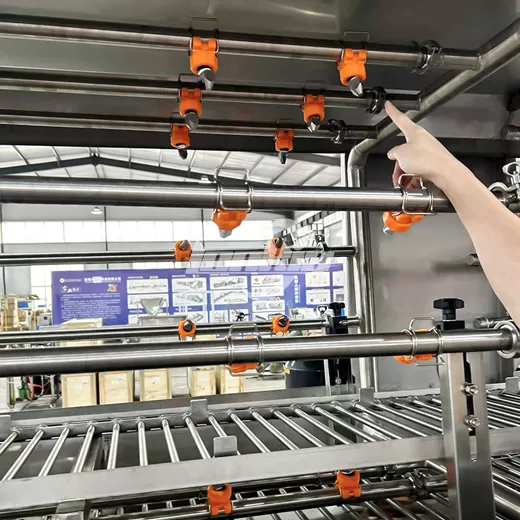
3. Key Components of an Industrial Poultry Crate Washer
Effective washing requires more than just pressure. A crate washer is an engineered system with multiple mechanical, hydraulic, and sanitation elements.
3.1 High-pressure pumps and manifolds
These generate the mechanical force required to strip away soil. Pump choice influences:
cleaning intensity
water usage
energy consumption
overall throughput reliability
Manifolds distribute pressure evenly to multiple nozzles placed at precise angles.
3.2 Nozzles and spray assemblies
Nozzle design determines water pattern, impact force, and soil removal performance.
Common nozzle types include:
fan jets for broad coverage
pencil jets for targeted removal
rotating spray heads for complex surfaces
Strategic placement ensures full 360° coverage of stacked crates.
3.3 Filtration and solids separation
Removing solids is essential for maintaining pressure and preventing clogging. Systems may include:
coarse screens
wedge-wire filters
settling tanks
centrifugal separators
automatic self-cleaning filters
Proper filtration reduces water and chemical usage and prevents pump damage.
3.4 Chemical dosing systems
Controlled chemical application enhances fat removal and supports disinfection.
Key features:
automated dosing for consistency
compatibility with alkaline or enzymatic cleaners
safe, enclosed chemical storage
Overdosing can increase costs and risk crate surface deterioration, making controlled dosing essential.
3.5 Control systems and safety interlocks
Modern washers are equipped with:
programmable logic controllers (PLC)
temperature and pressure monitoring
emergency stops
door interlocks
cycle logging for audits
Automation ensures repeatable results and reduces operator error.
4. Water Management, Solids Handling and Wastewater Treatment
Water quality and wastewater handling have major impacts on operational cost and regulatory compliance. Effective management ensures the system operates efficiently without excessive waste or environmental risk.
4.1 Water-use cycle in high-pressure systems
A typical cycle includes:
fresh water intake
wash and rinse usage
solids separation
partial water recycling
discharge or further treatment
Facilities handling heavy soil loads often incorporate multi-stage filtration before reuse.
4.2 Solids separation technologies
Solids must be removed to keep pumps and nozzles functioning properly.
Common methods include:
Screens: fast, cost-effective removal of feathers and large debris
Cyclonic separators: ideal for medium-density solids
Settling tanks: remove manure and organic fines through gravity
Centrifugal systems: for more efficient, continuous solids extraction
Good solids control prolongs equipment life and reduces maintenance.
4.3 Managing fat, oil, and grease
Fat management is essential for preventing blockages, unpleasant odours, and bacterial growth.
Facilities use:
surface skimmers
oil-water separators
coalescing plates
heated lines to prevent fat solidification
Proper fat management keeps circulation water stable and reduces chemical consumption.
5. FAQ
5.1 How does a poultry crate washer work?
A poultry crate washer works by moving crates through pre-wash, high-pressure wash, and rinse zones on a conveyor system. Nozzles deliver pressurized water at multiple angles to remove dirt, while filtration systems recycle water to reduce consumption.
5.2 How much water does a poultry crate washer use?
Water consumption varies by model, but modern crate washers typically use far less water due to multi-stage filtration and recirculation. Efficient systems can recycle up to 70–90% of wash water while maintaining sanitation performance.
5.3 Can a poultry crate washer remove biofilm?
Yes. High-pressure jets combined with heated wash water help break down biofilm. Proper nozzle configuration and stable temperature control are key to effective biofilm removal.
5.4 Are crate washers compatible with different crate types?
Most industrial washers are designed to handle multiple crate styles as long as the dimensions fit the conveyor. Adjustable guide rails and multi-angle nozzles improve compatibility.
5.5 What maintenance does a crate washer require?
Routine maintenance includes cleaning filters, inspecting nozzles, removing solids, checking pump performance, and verifying temperature stability. Most tasks are daily or weekly.