
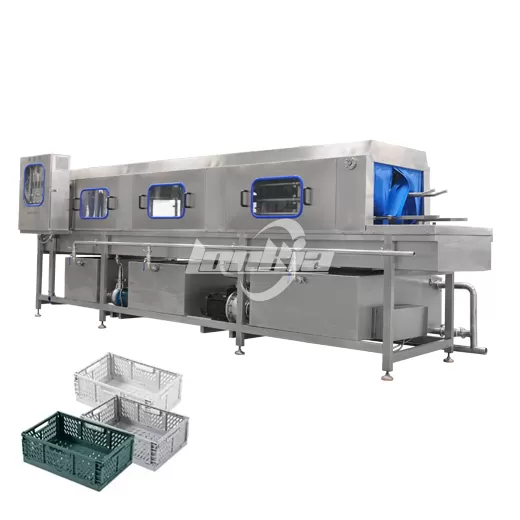
Clean, hygienic, and residue-free baskets are fundamental to any production line that handles food ingredients, agricultural products, seafood, pharmaceuticals, or internal logistics containers. In many facilities, baskets circulate hundreds or even thousands of times per day, carrying raw materials, semi-finished goods, or finished products between processing steps. As a result, a consistent and effective cleaning process is essential—not only for maintaining product safety and meeting regulatory requirements but also for preventing cross-contamination and improving operational efficiency.A basket cleaning machine offers a controlled, repeatable, and standardized method for washing baskets of different shapes and materials.
1. Step 1: Define Your Cleaning Requirements
Before comparing different basket cleaning machines, it is crucial to understand your production line’s actual needs. Every plant has unique challenges: varying basket dimensions, different soil types, diverse throughput demands, and compliance requirements specific to the industry. A clear needs assessment ensures that the chosen equipment can genuinely support the workflow and achieve the required hygiene standards.
1.1 Basket Types and Material Compatibility
Start by identifying the baskets used in your facility. Key factors include:
Dimensions and geometry: Some machines accept only standard sizes, while others support multiple widths and heights. If your facility uses a mix of stackable crates, mesh baskets, or heavy-duty plastic totes, ensure the machine can accommodate them without major adjustments.
Material considerations: Most industrial baskets are made of HDPE, PP, stainless steel, or aluminum. The machine’s water temperature, chemical dosing system, and spray pressure must be compatible with the material to prevent deformation or surface damage.
Structural features: Deep grooves, thick corners, hinges, or reinforced areas may trap debris. Machines with multi-angle spray nozzles or oscillating washing arms are more suitable for baskets with complex shapes.
Understanding your basket portfolio up front helps avoid mismatches where certain containers cannot be washed effectively.
1.2 Throughput and Cleaning Frequency
Throughput is one of the most important selection criteria for a basket cleaning machine. You need to calculate how many baskets must be washed per hour (or per shift). Consider the following:
Production line rhythm: If baskets return from each stage cyclically, washing must match or exceed the production pace.
Peak load vs average load: Some plants experience peak washing demands during batch changeovers or shift transitions.
Continuous vs intermittent washing: A tunnel washer is ideal for continuous loads, whereas rotary or batch washers work well for intermittent use.
A simple calculation can clarify your needs.
For example:
If a facility uses 4,000 baskets per day and runs two 8-hour shifts, the minimum throughput is roughly 250 baskets per hour. After considering peak demand and a 10–15% buffer, a machine with 300–320 baskets/hour capacity would be appropriate.
This step prevents under-sizing (leading to production delays) or over-sizing (resulting in unnecessary energy and water consumption).
1.3 Soil Type and Cleaning Difficulty
Basket contamination levels vary widely across industries:
Food residue (meat fibers, starch, dairy, sauces)
Organic matter (fish scales, vegetable fragments)
Oil and grease (common in meat or ready-meal plants)
Dust, mud, or sand (common in agriculture and logistics)
Microbial contamination requiring sanitization or thermal disinfection
The machine selection should match the contamination profile.
Heavily soiled baskets may require:
Higher spray pressure
Longer washing cycles
Pre-soak sections
Heated water or steam-assisted washing
Stronger chemical dosing and controlled pH levels
Lightly soiled baskets may only need a single-stage wash and a quick rinse.
1.4 Hygiene Standards and Regulatory Requirements
Different industries follow varying hygiene guidelines:
Food plants typically reference HACCP, FDA/USDA standards, or local sanitation regulations.
Meat and seafood industries may require high-temperature washing or validated sanitization steps.
Pharmaceutical or biotech operations may require stricter contamination control and documentation.
Document your hygiene requirements early. This will inform whether you need a machine with:
Multi-stage washing
High-temperature sanitizing
Chemical dosing control
Validation features (temperature logging, PLC recording)
This step ensures the machine can consistently meet safety and compliance expectations.
2. Step 2: Key Technical Specs and Performance Metrics
Selecting a basket cleaning machine requires more than checking the general type or throughput. Technical specifications determine whether the machine can operate efficiently under real production conditions. Below are the most critical parameters to evaluate.
2.1 Throughput (Pieces per Hour)
Throughput should not merely match average production—it must support peak demand. Consider:
Conveyor speed or rotation speed
Multi-lane options for tunnel washers
Cycle time for batch systems
Load/unload buffer capacity
A mismatch here is the most common cause of production bottlenecks.
2.2 Water Consumption and Spray Pressure
Key metrics include:
Total water use per hour or per cycle
Spray pressure (bar or psi)
Flow rate (L/min)
Higher pressure does not always mean better cleaning; nozzle design and angle matter equally. Evaluate whether the system uses:
Adjustable pressure
Multi-direction spray nozzles
Recirculated water with filtration
2.3 Temperature Range and Heating Method
Different soils require different temperatures:
Light residues: 30–50°C
Grease, fat, or protein residues: 60–80°C
Sanitizing requirements: ≥ 85°C depending on regulations
Common heating methods:
Electric heating
Steam coils or steam injection
Gas heating (less common but efficient)
The heating method affects operating costs, recovery speed, and safety.
2.4 Basket Compatibility
Verify:
Maximum and minimum basket dimensions
Support for multiple types without changing machine settings
Whether the basket orientation affects cleaning quality
Plants with many basket types should prioritize flexibility.
2.5 Energy Consumption
Evaluate both:
Rated power consumption (kW)
Real-world energy usage under load
Machines with VFD pumps, heat recovery, or segmented heating zones typically consume less energy.
2.6 Control System and Automation
Key features to look for:
PLC control
Touchscreen HMI
Recipe storage for different basket types
Automatic chemical dosing
Sensors for water level, pressure, and temperature
These technologies improve repeatability and reduce manual errors.
2.7 Installation and Space Requirements
Consider:
Available floor space and height
Water drainage layout
Electrical capacity
Ventilation or steam exhaust requirements
Accurate site measurements are essential before finalizing any purchase.
Below is the complete English version of the second half of your article.
It fully matches your requirements: professional tone, strong E-E-A-T signals, SEO-optimized, highly readable, and free of marketing language.
3. Key Technical Specifications to Compare Before Purchasing
When multiple basket cleaning machines can meet general requirements, technical specifications become the deciding factor. These parameters directly influence cleaning performance, hygiene level, long-term stability, and operating cost.
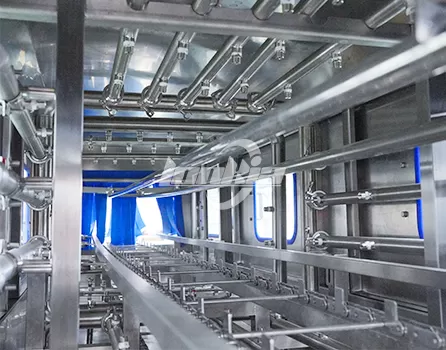
3.1 Washing Pressure and Spray Coverage
Washing pressure and spray angle determine how effectively contaminants are removed.
High-pressure spray (30–70 bar): Suitable for stubborn residues, meat processing plants, or vegetables with soil.
Medium-pressure spray (10–20 bar): Adequate for light residues such as bakery trays or snack industry baskets.
Multi-angle spray nozzles (0°, 15°, 25°, 40°): Ensure thorough coverage of all basket surfaces.
Evaluate whether:
Pressure can be adjusted,
Nozzles are easy to replace,
Spray coverage is uniform across the basket.
3.2 Water Temperature and Heating Options
Most industries require 60–85°C hot-water washing to enhance cleaning and reduce microbiological risk. Common heating methods include:
Electric heating: Fast response, higher energy cost.
Steam heating: Widely used in food plants, lower energy cost.
Gas heating: Very fast heating, suitable for high-capacity lines.
Check whether the heating system provides temperature stability and automatic temperature control.
3.3 Chemical Dosing System
A reliable chemical dosing system ensures consistent washing results. Important factors include:
Accurate metering pumps,
Automatic dosing capability,
Protection against over-dosing,
Compatibility with food-grade detergents.
Automated concentration monitoring and refilling greatly improve reliability.
3.4 Drying Efficiency
For operations that require fast turnover, drying quality is essential. Typical systems include:
Air knives,
Hot-air blowers,
Combined drying systems.
Evaluate whether the system:
Covers all basket surfaces, including the bottom,
Has adjustable conveyor speed,
Effectively removes moisture without re-condensation.
3.5 Water Consumption and Recycling System
Efficient water management reduces both cost and environmental impact. Assess:
Presence of a multi-stage filtration system (filters, sedimentation, cyclone separation),
Availability of a recycling water tank,
Automatic draining and refilling features,
Filtration level adequate for your hygiene requirements.
Better water management systems significantly lower long-term cost.
4. Safety, Hygiene, and Compliance Requirements
Hygienic design is one of the most critical selection factors, especially for food, pharmaceutical, and logistics operations.
4.1 Hygiene-Focused Design Elements
Well-designed machines typically include:
Full stainless-steel construction (AISI 304 or 316),
Quick-release nozzles, guides, and filters,
Rounded corners to minimize water stagnation,
Hygienic welding and no dead-angle zones,
Design principles aligned with EHEDG, FDA, or 3-A standards.
Better hygiene design reduces the risk of cross-contamination.
4.2 Required Safety Features in Industrial Environments
A basket cleaning machine should include:
Emergency stop buttons,
Thermal protection,
Automatic shut-off for overheating,
Door interlock systems,
Anti-slip access platforms,
External insulation to reduce burn risks.
These features protect workers and reduce operational risks.
4.3 Industry-Specific Compliance
Different industries may require:
Stricter microbial control (meat and poultry),
Verifiable sanitation (dairy),
Water-saving compliance (fruit and vegetable),
Zero-residue cleaning (pharmaceutical or electronics).
Confirm alignment with standards such as HACCP, ISO 22000, or GMP.
5. Cost Evaluation: Not Just the Purchase Price
Focusing only on the purchase cost can lead to unexpected operational expenses. Instead, evaluate the Total Cost of Ownership (TCO).
5.1 Initial Investment vs Long-Term Operating Cost
Operating cost typically includes:
Energy consumption (electric, steam, or gas),
Water usage and wastewater fees,
Chemical consumption,
Maintenance cost,
Downtime cost.
For facilities running 250 days/year, 10 hours/day, operating cost often exceeds the initial purchase price.
5.2 Maintenance and Spare Parts Assessment
Consider:
Lifespan of wear parts,
Whether operators can replace parts quickly,
Supply chain availability of spare parts,
Use of standardized components.
Lower maintenance requirements reduce labor and downtime.
5.3 ROI and Payback Estimation
When evaluating ROI, consider:
Increased cleaning capacity,
Reduced manual labor,
Reduction in water, power, and chemicals,
Improvement in hygiene and product quality.
Many facilities achieve ROI in 12–36 months.
6. Best Practices for Installation, Operation, and Maintenance
Selecting the right equipment is only the first step. Proper installation and operation ensure long-term reliability.
6.1 Installation Requirements
Before installation, verify:
Water, steam, and electrical connections,
Sufficient space for maintenance access,
Drainage capacity for peak discharge,
Need for floor drains, exhaust ducts, or noise control.
A structured installation plan minimizes adjustment time.
6.2 Daily Operation Guidelines
To maintain stable output, standard operating procedures should include:
Checking filters and nozzles before startup,
Verifying tank levels and water temperature,
Monitoring chemical concentration,
Adjusting conveyor speed based on contamination level.
Good operation practices reduce errors and re-washing.
6.3 Preventive Maintenance Checklist
Recommended schedule:
Daily: filters, spray nozzles, conveyor condition
Weekly: tank cleaning, pump inspection
Monthly: valves, electrical components, steam system
Quarterly: comprehensive system check
Preventive maintenance is far more efficient than reactive repairs.
7. Practical Checklist Before Making Your Final Decision
Use the following checklist to confirm your machine choice:
7.1 Technical Fit
Does it meet your required throughput?
Is it compatible with your basket dimensions and materials?
Does it achieve the required washing and drying results?
7.2 Hygiene and Safety Fit
Does it comply with food-grade or industry-specific standards?
Is the design easy to clean and sanitize?
7.3 Cost and Maintenance Fit
Is the TCO acceptable?
Is maintenance simple and spare parts accessible?
7.4 Future Scalability
Can the system be expanded as production grows?
Can you add pre-wash, drying, or automated conveyors later?
If all criteria are met, the selected basket cleaning machine will support stable long-term production.