
In food processing, retort machines (also known as autoclaves or pressure cookers) play a critical role in ensuring food safety and extending shelf life. These machines use high-temperature and high-pressure steam to sterilize packaged food, which allows it to be stored for longer periods without refrigeration.
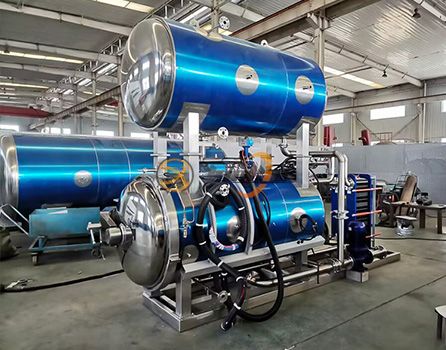
Types of Retort Machines
Retort machines come in various configurations, each designed to meet different needs based on the type of food being processed, production volume, and space available in your facility. The most common types are:
1.Hydrostatic Retort
A hydrostatic retort operates with water-based pressure, which makes it ideal for processing liquid or semi-liquid foods. It’s a continuous-flow system, meaning food products move through the retort chamber on a conveyor belt while being sterilized.
Benefits:
Ideal for large-volume production.
Consistent heat distribution.
Low maintenance.
Applications:
Soups, sauces, beverages, and liquid foods.
2.Rotary Retort
The rotary retort uses rotating baskets or drums to treat food products with steam or hot water. The rotating action helps ensure even heating, which is particularly useful for solid food products like meats, vegetables, or ready-to-eat meals.
Benefits:
Ideal for solid foods or products that need to retain shape.
Even heat distribution.
Flexible production options.
Applications:
Ready-to-eat meals, meats, and vegetables.
3.Basket Retort
A basket retort is a versatile machine used for sterilizing small batches of packaged food. The food is placed in baskets, which are then submerged in pressurized steam or hot water for the sterilization process.
Benefits:
Suitable for small to medium production volumes.
Flexibility in batch processing.
Ideal for products with varying shapes and sizes.
Applications:
- Small-batch producers, specialized products, and organic food producers.
Benefits of Using Retort Machines in Food Processing
Retort machines offer significant advantages for food manufacturers, particularly those producing shelf-stable products. Here are the key benefits:
1.Extended Shelf Life
Retort machines kill harmful microorganisms while preserving the food’s flavor, texture, and nutrients. This extends the shelf life of products without the need for refrigeration.
2.Improved Food Safety
By reaching high sterilization temperatures, retort machines help ensure that food is free from pathogens, reducing the risk of foodborne illness and improving safety for consumers.
3.Energy Efficiency
Modern retort machines are designed to be more energy-efficient, using less power and water compared to older models. This can lead to significant cost savings in the long run.
4.Consistency and Quality Control
Retort machines offer automated control systems that ensure consistent results. Whether you are processing small batches or large volumes, the quality of your product remains uniform.
5.Convenience and Consumer Demand
With the increasing demand for ready-to-eat meals and convenience foods, retort machines help manufacturers produce high-quality, safe, and convenient products that cater to the needs of busy consumers.
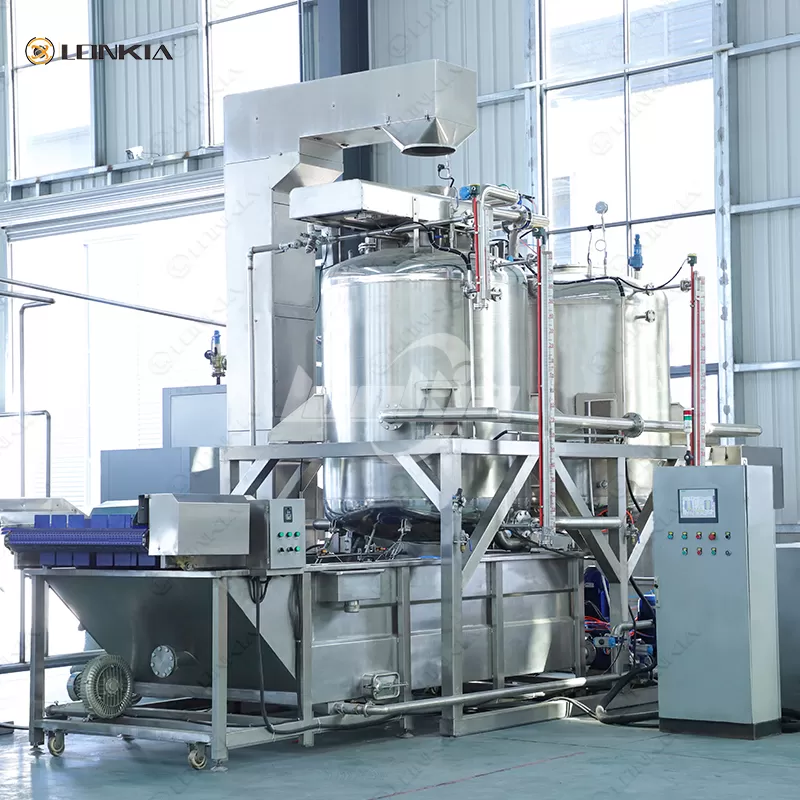
Key Considerations When Buying a Retort Machine
When purchasing a retort machine, there are several critical considerations to ensure that the machine you select aligns with your operational needs, budget, and long-term production goals. Choosing the right retort machine isn't just about the initial cost — it's about finding the best value, efficiency, and reliability to support your production for years to come. Here are the key factors to take into account when buying a retort machine:
1.Production Volume & Throughput
The most important factor to consider when purchasing a retort machine is your required production capacity. Retort machines come in different sizes and designs, with some being more suited for high-volume production and others for smaller, batch-style processing.
For large food processors with a high throughput demand, a hydrostatic retort might be the best option. This system allows for continuous production, capable of processing thousands of cans, jars, or pouches per hour. In contrast, a rotary retort or basket retort might be better suited for smaller batches or more delicate products that require gentle handling.
Key considerations for production volume:
How many units do you need to produce per hour?
Will you be processing high-volume, low-variety products, or will your production be smaller batches with varied sizes and fillings?
How much floor space do you have available for the machine and its surrounding support systems (like steam boilers, water tanks, etc.)?
2.Type of Food & Packaging
The type of food you plan to process plays a significant role in determining the best retort machine for your needs. Different types of retort machines work better with specific food types or packaging materials.
Hydrostatic retorts are ideal for liquid or semi-liquid products like soups, sauces, beverages, and dairy items. These products require uniform, high-pressure water flow for optimal heat transfer.
Rotary retorts are better for solid foods, particularly meats, vegetables, and ready-to-eat meals. The rotation ensures even heat distribution, which is critical for solid items that may be unevenly shaped or packed.
Basket retorts are ideal for smaller batches or specialty products such as organic or custom-sized food packages.
Additionally, packaging materials must be compatible with the chosen retort machine. For instance, flexible pouches, cans, or glass jars all have different heat resistance, and choosing a machine that aligns with your packaging type is essential for both quality and efficiency.
Key considerations for food and packaging:
Will you be processing liquids or solid foods?
What packaging materials do you plan to use? (Cans, pouches, jars)
Are there specific sterilization or cooking time requirements for different products?
3.Energy Efficiency & Operating Costs
Retort machines, especially large-scale systems, consume significant amounts of energy during the sterilization process. In today’s competitive food industry, managing energy consumption and operating costs is crucial to maintaining profitability.
Look for retort machines that come with energy-saving features, such as heat recovery systems that capture waste heat and use it to preheat water or steam, reducing energy costs. Water consumption is another factor to consider — some retort machines use large volumes of water during the sterilization process, while others may use air or steam as a more energy-efficient alternative.
Key considerations for energy efficiency:
What is the machine’s energy consumption per cycle, and are there features that can reduce it?
How does the retort system use steam or water, and can energy or water be recovered?
Does the machine support water recycling or low-energy cycles?
4.Automation & Control Systems
Modern retort machines come with advanced automation and control systems that can enhance the consistency, safety, and overall efficiency of food processing. These systems often include programmable logic controllers (PLCs), touchscreens, and remote monitoring capabilities to control the entire sterilization process, making it more efficient and reducing human error.
Automated control systems provide features like:
Real-time data monitoring, so you can track temperature, pressure, and processing times for each batch.
Flexible programming, allowing you to adjust processing cycles to accommodate different food types and packaging.
Safety alarms, which notify operators of any process deviations that could compromise food safety.
Automation reduces labor costs, minimizes human error, and ensures that each batch is processed exactly the same way.
Key considerations for automation:
Does the machine offer real-time monitoring and remote control?
Is there automated batch tracking for each product type?
How much of the process is automated, and how much manual intervention is required?
5.Maintenance Requirements & Longevity
Retort machines are heavy-duty equipment, and maintaining them properly is key to ensuring long-term, reliable performance. Machines with fewer moving parts tend to require less maintenance, but every machine requires periodic inspections, cleaning, and servicing. When evaluating different models, look at the maintenance schedule and any manufacturer warranty that might be offered.
Key considerations for maintenance:
How easy is it to clean and maintain the machine? Does it require specialized cleaning procedures?
Are there routine checks or parts that need to be replaced periodically?
Is the machine built to last? Does the manufacturer offer a warranty and ongoing support?
How to Choose the Right Retort Machine for Your Facility
Choosing the right retort machine requires understanding your facility’s production needs and goals. Here’s a quick guide:
Step 1: Assess Your Production Needs
Evaluate the volume of food you need to process, the type of food you produce, and how often you plan to run the machine. This will help you decide between a high-throughput machine (like a hydrostatic retort) or a smaller, batch-oriented machine (like a basket retort).
Step 2: Consider Your Budget
Retort machines can be a significant investment. Determine your budget, keeping in mind that higher-capacity machines may come with higher upfront costs but can offer better long-term value through efficiency and reduced labor costs.
Step 3: Evaluate Maintenance Requirements
Choose a retort machine that is easy to maintain and service. Machines with advanced automation and fewer moving parts tend to require less frequent maintenance.
Step 4: Consult with Experts
Partnering with a reputable manufacturer ensures that you get a machine that suits your needs. At Lonkia, we offer a range of retort machines for food processors, with customizable features based on your production capacity and product requirements.
FAQ: Retort Machines for Food Processing
1. What is the difference between a hydrostatic retort and a rotary retort?
Hydrostatic retorts are used for liquid-based foods and operate by pushing the product through a pressurized water chamber. They are continuous and handle high volumes.
Rotary retorts rotate the food inside a chamber to ensure even heat distribution. These are ideal for solid foods such as meat or vegetables.
2. How does a retort machine ensure food safety?
Retort machines work by heating food to high temperatures (typically between 115°C and 130°C) under pressure, which kills harmful microorganisms like bacteria, molds, and yeasts. This sterilization process makes the food shelf-stable and safe for consumption.
3. Can retort machines be used for both high-volume and small-scale production?
Yes, retort machines come in various sizes. Hydrostatic retorts are typically used for high-volume production, while basket and rotary retorts can handle smaller, more specialized batches. The key is to choose a machine that matches your production capacity.
4. What are the operating costs of a retort machine?
Operating costs include energy consumption, water usage, maintenance, and labor. The energy consumption is particularly high for large-scale machines, but newer models offer energy-saving features like heat recovery and water recycling systems to reduce operating costs over time.
5. How long does a retort machine last?
A well-maintained retort machine can last 10–15 years, depending on the frequency of use and how well it is maintained. Regular servicing and cleaning can help extend its lifespan.
6. How do I choose the right retort machine for my product?
Consider the type of food you process (liquid vs. solid), production volume, packaging type, and energy efficiency needs. It’s crucial to match the machine’s features to the specific requirements of your products to ensure optimal results.
Retort machines are a crucial investment for any food processor looking to produce high-quality, shelf-stable products. Whether you choose a hydrostatic, rotary, or basket retort, these machines offer several benefits, including extended shelf life, improved food safety, and cost efficiency.
By understanding the different types of retort machines, their benefits, and the factors to consider when making a purchase, you can make an informed decision that will optimize your food processing operations for years to come.
If you're ready to explore retort machines that best suit your production needs, visit our product page or contact us for a personalized consultation.