
For garlic processing companies, the purchase price of a garlic peeler is only one factor to consider. Electricity costs, compressed air costs, labor costs, raw material waste, and maintenance expenses incurred during long-term operation also affect the actual processing cost per kilogram of peeled garlic. Only by selecting the right garlic peeling equipment and optimizing operating parameters can companies improve production efficiency while ensuring peeling quality.
What Are the Main Operating Costs of a Garlic Peeler?
1. Electricity and Compressed Air Costs
Pneumatic garlic peelers use compressed air to separate the skins from the cloves; the peeling process does not rely on mechanical friction, which helps reduce compression and damage to the cloves. However, when calculating energy consumption, do not focus solely on the main unit's power rating; also factor in the electricity consumption of the air compressor.
Before purchasing, verify the equipment's rated power, operating air pressure, air consumption, and the air compressor's configuration requirements. Actual operating costs also depend on daily operating hours, equipment load, and local electricity rates.
2. Labor and Raw Material Waste
While the garlic peeling equipment reduces the workload associated with manual garlic peeling, personnel are still required to handle feeding, output inspection, and necessary sorting tasks according to the production process.
If peeling is incomplete or the rate of damaged cloves is high, the company may incur rework and raw material waste. Therefore, when evaluating equipment, one should not only compare hourly processing capacity but also focus on the percentage of intact cloves, the amount of residual peel, and the final yield of qualified products.
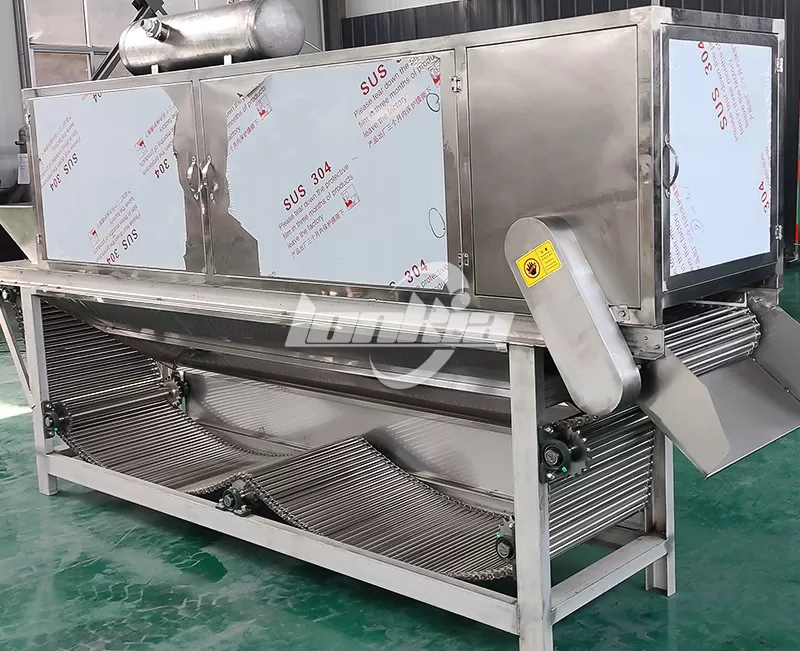
How to Reduce the Daily Operating Costs of a Garlic Peeler?
1. Adjust Peeling Parameters Based on Raw Materials
The size, variety, and skin condition of garlic cloves all affect the peeling performance of a garlic peeler. Insufficient air pressure may result in excessive residual skin, while improper parameter settings may increase the risk of damage to the garlic cloves.
It is recommended to first conduct tests using actual processing raw materials, gradually adjusting the air pressure and peeling time based on the peeling results, and recording the processing volume and wastage for each batch. Stable operating parameters can help reduce unnecessary rework.
2. Ensure Proper Equipment Cleaning and Regular Maintenance
Regularly inspect air hoses, filters, pneumatic components, and connections to help detect issues such as unstable airflow or pipeline leaks in a timely manner. When cleaning, follow the equipment manual, and ensure the power is turned off and the air supply is isolated before performing maintenance.
Maintaining a daily inspection log also helps reduce unexpected downtime and prevents subsequent processing stages from being disrupted by equipment malfunctions.
How to Calculate the Actual Cost per Kilogram of Peeled Garlic?
Companies can use the following formula for estimation:
Cost per kilogram of qualified product = Total operating cost ÷ Yield of qualified peeled garlic
Total operating cost includes electricity, labor, maintenance expenses, and raw material loss. When comparing different machines, ensure that the statistical periods, raw material conditions, and product quality standards are consistent to guarantee the comparability of the results.
For example, even if a garlic peeler machine has a high hourly processing capacity, the actual cost per kilogram of qualified product may not necessarily be lower if it results in significant garlic clove wastage or frequent rework. Therefore, conducting raw material test runs before purchasing and recording actual output data is more valuable than simply comparing rated production capacities.
Summary
The LONKIA pneumatic garlic peeler utilizes a pneumatic peeling mechanism and allows for adjustment of air pressure and peeling time based on the characteristics of the garlic cloves. It is suitable for processing peeled garlic cloves and as a pretreatment step for products such as minced garlic and garlic powder. Specific processing capacity and operational performance are subject to the actual machine model and test conditions.
When purchasing, it is recommended to comprehensively compare equipment specifications, air supply requirements, actual peeling performance, ease of maintenance, and after-sales support, rather than focusing solely on the initial purchase price. Through proper model selection and standardized operation, businesses can more effectively control long-term operating costs and ensure stable production.