
The actual processing capacity of a fruit and vegetable peeler depends not only on the equipment's rated capacity but is also closely related to raw material specifications, the peeling process, the feeding method, and the equipment's operating cycle. For processing plants handling root crops such as potatoes, carrots, and sugar beets, understanding these factors helps in selecting a steam peeler that matches production needs and reduces fluctuations in output during operation.
Raw Material Characteristics Affect Peeling Machine Capacity
Potatoes, carrots, and beets differ in shape, skin characteristics, and size distribution. Even when using the same steam peeler, the loading capacity, steam treatment time, and peeling results may vary depending on the raw material.
For example, when processing a mixed batch of potatoes with significant size variations, the processing requirements for larger and smaller pieces may differ. The length and curvature of carrots, as well as the condition of beet skins, also affect raw material loading and the setting of process parameters.
Therefore, when evaluating equipment capacity, one should clearly identify the variety, specifications, and actual condition of the raw materials being processed, rather than relying solely on the fruit and vegetable peeler's general capacity parameters.
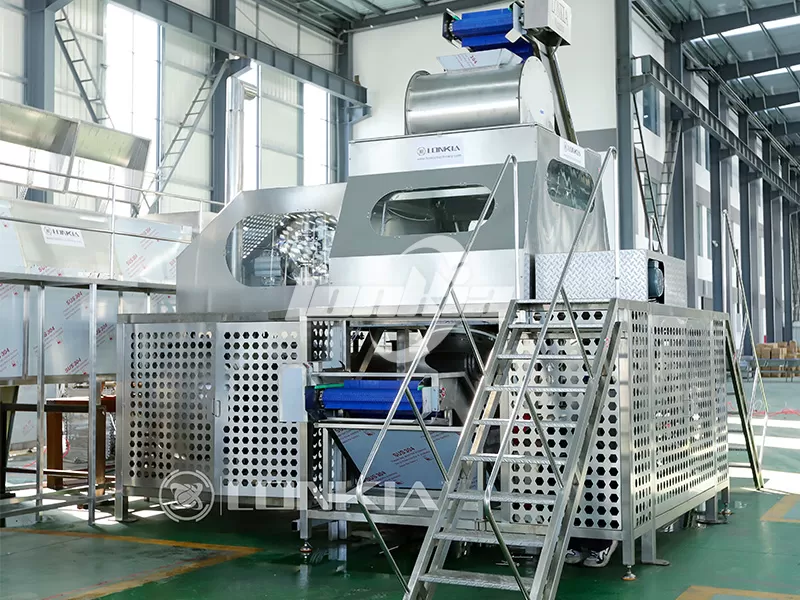
Steam Treatment Time and Equipment Cycle Time
Steam peelers typically use a specific steam pressure and treatment time to alter the adhesion between the raw material's skin and internal tissue, after which the skin is removed.
For batch-type equipment, actual production capacity is primarily influenced by the following factors:
- Batch loading capacity: The amount of raw material that can be consistently processed per batch.
- Steam treatment time: The time required for the raw material to achieve the desired peeling result.
- Unloading and loading time: The time required for the equipment to resume production for the next batch after each batch is completed.
- Auxiliary operation time: Whether cleaning, inspection, and necessary process adjustments affect the operating cycle.
If the equipment has a high batch processing capacity but each batch takes a long time to complete, the actual hourly output may still be lower than expected. When purchasing, request that the supplier clearly specify the batch loading capacity, the complete processing cycle, and the conditions under which capacity tests were conducted.
Feeding Methods and Equipment Design Affect Actual Output
Unstable raw material supply, fluctuations in loading volume, or untimely unloading may all prevent the equipment from consistently achieving its designed capacity. For production lines that must integrate with washing, cutting, and subsequent cooking equipment, attention should be paid to the fruit and vegetable peeler's feeding and unloading methods, operating procedures, and the coordination between equipment units.
At the same time, equipment design also affects operational efficiency. Customers should verify whether loading and unloading are convenient, whether operators need to intervene frequently, and whether process adjustments or equipment cleaning are required when switching between different raw materials.
Peeling Quality and Actual Production Capacity Must Be Evaluated Concurrently
Insufficient steam treatment time may result in residual peel on some raw materials; conversely, excessive treatment time may increase pulp loss, affecting the appearance and texture of subsequent cut or cooked products.
Therefore, equipment selection should not focus solely on processing more raw materials per hour; it is also necessary to confirm that peeling uniformity, residual peel levels, and raw material loss meet product requirements.
It is recommended to record the processing volume, peeling effectiveness, and usable raw material weight separately during actual raw material testing. For cooked root and tuber products requiring vacuum packaging, it is especially important to verify whether the peeled raw materials are suitable for subsequent processing, rather than relying solely on the equipment's discharge speed as the criterion for judgment.
Verify Equipment Parameters Based on Production Needs
Before purchasing a fruit and vegetable peeler, it is recommended to confirm the following with the supplier:
- Actual processing capacity for the target raw materials and corresponding specifications;
- Batch loading capacity, steam parameters, and a complete operating cycle;
- Equipment power rating and steam supply requirements;
- Test results for peeling effectiveness and raw material loss;
- Whether the equipment is compatible with existing washing, cooking, and packaging processes.
Lonkia can assist in evaluating the configuration of steam peeling equipment based on the customer's raw material types, processing requirements, and production cycle. Through actual raw material testing and parameter verification, customers can more accurately determine whether the equipment meets their production needs.
When selecting a fruit and vegetable peeler, the rated capacity is only a reference. Only by evaluating raw material characteristics, the complete processing cycle, peeling quality, and subsequent processes in combination can one determine the equipment's stable processing capacity in actual production.