
An automatic cabbage processing line can help food manufacturers increase production capacity, reduce manual labor, and maintain consistent processing quality. By integrating feeding, trimming, cutting, washing, dewatering, and packaging equipment, businesses can streamline cabbage processing and improve overall operational efficiency.
However, automation requires a higher initial investment than some manual or semi-automatic systems. To determine whether an automatic cabbage processing line is worth the cost, businesses should evaluate production volume, labor requirements, operating expenses, and long-term growth plans.
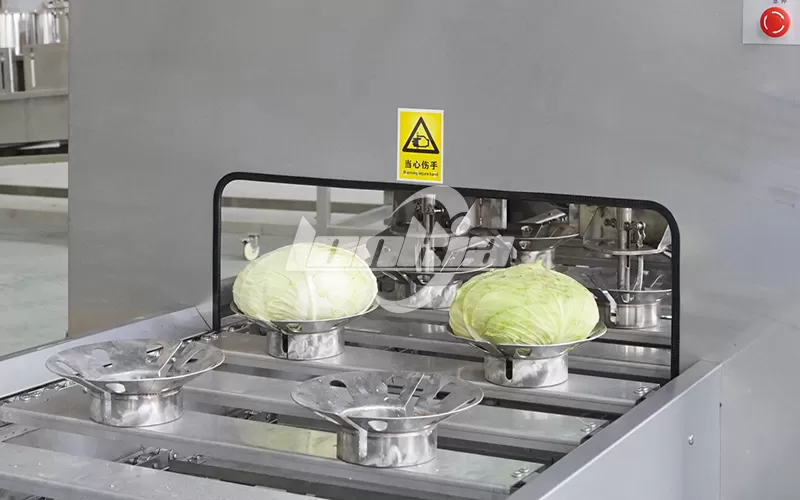
What Is an Automatic Cabbage Processing Line?
An automatic cabbage processing line is an integrated system designed to process fresh cabbage through multiple stages with reduced manual handling.
Depending on the final product, a typical line may include:
Automatic feeding and conveying systems
Cabbage trimming equipment
Industrial cabbage cutting or shredding machines
Vegetable washing machines
Dewatering equipment
Inspection and sorting conveyors
Weighing and packaging equipment
The configuration can be customized for shredded cabbage, sliced cabbage, fresh-cut vegetables, and other cabbage-based products.
What Are the Benefits of Automatic Cabbage Processing Equipment?
Automation offers several advantages for commercial cabbage processors.
Higher production efficiency: Integrated machines can process cabbage continuously, helping businesses handle larger volumes in less time.
Reduced labor requirements: Automatic feeding, conveying, cutting, and washing reduce repetitive manual operations and material handling.
Consistent product quality: Mechanical cutting equipment helps maintain more uniform product sizes, while standardized processing stages support consistent results.
Improved workflow: Connecting individual machines reduces unnecessary transfers and helps minimize production bottlenecks.
Better hygiene management: Food-grade materials, accessible equipment structures, and appropriate cleaning procedures can support hygienic production.
Is an Automatic Cabbage Processing Line Suitable for Your Business?
An automatic cabbage processing line is generally more suitable for businesses with substantial or growing production requirements.
It may be a good investment for:
Large vegetable processing factories
Fresh-cut vegetable producers
Commercial foodservice suppliers
Food manufacturers producing shredded or sliced cabbage
Businesses supplying supermarkets and food distribution companies
Smaller businesses with limited production volumes may find a semi-automatic system more cost-effective. The best option depends on the amount of cabbage processed, labor availability, and expected future demand.
How Much Does an Automatic Cabbage Processing Line Cost?
The cost of an automatic cabbage processing line depends on processing capacity, equipment configuration, automation level, and customization requirements.
A basic automated system with cutting and washing equipment will generally require a different investment from a complete production line incorporating trimming, dewatering, inspection, conveying, and packaging.
Other cost factors include stainless steel construction, control systems, installation requirements, and after-sales support.
For an accurate quotation, buyers should provide their target hourly capacity, final product specifications, required processing stages, and factory layout.
Can Automation Reduce Operating Costs?
Automation can reduce operating costs, particularly in facilities with high production volumes and significant manual labor requirements.
Potential savings may come from:
Reduced labor hours for repetitive tasks
Less manual transportation between machines
Improved production consistency
More efficient use of production time
Reduced handling-related product losses
Actual savings depend on the original production process, equipment utilization, maintenance costs, and local labor expenses. Businesses should evaluate these factors before estimating the payback period.
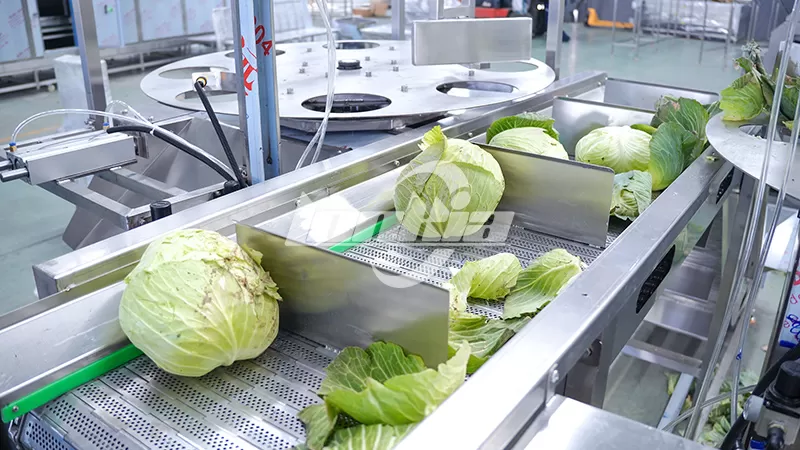
Automatic vs. Semi-Automatic Cabbage Processing Lines
The main difference is the level of integration and manual involvement.
| Factor | Semi-Automatic Line | Automatic Line |
|---|---|---|
| Initial investment | Generally lower | Generally higher |
| Labor requirements | More manual handling | Reduced manual handling |
| Production capacity | Suitable for smaller operations | Suitable for medium- to high-volume operations |
| Workflow | More operator-dependent | More integrated |
| Flexibility | Can suit smaller batches | Depends on system design |
| Expansion | May require additional equipment | Can be designed for future integration |
Businesses should compare both options based on actual production needs rather than assuming that full automation is always the best choice.
How to Choose the Right Automatic Cabbage Processing Line
Before purchasing cabbage processing equipment, consider the following factors:
Processing capacity: Match the line's throughput to your hourly and daily production targets.
Final product: Determine whether you need sliced cabbage, shredded cabbage, or another product, as this affects cutting and downstream equipment.
Washing and dewatering: Select suitable systems based on cleaning requirements and the desired condition of the finished product.
Factory layout: Ensure sufficient space for installation, material flow, cleaning, and maintenance.
After-sales service: Check the availability of technical support, spare parts, installation assistance, and maintenance guidance.
A customized configuration can help avoid unnecessary investment while ensuring that the equipment works efficiently as a complete system.
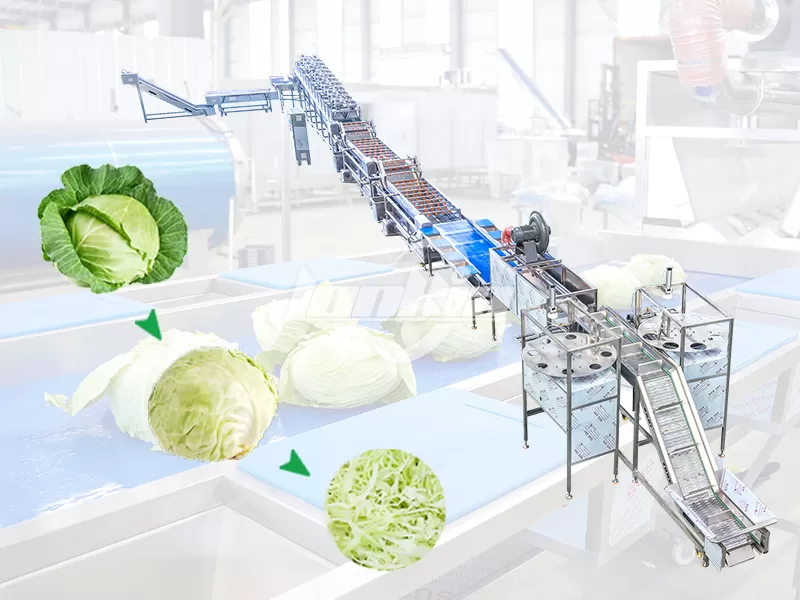
Why Choose LONKIA Machinery?
LONKIA Machinery provides food processing machinery and customized production line solutions for commercial food manufacturers. Automatic cabbage processing lines can be configured according to production capacity, product specifications, automation requirements, and available factory space.
Depending on the project, the system can integrate cutting, washing, dewatering, conveying, inspection, and packaging equipment to create a coordinated production workflow.
By defining your target output and processing requirements, you can work with LONKIA Machinery to identify an equipment configuration suited to your business.
Conclusion
An automatic cabbage processing line can be a worthwhile investment for businesses that need higher production capacity, reduced manual handling, and consistent processing quality. Its value depends on production volume, labor costs, equipment utilization, and long-term operating expenses.
Before investing, compare automatic and semi-automatic solutions, calculate the expected operating savings, and choose equipment that matches your actual production requirements. The right configuration can help your business improve efficiency while preparing for future growth.