
Tomato processing is one of the most important sectors in the global food industry, turning perishable fresh tomatoes into stable, high-value products such as tomato paste, puree, juice, diced tomatoes, and sauces. Industrial tomato processing lines integrate a series of automated technologies — from washing and sorting to evaporation and aseptic filling — that determine the quality, yield, and cost-effectiveness of the final product.
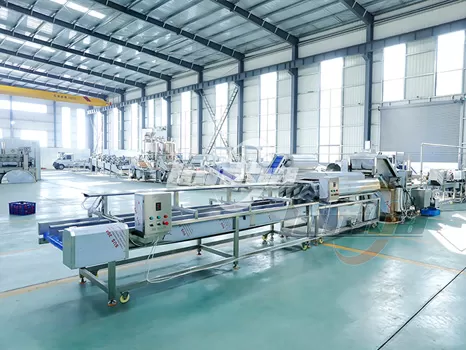
1. Industry Overview & Market Drivers
According to recent reports, over 40 million tons of tomatoes are processed annually worldwide, with major production centers in China, Italy, the United States, and Spain.
Industrial tomato processing converts fresh raw materials — which are seasonal and highly perishable — into shelf-stable products with consistent quality.
- Seasonality & Shelf Life: Tomatoes have a short harvest window. Efficient processing enables long-term utilization of raw material through concentration and aseptic packaging.
- Labor Cost & Automation: Rising labor costs in food processing push companies toward higher levels of automation, particularly in washing, sorting, and packaging.
- Traceability & Food Safety Regulations: Global regulations like HACCP, ISO 22000, and FDA requirements encourage modernization of equipment and digital monitoring systems.
- Sustainability: Energy-efficient evaporators, water recycling systems, and waste valorization (using tomato skins and seeds for oil or animal feed) are becoming standard in modern plants.
2. Overview of the Industrial Tomato Processing Line
Industrial tomato processing covers a broad range of end products — not only tomato paste and puree, but also tomato juice, canned whole tomatoes, diced tomatoes, and tomato sauces.
Although each product has its own formulation and packaging requirements, the core processing stages are largely similar, with adjustments in heating, concentration, and filling steps.
Step 1: Receiving & Inspection
Fresh tomatoes are delivered to the factory and carefully inspected for ripeness, Brix level, and physical quality.
Industrial processors often categorize raw materials by intended product type:
- High-Brix, fully ripe tomatoes → for paste and concentrate
- Firm, medium-ripe tomatoes → for diced or canned whole tomatoes
- Flavor-rich varieties → for juice and sauces
Automated weighing, sampling, and barcode tracking ensure full traceability from field to final packaging.
Step 2: Washing & Sorting
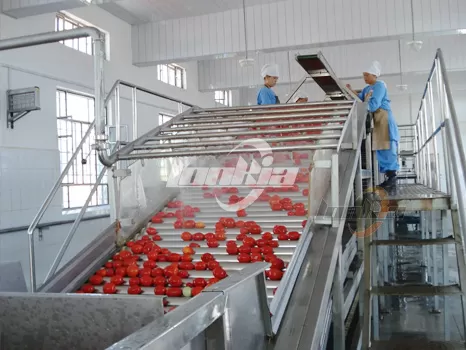
Tomatoes are washed thoroughly to remove soil, leaves, and pesticide residues.
Bubble washers and rotary drum washers are common, often combined with optical sorting systems that automatically reject defective or unripe fruits.
For canned products, gentle handling is critical to avoid skin breakage; while for paste production, uniformity and color consistency are prioritized.
Step 3: Grading & Preparation
Before processing, tomatoes may be graded according to size and firmness.
- For Canned Whole Tomatoes: Grading ensures consistent can filling.
- For Diced or Crushed Tomatoes: Some processors blanch and peel before dicing.
- For Juice and Paste: Grading helps balance sugar and acidity for blending.
Step 4: Peeling, Crushing, and Pulping
Depending on the product type:
- Canned Tomatoes: Peeled either by steam or lye peeling, then trimmed manually or by machine.
- Diced/Crushed Tomatoes: Lightly blanched and mechanically diced into uniform cubes.
- Tomato Juice & Paste: Crushed and pulped to separate skin and seeds through sieving screens.
Hot break and cold break processes may be applied to adjust viscosity and flavor — hot break for thick paste, cold break for fresh-tasting juice.
Step 5: Heating / Concentration (as needed)
Not all tomato products require concentration.
- Tomato Juice: Typically pasteurized only, not concentrated.
- Tomato Paste / Puree: Concentrated to 28–30°Brix using vacuum evaporators.
- Canned Diced Tomatoes: Heated mainly for sterilization rather than concentration.
Modern plants use falling-film or MVR evaporators to achieve precise concentration levels while preserving flavor and color.
Step 6: Sterilization & Filling
Final processing conditions differ by product:
- Tomato Paste / Juice: Sterilized via tube-in-tube or plate heat exchangers, then aseptically filled into drums, boxes, or bottles.
- Canned Tomatoes: Filled into cans with juice or sauce, then sealed and sterilized in rotary retorts or autoclaves.
Aseptic and retort filling systems both ensure long shelf life and food safety, but serve different packaging formats and market needs.
Step 7: Packaging & Storage
Packaging options vary widely:
- Industrial bulk: aseptic bags-in-drums or BIB for paste and puree.
- Retail: metal cans, glass jars, or PET bottles for canned and juice products.
- Foodservice: pouches and bag-in-box formats for sauces.
Automated labeling, coding, and palletizing systems improve logistics efficiency and traceability across all product categories.
In summary:The industrial tomato processing line can be flexibly configured to produce multiple product types — from concentrated paste to canned whole tomatoes — by adjusting processing temperatures, residence times, and filling systems.This versatility is what makes modern tomato processing plants highly adaptable and globally competitive.
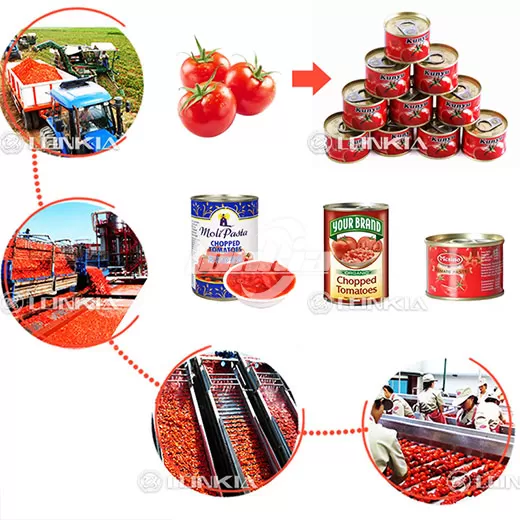
3. Key Processes & Equipment Deep Dive
In an industrial tomato processing line, a series of essential machines are used to turn fresh tomatoes into paste, juice, or canned products efficiently. Here’s a breakdown of the most common equipment and their roles — explained in simple, practical terms that match real factory operations.
1. Washing and Sorting
The process starts with cleaning.
- Bubble washer / drum washer: Removes mud, leaves, and dust from raw tomatoes using water flow and bubbles.
- Brush washing machine: Cleans the tomato surface more thoroughly.
- Vibrating or rotating screen: Separates unwanted fragments.
- Color sorting machine / vision camera system: Automatically detects and removes under-ripe or defective tomatoes.
This stage ensures that only clean, uniform tomatoes continue down the line, improving the quality and safety of the final product.
2. Crushing, Pulping, and Filtering
- Tomato crusher or cutter: Breaks tomatoes into small pieces for easier processing.
- Pulper or centrifugal separator: Separates skin and seeds from the juice and pulp.
- Filters or fine mesh sieves: Remove large fibers and particles to produce a smooth tomato puree.
These steps transform raw tomatoes into a pumpable liquid, which is the foundation for multiple tomato-based products.
3. Heating and Enzyme Inactivation
Before further processing, tomato pulp is heated to stabilize its natural color and flavor.
- Pre-heating tube / heat exchanger: Rapidly heats the tomato pulp to deactivate enzymes that cause separation or discoloration.
- Depending on the product type (paste, juice, or canned), the temperature and time vary — “hot break” for thicker paste, “cold break” for fresher-tasting juice.
4. Concentration and Evaporation
- Evaporators (single or multi-effect): Remove water content from the pulp to increase solid concentration.
- Vacuum evaporators: Allow evaporation at lower temperatures to preserve taste and color.
- Heat recovery systems: Reuse steam or hot water energy to lower operating costs.
Concentration is one of the most energy-intensive stages, so modern plants often use energy-saving designs to boost efficiency.
5. Filling, Sealing, and Packaging
- Pasteurizers / sterilizers: Heat-treat tomato pulp or paste before packaging.
- Canning sterilizers or retort machines: Commonly used for whole or diced tomatoes in cans.
- Automatic filling and sealing machines: Fill tomato paste, juice, or puree into cans, bottles, or pouches.
- Cooling tunnels: Quickly cool the sealed products to maintain stability.
- Labeling, coding, and packing machines: Complete the packaging process for storage and distribution.
Each production line can be customized — for example, canned tomato products require retort sterilization, while tomato juice lines may rely more on pasteurization and hot filling.
4. Sterilization and Filling Systems (Simplified for Practical Understanding)
Instead of complex aseptic systems, most tomato processing factories use standard sterilization and filling solutions that balance quality, safety, and cost.
Common Sterilization Options
- Pasteurization (for juice or pulp): Heat the product at 85–95°C for a short time to kill harmful microbes while preserving flavor.
- Hot water or steam sterilizers (for tomato paste or canned products): Ensure long shelf life and product safety.
- Rotary retorts (for cans or jars): Provide uniform heating for thicker or solid tomato pieces.
Typical Filling Solutions
- Hot filling machines: Fill tomato juice or paste while hot to minimize microbial risk.
- Vacuum or piston fillers: Provide accurate filling for viscous tomato paste.
- Automatic capping or seaming machines: Seal bottles, pouches, or cans immediately after filling.
These systems form the final step in the processing line, turning semi-finished tomato pulp into a stable, ready-to-sell consumer product — whether it’s paste, juice, or canned tomatoes.
5. Efficiency Optimization & Energy Management
Energy is one of the largest cost components in tomato paste production — primarily due to evaporation and sterilization processes. Efficient energy management can significantly impact profitability and sustainability.
5.1 Key Areas to Optimize
- Heat Recovery:
- Use regenerative heat exchangers to preheat incoming product using outgoing waste heat.
- This can recover up to 30% of thermal energy.
- Mechanical Vapor Recompression (MVR):
- Recycles vapor energy within the evaporator.
- Reduces steam consumption by up to 80%.
- Variable Frequency Drives (VFDs):
- Installed on pumps, fans, and conveyors to minimize electrical power during low-load conditions.
- Water Recycling:
- Install filtration and UV sterilization systems to reuse wash water.
- Reduces both water and wastewater treatment costs.
- Insulation & Steam Traps Maintenance:
- Regular inspection prevents energy losses through leaks or degraded insulation.
Case Study: A mid-sized factory in Turkey reduced its total energy consumption by 22% after implementing an MVR evaporator and closed-loop water recycling — with ROI achieved in just 18 months.
6. Quality Control & Food Safety
In tomato processing, quality assurance is not an option — it’s a necessity.
From raw material to packaging, every stage must meet strict international standards to ensure consistent taste, color, and microbial safety.
6.1 Raw Material Testing
- Brix Measurement: Indicates sugar concentration and determines pricing for suppliers.
- Acidity (pH): Should typically range between 4.1–4.3.
- Pesticide Residue Check: Required for export compliance (EU, FDA, etc.).
6.2 In-Process Control
- Continuous temperature logging in hot break and sterilization stages.
- Sampling every batch for viscosity, color (HunterLab L/a/b values), and microbial load.
6.3 Finished Product Standards
For tomato paste, key parameters include:
Parameter | Standard Range |
Brix | 28–30° (double concentrate) |
pH | 4.1–4.3 |
Viscosity | >3.0 poise |
Color (a/b ratio) | >2.1 |
Microbial count | Nil (after sterilization) |
6.4 Certifications & Compliance
To access global markets, processors should ensure compliance with:
- HACCP
- ISO 22000 or FSSC 22000
- FDA (for U.S. export)
- Halal / Kosher (for Middle East markets)
Digital record-keeping systems integrated with SCADA streamline audit preparation and regulatory documentation.
7. Investment, ROI & Supplier Selection
7.1 Estimating Investment
Investment in an industrial tomato processing line varies widely depending on capacity, automation level, and product range.
Production Capacity | Approximate Investment (USD) | Suitable For |
1–2 tons/hour | $100,000–$200,000 | Small/local plants |
5–10 tons/hour | $300,000–$700,000 | Medium processors |
20+ tons/hour | $1M+ | Industrial exporters |
Additional costs include utilities (steam boiler, water treatment), installation, and training.
7.2 ROI Considerations
A well-optimized plant can achieve ROI within 2–3 years, especially when equipped with energy-saving systems like MVR and automated filling.
Profitability depends on:
- Raw tomato cost vs paste selling price
- Energy consumption per ton
- Downtime reduction via automation
7.3 Choosing the Right Supplier
When sourcing tomato processing equipment, prioritize manufacturers that offer:
- Turnkey project design & installation
- Local after-sales service
- CIP/SIP systems
- PLC-based automation and remote support
- References from existing plants
Tip: Evaluate suppliers not just on machinery cost, but also on their integration experience — a poorly configured line can waste more in downtime than initial savings.