
During the pallet cleaning process, many customers are primarily concerned with whether the pallets can be cleaned thoroughly. However, once production begins, another issue becomes equally important: Do the pallets need to be dried after cleaning? In industries such as food processing, meat processing, baking, and produce handling, pallets often need to be quickly returned to production or logistics operations. If a significant amount of moisture remains on the pallet surface, it will not only affect subsequent use but may also require additional manual handling steps. Therefore, when selecting a pallet cleaning machine, the decision on whether to include a drying system should be based on the actual production workflow.
Why Do Pallets Need to Be Dried After Cleaning?
Water droplets typically remain on the surface of cleaned pallets, especially those with holes, grooves, or complex structures. If the pallets proceed directly to the next process after cleaning, the residual moisture may interfere with product loading, pallet stacking, or conveying.
For production lines where pallets need to be reused immediately, the drying process reduces waiting time, allowing cleaned pallets to enter subsequent processes more quickly. Therefore, integrating cleaning and drying is practical for production lines operating continuously.
How Does a Pallet Cleaning Machine Perform Cleaning and Drying?
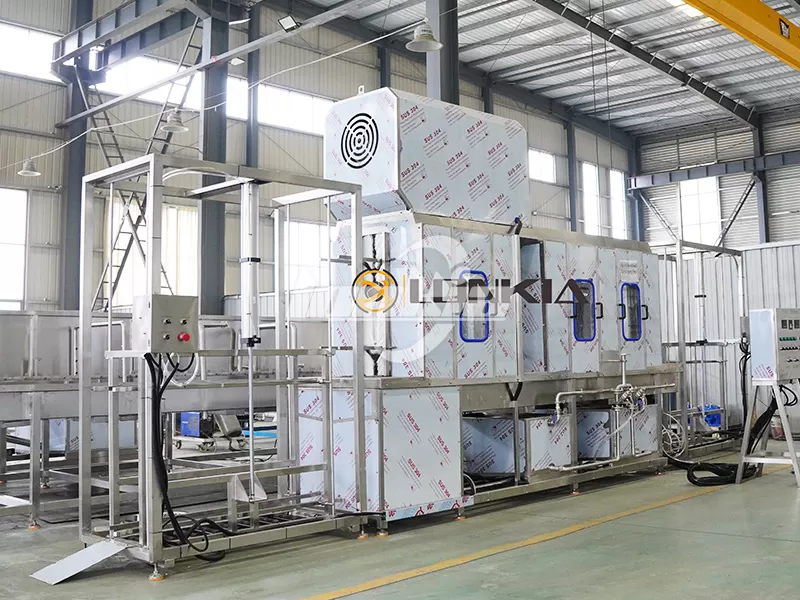
Lonkia's pallet cleaning machine combines cleaning and drying functions into a single unit. Once the pallets enter the conveyor system, they first undergo a multi-stage cleaning process, including hot alkaline water washing, high-temperature, high-pressure hot water washing, and high-pressure clean water rinsing, which progressively removes dirt and residues through different stages.
After cleaning, the pallets continue along the conveyor system into the subsequent drying zone, where moisture is further removed. This continuous process reduces the need for manual handling and separate processing of pallets, making it better suited for production environments that require continuous pallet turnover.
When Is It Most Worthwhile to Include a Drying Function?
Not all pallet cleaning scenarios require the pallets to be completely dry. Customers can make this determination based on their subsequent processes:
- Immediate use after cleaning: We recommend including a drying function to reduce wait times.
- Food processing production lines: Cleaned pallets typically need to be returned to the production process quickly; drying facilitates a seamless transition.
- When pallets need to be stacked directly: Reducing surface moisture appropriately can minimize water accumulation between pallets.
- When pallets are temporarily stored after centralized washing: If pallets have sufficient time for natural drainage, the decision to include a drying configuration can be based on actual needs.
Therefore, a drying system is not merely an optional feature; its necessity must be determined based on how the pallets are used, their turnover rate, and subsequent processes.
What Other Equipment Details Should Be Considered when Purchasing?
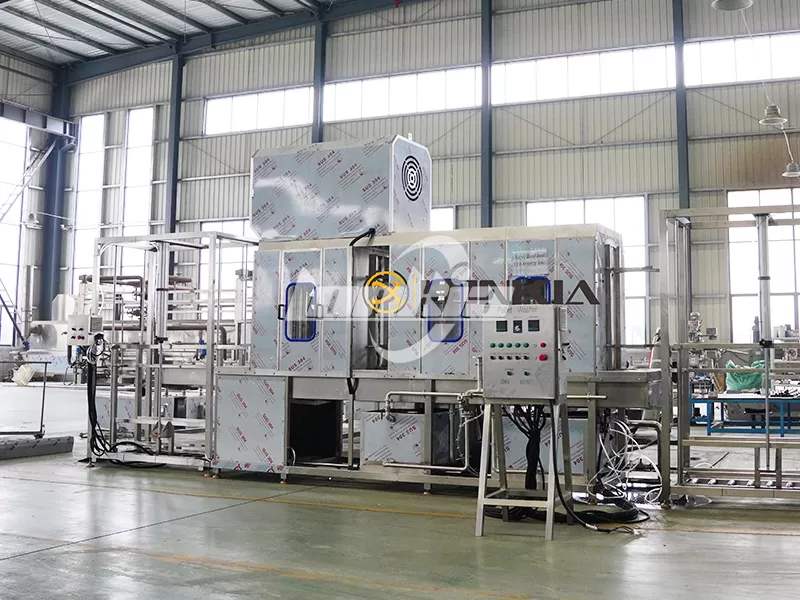
In addition to the drying method, customers should also consider the washing equipment's conveyor speed, spray coverage, and ease of maintenance. Lonkia's pallet washers feature a three-dimensional, four-directional nozzle arrangement and are equipped with filtration systems; the nozzle tubes and main component housings are removable, facilitating internal cleaning and routine maintenance.
Additionally, the equipment uses a variable-frequency drive motor, allowing the operating speed to be adjusted according to production volume, with a processing capacity ranging from 30 to 1,000 trays per hour.
How Can You Determine if You Need a Tray Drying System?
If your trays need to be quickly returned to production, continuously conveyed, or directly fed into the next process step after washing, a pallet cleaning machine with a drying function is typically the more suitable choice. If there is a lengthy drainage and holding period after pallet washing, you can assess your drying needs based on your actual workflow.
When selecting equipment, we recommend providing information on pallet dimensions, material, type of contamination, post-cleaning usage, and target throughput. This allows for a more accurate determination of the cleaning and drying configuration, ensuring the equipment truly aligns with your production process.