
Compared with many other fruits, mango presents unique challenges in industrial processing. Its irregular shape, large central seed, high sugar content, and wide variation in ripeness make standardization difficult.
In practice, many processing issues observed downstream—such as yield loss, inconsistent pulp quality, or hygiene problems—can be traced back to early-stage decisions in raw material handling and line design. Understanding these challenges is the first step toward building a stable and efficient mango processing line.
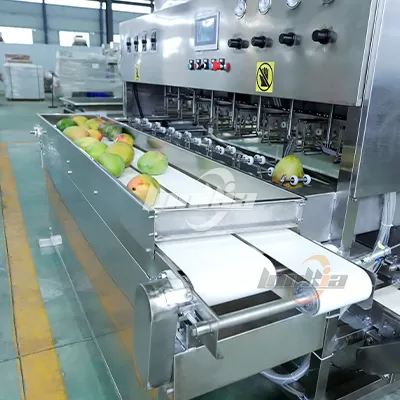
1. Raw Material Variability
1.1 Differences in Mango Variety and Size
Mango varieties differ significantly in:
Fiber content
Flesh thickness
Seed size and shape
A processing line optimized for one variety may perform poorly with another. Large seeds or fibrous flesh can reduce pulping efficiency and increase waste if equipment settings are not adjusted accordingly.
Practical solutions include:
Sorting mangoes by size and variety before processing
Designing equipment with adjustable parameters
Processing different varieties in separate production runs
1.2 Inconsistent Ripeness Levels
Ripeness has a direct impact on almost every processing step. Under-ripe mangoes resist peeling and generate higher mechanical stress, while over-ripe mangoes are prone to crushing and excessive pulp loss.
Inconsistent ripeness leads to:
Uneven peeling performance
Variable cutting accuracy
Fluctuating pulp yield
Solutions focus on:
Pre-ripening control
Visual or sensor-based sorting
Separating batches by maturity level
2. Peeling and De-Stoning Challenges
2.1 Irregular Shape and Soft Flesh
Unlike spherical fruits, mangoes have asymmetrical shapes and soft flesh that deforms easily under pressure. This complicates mechanical peeling and increases the risk of flesh damage.
Common problems include:
Incomplete peeling
Excessive flesh removal
Skin fragments remaining on pulp
2.2 Seed Removal Inefficiency
The mango seed is large, flat, and often offset from the fruit’s center. In mechanical de-stoning, this leads to:
Incomplete separation
High flesh retention on the seed
Equipment clogging
These issues directly affect yield and line stability.
2.3 Engineering and Process Solutions
Effective solutions combine equipment design and process strategy:
Dedicated mango peeling and de-stoning machines
Adjustable cutting depth and pressure control
Hybrid approaches combining automation with manual assistance for difficult batches
The goal is not full automation at any cost, but consistent performance across variable raw material conditions.
3. High Product Loss During Cutting and Pulping
3.1 Causes of Yield Loss
Yield loss during cutting and pulping often results from:
Over-aggressive cutting
Poor alignment between cutting tools and fruit geometry
Excessive shear force damaging flesh structure
These factors can significantly increase waste, especially when processing large volumes.
3.2 Cost Implications of Product Loss
Even small increases in yield loss translate into substantial raw material waste at scale. High loss rates reduce profitability and make cost control more difficult, particularly during peak processing seasons.
3.3 Practical Ways to Improve Yield
Processors can reduce losses by:
Optimizing cutting paths
Using low-shear pulping equipment
Implementing routine blade inspection and maintenance
Small mechanical adjustments often produce measurable improvements in yield consistency.
4. Juice and Pulp Quality Instability
4.1 Fiber Content and Texture Variability
Mango pulp quality is highly sensitive to fiber content. Differences in variety and maturity can cause:
Excessive fiber in juice and purée
Inconsistent mouthfeel
Variations in viscosity
These inconsistencies reduce product uniformity and complicate downstream formulation.
Solutions include:
Multi-stage pulping and refining
Adjustable screen sizes
Standardizing raw material batches before pulping
4.2 Oxidation and Color Degradation
Mango flesh is prone to enzymatic browning once cut. Extended exposure to oxygen during slow or poorly coordinated processing leads to:
Color darkening
Flavor deterioration
Reduced consumer acceptance
Effective control strategies:
Minimizing transfer time between steps
Temperature control during processing
Enzyme inactivation through controlled heat treatment
4.3 Process Timing as a Quality Control Tool
In mango processing, time is a critical quality variable. Well-designed lines prioritize short, predictable process times between cutting, pulping, and stabilization steps to preserve fresh fruit characteristics.
5. Throughput Bottlenecks in Mango Processing Lines
5.1 Imbalanced Line Sections
Throughput issues often arise when one processing step operates slower than others. Common bottlenecks include:
Peeling slower than pulping
Heating or cooling stages limiting overall capacity
5.2 Scaling Challenges
Increasing line capacity without addressing upstream and downstream compatibility often creates inefficiencies rather than productivity gains.
5.3 Line Balancing Solutions
Effective approaches include:
Modular equipment selection
Buffer tanks and accumulation zones
Data-driven capacity analysis
Balanced lines operate more reliably and with fewer disruptions.
6. Energy and Water Consumption Challenges
6.1 Water Use in Washing and Cleaning
Mango processing requires frequent washing due to sticky residues. Without optimization, water usage can become excessive.
Optimization strategies:
Counterflow washing
Water recirculation systems
Filtration and reuse
6.2 Energy Demand in Thermal Processing
Heating and cooling steps consume significant energy, especially during pasteurization or aseptic processing.
Energy efficiency improvements include:
Heat recovery systems
Insulated pipelines and tanks
Optimized temperature profiles
7. Designing a More Reliable Mango Processing Line
A robust mango processing line is designed around raw material variability rather than ignoring it. Key design principles include:
Adjustable process parameters
Modular equipment configuration
Allowance for seasonal fluctuations
Flexibility is a competitive advantage in mango processing.
8. Case-Based Insights: Typical Problems and Fixes
Small-scale processors: Overinvestment in automation without raw material control
Large-scale plants: Throughput imbalance caused by partial upgrades
Juice-focused lines: Inadequate fiber control leading to quality complaints
Learning from these patterns helps avoid costly mistakes.