
In high-volume egg processing facilities, production speed and hygiene control must operate in parallel. While much attention is placed on egg washing, grading, and packaging, reusable egg trays often represent an overlooked source of contamination and operational disruption.
Egg trays circulate continuously between farms, processing lines, and storage areas. Without proper cleaning and sanitation, they can carry organic residues, shell fragments, and microorganisms back into the processing environment. As throughput increases, manual or inconsistent tray cleaning quickly becomes a bottleneck.
Egg tray washer systems are therefore not auxiliary equipment but essential infrastructure that supports food safety, line efficiency, and regulatory compliance in modern egg processing plants.
1. What Is an Egg Tray Washer System?
1.1 Definition and Industrial Function
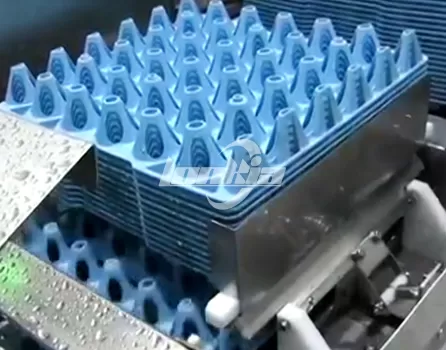
An egg tray washer system is an automated industrial machine designed to clean, sanitize, and often dry reusable egg trays at a speed compatible with high-throughput egg processing lines. It replaces manual washing or basic rinsing methods with a controlled, repeatable process.
Within the processing line, the system ensures that clean trays are consistently available for egg packing, preventing interruptions caused by tray shortages or hygiene failures.
1.2 Egg Tray Cleaning as a Critical Control Point
Reusable trays come into direct or indirect contact with eggs, workers, and production surfaces. If inadequately cleaned, they can become vectors for cross-contamination.
Common contaminants include:
Egg residue and albumen
Shell fragments and dust
Organic debris from transport environments
In high-volume operations, even small sanitation lapses can propagate rapidly, making tray washing a critical control point within the overall hygiene management system.
2. Challenges of Egg Tray Cleaning in High-Volume Operations
2.1 Throughput Pressure and Process Bottlenecks
As production capacity increases, tray circulation must match the speed of egg washing and grading equipment. Manual or low-capacity cleaning systems struggle to keep pace, leading to:
Accumulation of dirty trays
Interruptions in packing operations
Increased labor dependency
High-volume facilities require tray washer systems that operate continuously and predictably.
2.2 Hygiene Consistency at Scale
Manual cleaning introduces variability. Differences in washing time, water temperature, and chemical concentration result in inconsistent sanitation outcomes.
In large-scale plants, inconsistent tray hygiene can undermine otherwise well-controlled processes, making automated systems essential for uniform cleaning performance.
2.3 Labor, Water, and Energy Constraints
Relying on manual cleaning increases labor costs and exposes operations to workforce availability risks. At the same time, inefficient washing practices often result in excessive water and energy consumption.
Modern egg tray washer systems address these constraints by optimizing water usage, reducing manual handling, and stabilizing operational costs.
3. Purpose of Egg Tray Washer Systems in High-Volume Lines
3.1 Supporting Continuous Production Flow
High-volume egg processing relies on uninterrupted tray availability. Egg tray washer systems ensure a constant supply of clean trays, allowing packing operations to run without delay.
This continuity is essential for maximizing equipment utilization and meeting production targets.
3.2 Ensuring Hygienic Consistency and Risk Reduction
Automated tray washing standardizes cleaning parameters such as temperature, exposure time, and sanitizer concentration. This reduces reliance on operator judgment and minimizes sanitation-related variability.
Consistent hygiene performance supports food safety programs and simplifies verification and auditing processes.
3.3 Reducing Manual Handling and Cross-Contamination
By automating tray cleaning and handling, washer systems reduce direct human contact with contaminated trays. This lowers the risk of cross-contamination and improves overall plant hygiene.
3.4 Enhancing Long-Term Operational Stability
Reliable tray washing prevents downstream disruptions, reduces emergency cleaning interventions, and supports stable, predictable plant operations—an essential requirement in high-volume environments.
4. How an Egg Tray Washer System Works
4.1 Core Cleaning and Sanitizing Principles
Egg tray washer systems rely on a combination of:
Mechanical action (high-pressure spray or brushing)
Thermal energy (hot water)
Chemical sanitation
The interaction of these factors removes organic residues and reduces microbial load while preserving tray integrity.
4.2 Typical Washing Stages in High-Volume Systems
A standard egg tray washer system consists of multiple sequential stages:
Pre-Rinse
Removes loose debris and prepares surfaces for effective washing.Main Wash
Uses heated water combined with detergents to dissolve organic residues.Sanitizing Stage
Applies disinfectants at controlled concentrations to reduce microbial contamination.Final Rinse and Drying
Removes chemical residues and prepares trays for immediate reuse.
Each stage is engineered to operate within strict time and temperature parameters to ensure repeatability.
4.3 Continuous Washing Logic for High Throughput
In high-volume facilities, tray washers typically operate in continuous mode. Trays move through the system on conveyors at a controlled speed, allowing for precise residence time management.
This design enables:
Stable throughput
Predictable cleaning outcomes
Seamless integration with upstream and downstream processes
Continuous systems are essential for maintaining rhythm and balance across the entire egg processing line.
5. Key Components of a High-Volume Egg Tray Washer
5.1 Tray Conveying System
Chain or belt conveyors
Adjustable speed for residence time control
5.2 Spray and Mechanical Cleaning Modules
High-pressure spray nozzles
Optional brushing systems
5.3 Heating and Chemical Dosing Systems
Temperature-controlled water heating
Automated detergent and sanitizer dosing
5.4 Drying and Discharge Units
Air knives or heated air blowers
Ensures trays are dry and ready for reuse
5.5 Control and Monitoring System
PLC-based automation
Real-time monitoring of temperature, flow, and chemical concentration
These components work together to deliver consistent results under high load conditions.