
We have all experienced the disappointment. You buy a bag of frozen french fries from the supermarket, drop them into hot oil, and hope for that magical fast-food crunch. Instead, you end up with limp, greasy, soggy potatoes that taste more like oil sponges than a delicious side dish.
Why do restaurant fries have that shattering, golden-brown crust and a fluffy, steaming interior, while homemade attempts fall flat? The answer is not in the brand of the potato—it is entirely in the execution.
Deep frying frozen french fries is not just about heating up oil; it is a rapid, violent process governed by thermodynamics and culinary science. Whether you are hosting a burger night or just craving a late-night snack, this guide will dissect the exact temperatures, oils, and equipment you need to transform a standard bag of frozen fries into absolute restaurant-quality perfection.
1. The Culinary Science of Deep Frying Frozen French Fries
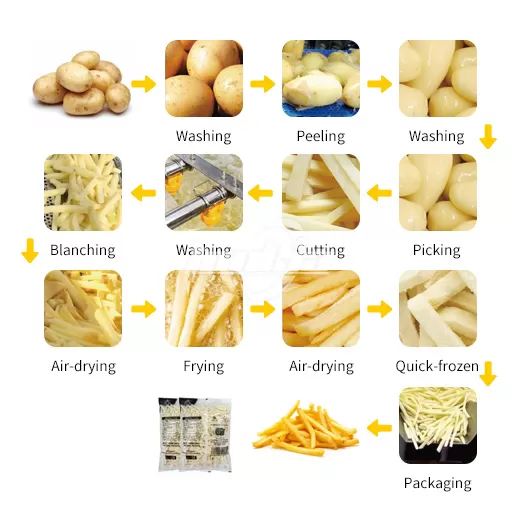
To master the fry, you must first understand what is happening on a microscopic level when a freezing-cold potato meets boiling-hot fat. Commercial frozen french fries are actually "par-fried" (partially fried) at the factory before being flash-frozen. This means the cooking process has already started.
Why You Should Never Thaw Your Fries (The Ice Crystal Matrix)
The most common and devastating mistake home cooks make is letting the fries thaw on the counter before frying. Do not thaw your fries. When potatoes are flash-frozen at the factory, the moisture inside them turns into microscopic ice crystals. If you let the fries thaw, those ice crystals melt back into liquid water. The structural integrity of the potato collapses, and the starch turns into a wet paste. When you drop thawed fries into hot oil, they absorb the fat immediately, resulting in a soggy, greasy mess. Keeping them at a rigid -18°C (0°F) right up until the moment they hit the oil ensures the surface moisture vaporizes instantly, creating a protective barrier that keeps the oil out and the potato flavor in.
Starch Gelatinization and The Maillard Reaction
When you drop frozen fries into 350°F (175°C) oil, two critical scientific reactions occur simultaneously:
Starch Gelatinization: The extreme heat causes the surface starches of the potato to rapidly dehydrate and form a rigid, microscopic crust. This crust acts like a shield, preventing the oil from soaking into the center of the fry.
The Maillard Reaction: As the surface temperature of the fry exceeds 300°F (150°C), the amino acids and reducing sugars in the potato begin to aggressively interact. This chemical reaction is responsible for creating that beautiful, appetizing golden-brown color and the complex, savory flavor profile we associate with perfect fried food.
2. Choosing the Right Frying Oil (Smoke Point vs. Flavor)
Not all fats are created equal. The oil you choose acts as the heat transfer medium, and it dictates both the safety of your kitchen and the final taste of your fries.
High Smoke Point Oils (Peanut, Canola, Sunflower)
Because we are deep frying frozen french fries at 350°F (175°C), you absolutely must choose an oil with a smoke point well above 400°F (204°C). If you use an oil with a low smoke point—like extra virgin olive oil or unclarified butter—it will break down, burn, release acrid smoke, and infuse your fries with a bitter, burnt chemical taste.
Peanut Oil: The gold standard for deep frying. It has a very high smoke point and imparts a subtly sweet, nutty flavor that complements potatoes perfectly.
Canola and Sunflower Oil: Excellent, neutral-tasting alternatives that are highly affordable and perfectly safe for high-heat frying.
The Restaurant Secret: Beef Tallow and Blended Oils
If you want to unlock the legendary flavor of pre-1990s fast-food french fries (like the original McDonald's recipe), the secret ingredient is animal fat. Pure vegetable oils provide great texture but lack savory depth.
To elevate your homemade fries to a gourmet level, try blending your frying oil. Adding just 10% to 20% beef tallow or duck fat to your peanut or canola oil will drastically enhance the savory, "umami" flavor profile of the crust without compromising the high smoke point required for a safe fry.
3. Essential Equipment for Safe and Perfect Frying
You do not need a massive commercial deep fryer to achieve restaurant-quality results, but you do need the right tools to manage the intense thermal drop that occurs when frozen food hits hot oil.
The Heavy-Bottomed Dutch Oven vs. Countertop Deep Fryer
When you drop a handful of -18°C frozen fries into hot oil, the temperature of that oil will plummet immediately. If the temperature stays too low for too long, the fries will boil in their own moisture rather than frying, destroying the crust.
The Cast Iron Dutch Oven: This is your best friend. Cast iron is incredibly dense and has massive thermal mass. It retains heat brilliantly, meaning the oil temperature recovers much faster after you add the frozen fries.
Countertop Deep Fryers: While convenient because of their built-in thermostats, many cheap domestic deep fryers have weak heating elements. They struggle to recover from the "temperature shock" of frozen fries, leading to longer, greasier cooking times.
The Importance of an Accurate Deep-Fry Thermometer
Frying blind by waiting for the oil to "shimmer" or dropping a piece of bread in to test the heat is a recipe for inconsistency. To trigger the Maillard reaction without burning the starch, you need precision. A clip-on deep-fry thermometer or a high-quality digital instant-read thermometer is non-negotiable. You must ensure the oil is exactly at 350°F (175°C) before the fries go in, and monitor it closely to maintain heat during the cook.
The Cooling Rack (Why You Must Ditch Paper Towels)
This is the second biggest mistake home cooks make. After successfully frying the perfect batch, they dump the hot fries onto a plate lined with paper towels to absorb the excess oil.
Stop doing this. Freshly fried potatoes are still releasing massive amounts of steam. When you place them on a flat paper towel, that steam is trapped underneath the fries. Within 60 seconds, the steam condensates, making the bottoms of your fries wet and completely destroying the crispy crust you just worked so hard to build.
Instead, immediately transfer your finished fries to a wire cooling rack set over a baking sheet. This allows 360-degree airflow, letting the excess oil drip away while allowing the steam to escape harmlessly into the air, locking in the ultimate crunch.
4. Step-by-Step: Deep Frying Frozen French Fries
Now that you have the science, the right oil, and the proper equipment, it is time to execute. Deep frying frozen french fries requires precision. Follow these steps exactly to ensure maximum crispiness.
Step 1: Prepping the Oil and Hitting the Target Temperature (350°F / 175°C)
Fill your heavy-bottomed Dutch oven or deep fryer with your chosen high-smoke-point oil. Never fill the pot more than halfway. Hot oil expands, and frozen fries will cause the oil to bubble up vigorously; you need plenty of headspace to prevent a dangerous overflow.
Turn your stove to medium-high heat and attach your deep-fry thermometer. Heat the oil steadily until it reaches exactly 350°F (175°C). Do not rush this process with maximum heat, as you risk degrading the oil before you even start cooking.
Step 2: The Golden Rule of Batch Sizing (Preventing Temperature Drop)
This is the moment where most home cooks fail. If you dump an entire bag of -18°C frozen fries into the pot, the oil temperature will instantly plummet from 350°F down to 250°F or lower. At that low temperature, the crust cannot form. The fries will simply sit in lukewarm oil, absorbing fat and turning soggy.
The Golden Rule: Only fry in small batches. The frozen fries should never make up more than one-third of the volume of the oil. Frying a handful at a time ensures the thermal mass of the oil stays high, recovering back to 350°F almost instantly.
Step 3: The Fry Cycle and Agitation
Gently lower your small batch of frozen fries into the hot oil. Immediately, the oil will vigorously bubble—this is the frozen moisture rapidly vaporizing into steam and escaping the potato.
Time: Depending on the thickness of the cut, frying will take anywhere from 3 to 5 minutes for shoestring fries, and 5 to 8 minutes for thick-cut steak fries.
Agitation: After the first 45 seconds, use a metal spider strainer or tongs to gently nudge the fries. This prevents them from sticking together.
You will know they are perfectly done when the violent bubbling subsides (meaning the surface moisture is gone), they float slightly to the top, and they achieve a deep, even golden-brown color.
5. Post-Fry Perfection: Seasoning and Resting
The cooking does not stop when the fries leave the oil. The first 30 seconds out of the fryer dictate whether your fries will be flavorless or restaurant-quality.
Why You Must Salt Immediately (The 5-Second Rule)
As soon as you pull the fries from the oil and transfer them to your wire cooling rack, you must salt them immediately. Do not wait. When fries are pulled from the fryer, the residual microscopic layer of oil on their surface is still hot and liquid. If you salt them within the first 5 seconds, the salt granules will embed themselves directly into that hot oil and stick to the crust perfectly. If you wait even a minute, the oil cools and drains away, and the salt will simply bounce off the dry fries and pool at the bottom of the tray.
Elevating Your Seasoning Game
While standard table salt works, upgrading your seasoning will drastically improve the final product:
Kosher Salt: The jagged, flaky structure of Kosher salt clings to fried foods much better than the dense, cubic crystals of standard table salt.
Restaurant Blends: For a gourmet touch, toss your hot fries in a stainless steel bowl with garlic powder, smoked paprika, finely grated Parmesan cheese, and a dash of dried rosemary. If you want true luxury, a light drizzle of high-quality truffle oil immediately after frying transforms a basic frozen side dish into a premium appetizer.
6. Safety First: Managing Hot Oil and Ice
Deep frying is inherently dangerous if not respected. You are introducing frozen water (ice) to boiling fat—two substances that react violently together.
Preventing Oil Splatter and Steam Explosions
Before opening your bag of frozen fries, give it a firm shake and tap it on the counter. Open the bag and brush away any large, loose chunks of ice crystals. Never throw frozen fries into hot oil from a distance. The splashback of 350°F oil will cause severe burns.
Instead, place the fries into a metal spider strainer or your fryer basket, and lower them slowly and deliberately into the oil. If the oil begins to violently bubble up toward the rim of the pot, simply lift the strainer out for two seconds to let the bubbles subside, then lower it back in.
Proper Oil Disposal and Re-use
Do not pour used frying oil down your kitchen sink, as it will solidify and destroy your plumbing.
If you plan to reuse the oil, let it cool completely to room temperature. Strain it through a fine-mesh sieve lined with cheesecloth to remove all burnt potato particles (which will cause the oil to spoil faster). Store the strained oil in an airtight, dark container in a cool place. You can typically reuse deep-frying oil 3 to 4 times for potatoes. Once the oil becomes dark, thick, or develops a rancid, fishy smell, it must be discarded in the trash.
7. Frequently Asked Questions (FAQs)
Q: How long does deep frying frozen french fries take?
A: At an optimal oil temperature of 350°F (175°C), standard shoestring frozen fries take about 3 to 5 minutes to become perfectly crispy. Thicker cuts, like crinkle-cut or steak fries, will require 5 to 8 minutes. Always judge by the deep golden color and the reduction in oil bubbling rather than a strict timer.
Q: Why are my deep-fried frozen french fries soggy and oily?
A: There are three main culprits for soggy fries:
You let them thaw before frying, which destroys their internal structure.
You overcrowded the pot, causing the oil temperature to drop too low, resulting in the potatoes boiling in oil instead of frying.
You placed the finished fries on paper towels, which trapped the steam and ruined the crust.
Q: Can I double-fry frozen french fries for extra crunch?
A: While the classic Belgian or French method for making fries from scratch requires a "double fry" (blanching at a low temp, then crisping at a high temp), doing this with frozen fries is usually unnecessary. Commercial frozen french fries are already par-fried at the factory. When you deep fry them straight from the freezer at home, you are effectively performing the second, high-heat crisping fry.