
The best cabbage processing line for large-scale production is one that combines high processing capacity, reliable equipment, efficient material handling, and consistent product quality. For industrial vegetable processors, a well-designed production line can reduce manual labor, improve processing efficiency, and support continuous operation.
However, not every cabbage processing line is suitable for every factory. The right solution depends on the required output, final cabbage product, washing and cutting requirements, factory layout, and level of automation.
What Makes a Cabbage Processing Line Suitable for Large-Scale Production?
A large-scale cabbage processing line must handle high volumes of raw materials without creating bottlenecks between processing stages.
Key features include:
High processing capacity: Equipment should match the required hourly output.
Continuous operation: Conveyors and processing machines should work together smoothly.
Consistent cutting quality: Cutting equipment should produce cabbage pieces that meet the required specifications.
Efficient washing: Industrial washing equipment should handle the required volume while maintaining appropriate cleaning performance.
Easy maintenance: Equipment should allow convenient cleaning, inspection, and routine servicing.
Expandable configuration: The production line should accommodate future capacity increases when needed.
The best system is not necessarily the largest or most automated one. It is the line that meets production targets efficiently and reliably.
What Equipment Does a Large Cabbage Processing Line Need?
A commercial cabbage processing line can include several interconnected machines, depending on the final product and processing requirements.
1. Feeding and Conveying Systems
Automated feeding and conveyors move fresh cabbage between processing stages. For high-volume production, a well-designed conveying system helps maintain a steady material flow and reduces unnecessary manual handling.
2. Cabbage Trimming Equipment
Trimming removes unwanted outer leaves, roots, and damaged portions before further processing. The appropriate trimming method depends on the incoming cabbage condition and the required level of automation.
3. Industrial Cabbage Cutting Machines
Industrial cabbage cutters can process cabbage into slices, strips, or smaller pieces. For shredded cabbage production, cutting equipment should provide consistent cutting sizes and match the capacity of the upstream and downstream machines.
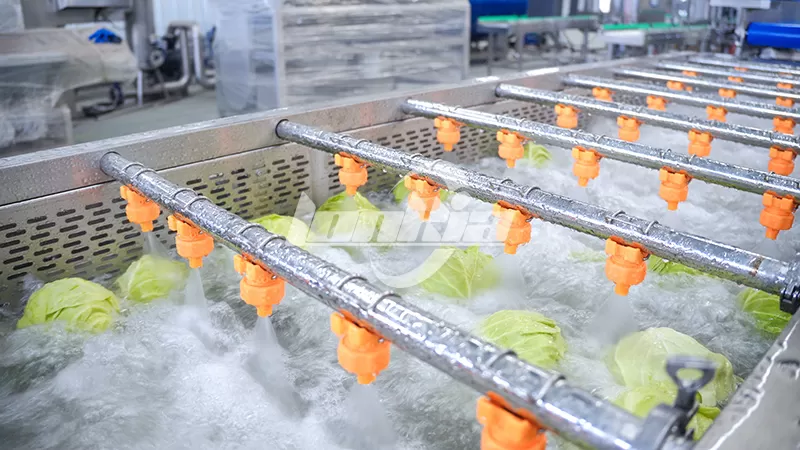
4. Commercial Vegetable Washing Machines
Washing equipment removes soil, plant debris, and other surface contaminants. A suitable industrial washing system should provide sufficient throughput, effective cleaning, and convenient sanitation.
5. Dewatering and Packaging Equipment
After washing, dewatering equipment can remove excess surface water before inspection and packaging. Weighing and packaging machines can also be integrated when the finished product needs to be packed for retail, foodservice, or further processing.
How Much Capacity Should a Large-Scale Cabbage Processing Line Have?
The required capacity depends on daily production targets, operating hours, raw material supply, and expected demand.
For example, a factory processing 8 tons of cabbage during an 8-hour shift needs an average throughput of approximately 1 ton per hour. In practice, equipment selection should also account for downtime, raw material variations, and differences in processing speed between machines.
When planning capacity, consider:
Daily and hourly production targets
Seasonal fluctuations in cabbage supply
Required cutting and washing stages
Peak production requirements
Future business expansion
All major machines should be selected to work at compatible processing speeds. Otherwise, one slow machine can limit the output of the entire line.
Is an Automatic Cabbage Processing Line Better?
For large-scale operations, an automatic cabbage processing line can reduce repetitive manual work and improve production consistency.
Automation may cover feeding, conveying, cutting, washing, dewatering, inspection, and packaging. The appropriate level depends on the production process and labor requirements.
A fully automatic line generally requires a higher initial investment. Buyers should therefore compare not only equipment prices but also labor costs, maintenance, energy consumption, and expected production benefits.
For some factories, a partially automated line may provide a better balance between investment and efficiency.
How to Choose the Best Cabbage Processing Line Manufacturer
Choosing the right manufacturer is as important as selecting the equipment itself. Before purchasing, evaluate the following factors:
Experience in food processing machinery
Ability to customize equipment configurations
Clear technical specifications and capacity information
Food-contact materials and hygienic design
Installation and commissioning support
Availability of spare parts and after-sales service
Ask the manufacturer to assess your actual production requirements instead of relying on a standard machine list. A process-based proposal can help identify capacity limitations and avoid unnecessary equipment costs.
What Affects the Cost of a Large-Scale Cabbage Processing Line?
The price of a large-scale cabbage processing line depends on its capacity, equipment configuration, automation level, and customization requirements.
A line containing only cutting and washing equipment will have different costs from a complete system with trimming, dewatering, inspection, conveying, and automatic packaging.
Other factors include stainless steel construction, control systems, factory layout, installation requirements, and supporting utilities.
To obtain an accurate quotation, provide the manufacturer with your target capacity, final product specifications, required processing steps, and available installation space.
Why Choose LONKIA Machinery?
LONKIA Machinery provides food processing machinery and customized production line solutions for commercial food manufacturers. Cabbage processing equipment can be configured according to production capacity, product specifications, automation requirements, and factory layout.
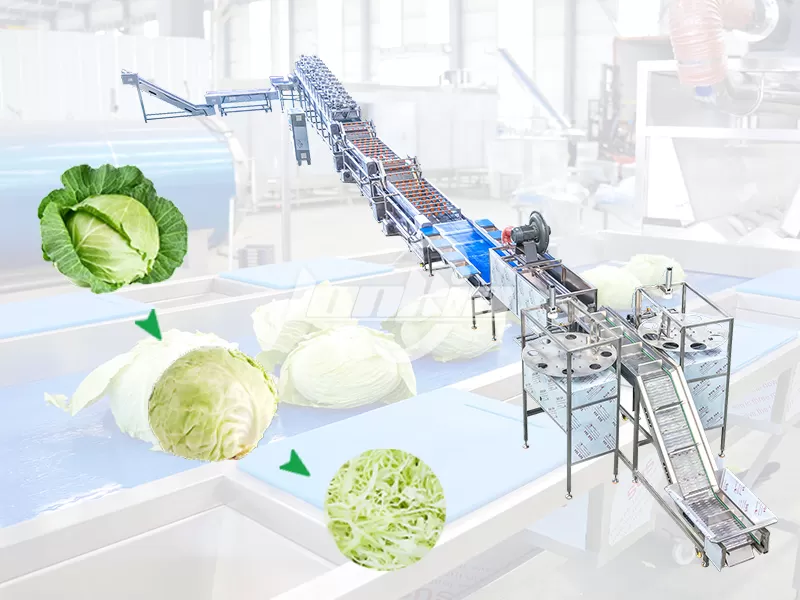
Depending on the project, a production line can integrate conveying, cutting, washing, dewatering, inspection, and packaging equipment into a coordinated workflow.
Discussing your raw materials, target output, and finished product requirements with LONKIA Machinery can help determine a practical configuration for your production facility.
Conclusion
The best cabbage processing line for large-scale production combines suitable capacity, reliable cutting and washing equipment, efficient conveying, and an appropriate level of automation. The complete system should be designed around the final product and the factory's production targets.
Before making a purchasing decision, compare equipment configurations, operating costs, hygiene requirements, maintenance needs, and manufacturer support. A properly planned cabbage processing line can help large-scale processors improve productivity and maintain consistent product quality.