
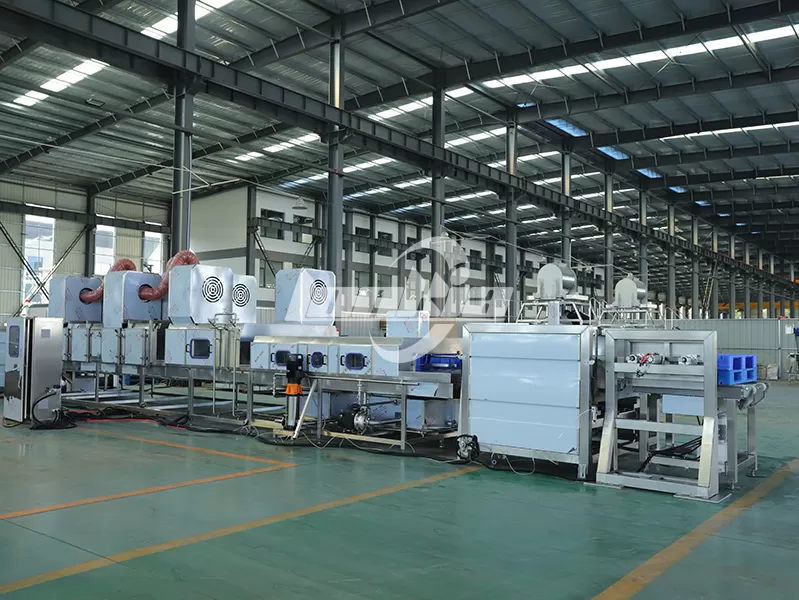
When purchasing an automatic pallet washer, in addition to considering the equipment's processing capacity, it is also important to evaluate the cleaning effectiveness, detergent residue, drying efficiency, and subsequent handling requirements. Pre-wash, rinse, and drying are common functions in the pallet washing process, but not all factories require the same configuration. Selecting the appropriate washing process ensures that the equipment better meets actual production requirements.
Functions of Each Stage in an Automatic Pallet Washer
1. Pre-wash: Removing Surface Dust and Loose Contaminants
The pre-wash stage is primarily used to remove dust, mud, and easily detachable residues from the pallet surface, preparing it for subsequent deep cleaning. The automatic pallet washer rinses the pallets via a spray system to minimize the impact of loose contaminants on the subsequent cleaning process.
For trays with a significant amount of solid residue, special attention should be paid to nozzle layout, spray coverage, and conveyor speed to ensure that the tray's surface, bottom, and grooves are thoroughly rinsed.
2. Rinsing: Removing Detergent and Residual Contaminants
The main wash stage typically removes grease and stubborn dirt through spraying, appropriate water temperature, and detergent. After the main wash is complete, the rinse system uses clean water to flush away residual detergent and dislodged contaminants.
For applications with specific cleanliness requirements, such as food processing, the effectiveness of the rinse is particularly important. When selecting equipment, verify the rinse water volume, spray coverage, and methods used to validate cleaning effectiveness to prevent detergent residue on the tray surfaces.
3. Drying: Meeting Subsequent Handling Requirements
Moisture may remain in the grids, grooves, and bottom support structures of washed trays. A drying system can reduce surface moisture using hot or room-temperature air, thereby shortening wait times.
If trays need to be put into production, stacked, or moved to a designated storage area immediately after washing, a drying function is typically more practical. If subsequent processes allow for natural drainage, the need for an additional drying unit can be assessed based on the production schedule.
How to Choose the Right Washing Configuration?
1. Select Based on Tray Specifications and Contaminant Types
Trays of different materials, sizes, and structures have varying requirements for automatic pallet washers. Before purchasing, clearly identify the pallet's length, width, height, material, and bottom structure, and specify the primary types of contamination, such as grease, food residue, mud, or general dust.
For stubborn contamination, it is also necessary to comprehensively consider water temperature, spray pressure, detergents, and cleaning duration. It is recommended to conduct cleaning tests using actual pallets to confirm whether the equipment can achieve the expected results.
2. Determine Equipment Configuration Based on Production Needs
If the facility requires continuous tray processing, focus on the pallet washing equipment's processing capacity, conveyor speed, and cleaning cycle, and verify that the pre-wash, main wash, rinse, and drying stages can keep pace with production demands.
LONKIA automatic tray washers utilize PLC-based automatic control, allowing for the configuration of cleaning and drying functions tailored to actual needs. The equipment's processing capacity, cleaning parameters, and specific configuration should be determined based on tray specifications and on-site operating conditions to ensure the equipment aligns with the production process.
What Should Be Confirmed Before Purchasing an Automatic Pallet Washer?
Before requesting quotes from suppliers, it is recommended to prepare the following information:
- Pallet Information: Dimensions, material, structure, and daily washing volume.
- Washing Requirements: Primary types of contamination, cleaning standards, and whether disinfection is required.
- Functional Configuration: Whether pre-wash, rinse, heating, and drying systems are needed.
- On-site Conditions: Power supply, installation space, water inlet and outlet, and existing conveying equipment.
- Procurement Requirements: Target processing capacity, equipment budget, delivery timeline, and relevant technical documentation.
Clarifying these conditions in advance helps suppliers develop more suitable equipment solutions and makes quotes from different suppliers more comparable.
Conclusion
Pre-wash, rinse, and drying each serve distinct functions. When selecting an automatic tray washer, the specific configuration should be determined based on the degree of tray contamination, cleaning requirements, production pace, and subsequent usage—rather than simply adding more features.
If you are looking for an automatic pallet washer suitable for factory use, please contact LONKIA and provide your tray specifications, target processing capacity, and cleaning requirements. We can assist you in evaluating equipment configurations, technical parameters, and quotation proposals based on your actual application needs.