
Large-scale potato processing plants need more than basic sorting equipment. When processing several tons of potatoes per hour, the grading system must deliver high capacity, accurate sorting, gentle product handling, and stable operation. A well-designed potato sorting and grading line can help large processors reduce labor requirements while maintaining consistent product quality.
Choosing the best system depends on the type of potatoes being processed, required grading standards, production capacity, and the level of automation needed. This guide explains the key features to consider when selecting a potato sorting and grading line for large-scale production.
What Does a Large-Scale Potato Sorting and Grading Line Include?
A large-scale grading line usually combines several machines to create a continuous processing system.
Depending on the application, the line may include:
potato receiving hopper
feeding and elevator conveyors
potato cleaning equipment
sorting and grading machine
inspection conveyor
weighing system
packaging equipment
Integrating these machines allows potatoes to move continuously from receiving to grading and packaging, reducing manual handling between processing stages.
High Processing Capacity
Capacity is one of the most important factors for a large potato processing plant.
Industrial grading lines can be designed for different production requirements, such as 5, 10, 20, or more tons per hour. The right capacity should match your actual production volume while allowing some room for future growth.
A properly sized line helps prevent bottlenecks and keeps the entire processing system running smoothly.
Accurate Potato Size Grading
Large-scale processors often supply different markets with specific potato size requirements. An effective grading system should separate potatoes into consistent size categories.
Depending on the machine design, potatoes can be graded by:
size
weight
diameter
quality characteristics
Accurate grading improves product uniformity and makes subsequent packaging or processing more efficient.
Gentle Potato Handling
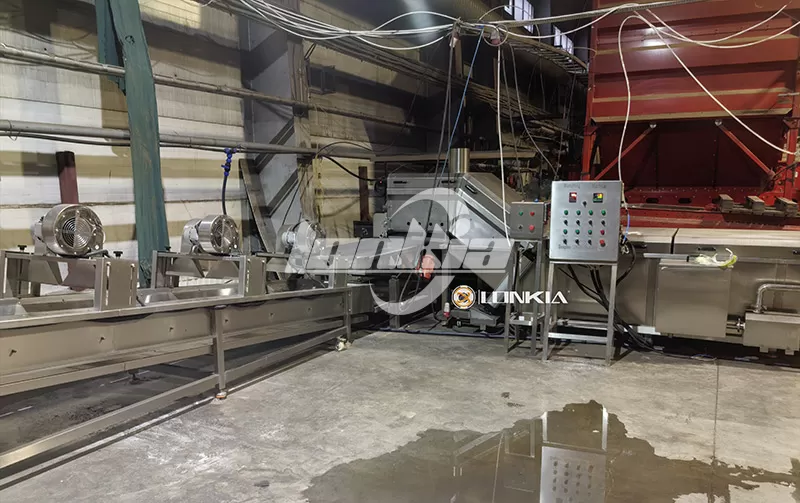
High capacity should not come at the expense of product quality. Excessive drops, fast conveyors, or unsuitable transfer points can cause bruising and damage.
A quality potato sorting and grading line should use smooth product transfers and controlled conveying speeds to reduce mechanical damage.
This is particularly important for fresh-market potatoes, where appearance directly affects selling value.
Automatic Operation
For large-scale production, automation can significantly improve efficiency.
An automatic grading line can reduce manual work during:
feeding
sorting
grading
conveying
weighing
packaging
PLC controls and automated conveyors also make it easier for operators to monitor and adjust the production process.
Integration with Other Potato Processing Equipment
A large-scale grading system should be easy to integrate with other processing equipment.
For example, a complete potato processing line may connect washing, grading, inspection, and packaging equipment into one continuous workflow.
This reduces unnecessary handling and allows the entire production process to operate more efficiently.
Durable Construction and Easy Maintenance
Industrial potato processing equipment needs to withstand continuous operation. Stainless steel construction is commonly preferred because it provides good corrosion resistance and is easy to clean.
The machine should also provide convenient access to important components, making routine inspection, cleaning, and maintenance easier.
How Much Does a Large-Scale Grading Line Cost?
The price of a large-scale potato sorting and grading line depends on capacity, automation, grading technology, and additional equipment.
A basic industrial grading system may cost tens of thousands of dollars, while a complete automated line with washing, optical sorting, weighing, and packaging equipment can require an investment of more than $100,000.
Instead of choosing the cheapest option, buyers should evaluate total operating costs, expected capacity, maintenance requirements, and long-term production efficiency.
How to Choose the Best Potato Grading Line
Before purchasing, consider these questions:
How many tons of potatoes do you need to process per hour?
How many grading sizes are required?
Do you need size, weight, or optical sorting?
Will the line connect to washing and packaging equipment?
How much automation does your facility require?
Do you expect production to increase in the future?
These factors will help determine the right equipment configuration.
Why Choose LONKIA Machinery?
LONKIA Machinery provides customized potato processing solutions for farms, packing facilities, and large-scale food processing plants.
Our potato sorting and grading lines can be configured according to production capacity, grading requirements, factory layout, and automation needs. We can also integrate grading equipment with washing, inspection, and packaging systems to create a complete potato processing solution.
With professional engineering support and customized equipment design, LONKIA Machinery helps customers build efficient and reliable potato processing lines.
Conclusion
The best potato sorting and grading line for large-scale potato processing is not necessarily the most expensive system. It should provide the right combination of processing capacity, grading accuracy, gentle handling, automation, durability, and expandability.
For high-volume potato processors, investing in a properly designed automated grading line can improve production efficiency, reduce labor costs, and deliver more consistent products. Choosing an experienced manufacturer such as LONKIA Machinery can also make equipment customization, line integration, and long-term technical support much easier.