
In the fruit and vegetable processing industry, the processing capacity of bubble washers is one of the most closely scrutinized parameters when purchasing equipment. When planning to build vegetable processing lines, fruit processing lines, or prepared meal production lines, many customers ask: "How many kilograms of raw materials can this bubble cleaning machine wash per hour? Will it meet my production needs?"
In fact, the production capacity of a bubble washer is not determined by a single factor but is influenced by multiple aspects, including equipment design, conveyor speed, washing time, raw material type, and production requirements. Understanding these factors can help food processing companies select more suitable washing equipment and avoid issues such as insufficient capacity or mismatched configurations.
What Is the Standard Processing Capacity of a Bubble Washer Machine?
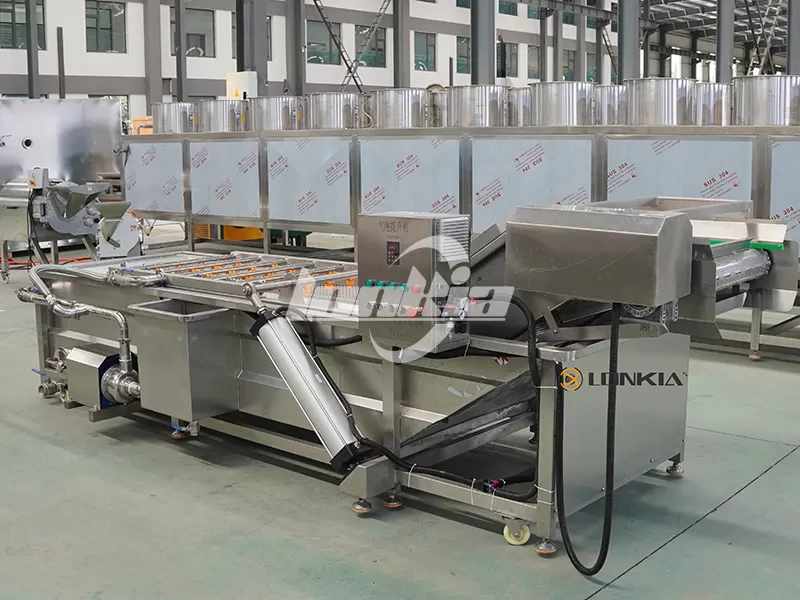
Bubble washers are typically used in continuous food processing operations, where they thoroughly clean fruits and vegetables through the combined action of bubbles, water flow, and a spray system. Depending on the equipment design and configuration, the processing capacity of bubble washers on the market generally ranges to meet various production needs—from several hundred kilograms per hour to several metric tons per hour.
For food processing plants, it is more important to determine the appropriate capacity based on their own raw material supply and the speed of downstream processing equipment, rather than simply pursuing higher throughput.
For example:
- High-density root and tuber products, such as potatoes and carrots, require a longer tumbling wash time;
- Leafy vegetables, such as lettuce and spinach, require a gentler conveying method;
- Fruits such as strawberries and tomatoes require minimized product impact to ensure product integrity.
Therefore, the actual hourly output of the same bubble washer may vary when processing different products.
What Factors Affect the Hourly Output of a Bubble Washer?
1. Wash Tank Length and Equipment Structure
A bubble washer primarily agitates the product using a stream of bubbles in the water tank, while a conveyor belt facilitates continuous washing.
The longer the cleaning section of the bubble washing equipment, the longer the raw materials remain in the water, and the better the cleaning results are typically. However, if the dwell time increases, the volume of material processed per unit of time will also be affected.
Therefore, when designing the equipment, it is necessary to balance:
- Cleaning effectiveness
- Conveyor speed
- Hourly throughput
A reasonable structural design ensures that the equipment achieves its target production capacity under stable operating conditions.
2. Raw Material Type Affects Actual Processing Speed
Different products have varying cleaning requirements, which also affect the operating speed of the bubble washer.
For example:
Root and tuber vegetables
Such as:
- Potato
- Carrot
- Beetroot
These may have soil adhering to their surfaces and require a stronger water flow for rinsing; therefore, the equipment must maintain sufficient cleaning time.
Leafy vegetables
Such as:
- Lettuce
- Spinach
- Cabbage
Since these products are delicate, the conveying speed must be reduced to avoid compromising product quality.
Therefore, when purchasing a bubble washer, customers should inform the equipment manufacturer in advance about the specific products they will be processing, rather than simply providing the target output.
How to Determine the Capacity of a Bubble Washer Based on Factory Needs?
When selecting a bubble washer, customers are advised to base their calculations on the following three factors:
1. Speed of Downstream Processing Equipment
If the following equipment is connected downstream of the washer:
- Vegetable cutters
- Frying lines
- Quick-freezing equipment
- Packaging equipment
then the washer's capacity must be aligned with the entire production process.
For example, if the downstream equipment processes 1,000 kg of raw materials per hour, the upstream washing equipment must also have a similar processing capacity to avoid delays or material backlogs.
2. Daily Production Hours
In addition to hourly output, the following factors must be considered:
- Number of working hours per day
- Weekly production frequency
- Raw material supply
By calculating the daily processing volume, customers can select the most appropriate equipment configuration with greater accuracy.
3. Product Cleaning Standards
Some customers focus not only on speed but also on cleaning effectiveness.
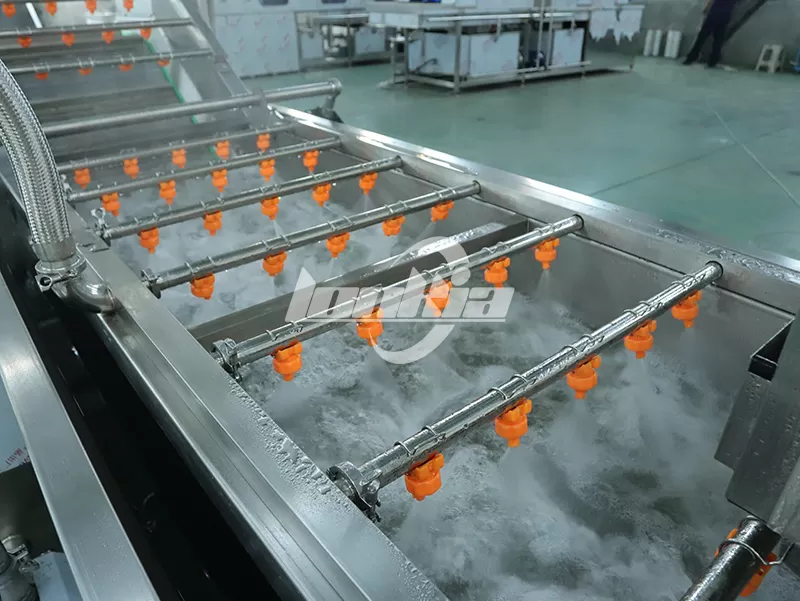
The Bubble Washer uses a bubble generation system, water circulation, and a spray washing structure to thoroughly agitate the raw materials in water while reducing manual labor. Currently, many fruit and vegetable processing systems employ a combination of bubbles and spray washing to enhance continuous cleaning performance.
Therefore, an appropriate cleaning time is also a key factor affecting final production capacity.
Conclusion
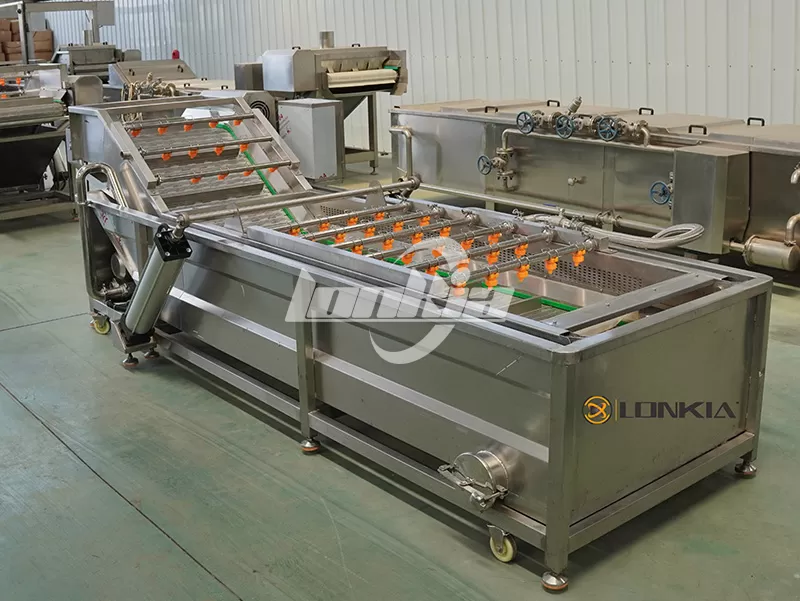
The production capacity of a bubble washer depends on the characteristics of the raw materials, cleaning requirements, equipment size, and production line configuration.
For food processing companies, the key to selecting the right bubble washer is not to choose the one with the highest output, but to select equipment that operates stably, meets cleaning standards, and integrates seamlessly with the entire production process. By clearly defining production needs in advance, customers can obtain more precise and efficient cleaning solutions.