
Processing garlic into garlic powder is not simply a matter of adding a grinder. For customers planning to build a garlic powder production line, the thoroughness of the initial peeling process, the integrity of the garlic cloves, and the compatibility between the peeling, washing, drying, and grinding equipment all affect the final product quality. Therefore, to properly configure a peeled garlic production line, equipment selection should be determined by working backward from the requirements of the final garlic powder product.
Determine Garlic Powder Production Requirements
Before selecting garlic processing machine, it is necessary to clarify the variety of raw garlic, the size of the cloves, the hourly processing capacity, and the required fineness of the final garlic powder. These parameters directly influence the configuration of the peeling, washing, drying, and grinding equipment.
If selection is based solely on the processing capacity of individual machines, it is easy to end up with a situation where the front-end peeling speed is too fast. In contrast, the back-end processing capacity is insufficient. Therefore, the entire peeled garlic production line should be matched according to its continuous processing capacity.
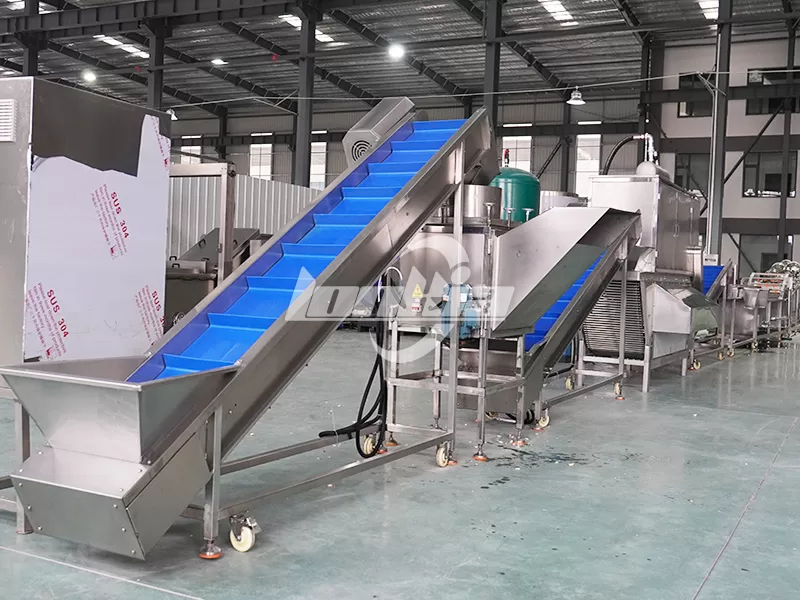
Peeling Is a Critical Step in Garlic Powder Production
Garlic powder production first requires clean garlic cloves. If the garlic skin is not thoroughly removed, residual skin may enter subsequent processes; if the cloves are severely damaged during peeling, it will also affect subsequent drying and grinding.
The peeled garlic production line uses a pneumatic peeling method to process cloved garlic, eliminating the need for traditional soaking. Depending on the raw material, the peeling rate can reach over 95%, with a maximum processing capacity of 3,000 kg/h. Pneumatic peeling reduces mechanical compression, helping to preserve the integrity of the garlic cloves and providing a stable supply of raw material for subsequent processing.
Installing Washing Equipment After Peeling
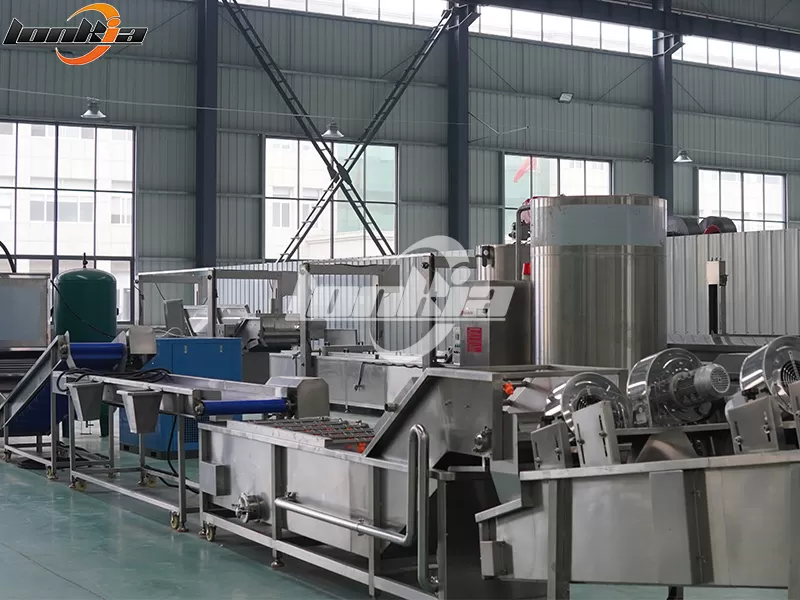
Peeled garlic cloves may still contain small amounts of skin and surface impurities, so appropriate washing equipment must be installed. The processing capacity of the washing equipment should match that of the peeling equipment to ensure a continuous flow of garlic cloves into the next process.
Proper conveying and equipment integration are equally important, as they reduce material buildup caused by manual transfer and help maintain stable operation of the entire production line.
Selecting Drying Equipment Based on Garlic Powder Specifications
After washing, the garlic cloves must be dried before proceeding to the grinding stage. Drying equipment should be selected based on raw material throughput, target product moisture content, and the feed requirements of the grinding equipment.
If the degree of drying is inconsistent, it may affect the effectiveness of subsequent grinding. Therefore, when configuring the production line, attention must not be limited to the peeling equipment; drying capacity must also be coordinated with the preceding and subsequent processes.
Configuring Grinding Equipment Based on Final Particle Size
The dried garlic cloves enter the grinding equipment to produce the final garlic powder. Different applications have varying requirements for garlic powder fineness, so the grinding equipment must be selected based on the target particle size.
If the customer has specific requirements for garlic powder particle size, product specifications can be determined during the project design phase, and the corresponding grinding and screening equipment can be selected to avoid having to adjust the equipment configuration later.
How Should a Complete Garlic Peeling Production Line Be Configured?
A peeled garlic production line for garlic powder production can typically be configured according to the following process flow:
Garlic Clove Separation → Pneumatic Peeling → Washing → Drying → Grinding → Screening → Packaging
The actual equipment configuration must be adjusted based on the customer's raw materials, production capacity, and final product requirements. Lonkia can match peeling and downstream processing equipment according to specific processing conditions, ensuring a smooth flow between each process step and providing customers with a comprehensive garlic processing equipment solution.
What Information Is Required Before Purchasing?
To obtain a more accurate production line proposal, we recommend that customers provide the following when requesting a quote:
- Garlic variety and clove size
- Hourly raw material throughput
- Target fineness of garlic powder
- Target garlic powder output
- Whether some processing equipment is already in place
- Available factory space and equipment layout
For garlic powder projects, a well-designed peeled garlic production line is not simply a matter of stacking equipment, but rather involves rationally matching each process step to the final product requirements. By first determining product specifications and production capacity, and then configuring the peeling, washing, drying, and grinding equipment, a more stable and practical turnkey solution can be achieved.