
In modern food processing, vegetable washing is not a trivial step — it is the foundation of food safety, product quality, and production efficiency. Whether vegetables are destined for freezing, canning, slicing, or packaging, the removal of soil, pesticide residues, microorganisms, and debris is essential before further processing.A veg washing machine automates this cleaning process, replacing traditional manual washing with a controlled, repeatable, and hygienic operation.
1. Types of Veg Washing Machines and Working Principles
Vegetable washing machines come in several configurations, each suited to particular raw materials and contamination types. Below are the most common industrial systems and their operating principles.
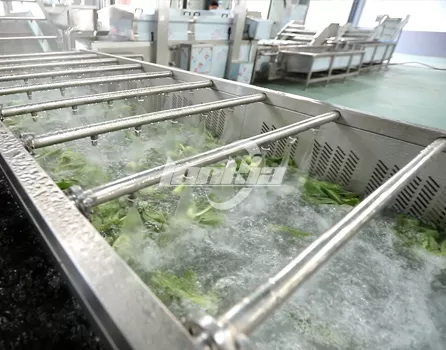
1.1 Bubble Washing Machines
Bubble washers use compressed air to create an intense bubbling action in a water tank. The rising bubbles lift and agitate vegetables, creating a gentle scrubbing effect that removes dirt and small insects.
Applications: Leafy vegetables (spinach, lettuce, cabbage), herbs, and delicate fruits.
Design features: Air diffusers or perforated pipes at the tank bottom, adjustable airflow, and circulation pumps.
Advantages: Gentle handling, high water contact area, effective for lightweight produce.
Limitations: Less suitable for heavy or thick-skinned vegetables.
1.2 Rotary Brush Washing Machines
These machines combine rotary motion with brush scrubbing and water spraying. Vegetables tumble against the rotating brushes while water jets rinse away loosened dirt.
Applications: Carrots, potatoes, beets, radishes, and other root crops.
Parameters: Brush type (nylon or soft bristle), rotation speed, and water spray intensity.
Advantages: Strong mechanical cleaning for mud and soil.
Limitations: May cause surface abrasion if brushes are too stiff.
1.3 Spray or Jet Washing Systems
These machines rely on high-pressure nozzles that deliver water jets from multiple angles. The continuous spray removes debris as the vegetables move along a conveyor.
Applications: Root crops, cucumbers, peppers, and pre-cut vegetables.
Key factors: Nozzle design, pressure (0.3–0.6 MPa), and conveyor speed.
Advantages: Highly effective surface rinsing; adaptable to continuous production.
Limitations: Water consumption is higher than bubble washers unless recycled.
1.4 Drum or Flume Washers
Flume or floating washers use controlled water flow to create a mild current that separates lighter debris (leaves, stems, insects) from the vegetables. Products float and move through the tank while heavier dirt settles at the bottom.
Applications: Mixed vegetables, shredded cabbage, leafy greens.
Features: Adjustable flow direction, partitioned tanks for staged washing.
Advantages: Continuous operation and gentle product handling.
3.5 Ultrasonic and Ozone-Assisted Systems
Advanced washing systems integrate ultrasonic waves or ozone gas into the water for enhanced microbial removal.
Ultrasonic washing: High-frequency sound waves (20–40 kHz) create microscopic bubbles that implode, generating localized pressure waves to remove fine particles.
Ozone treatment: Oxidizes microorganisms and pesticide residues without chemical additives.
Applications: Organic vegetables, ready-to-eat salads, and export-quality produce.
Advantages: Exceptional hygiene performance, minimal mechanical stress.
2. Key Performance Parameters and Engineering Considerations
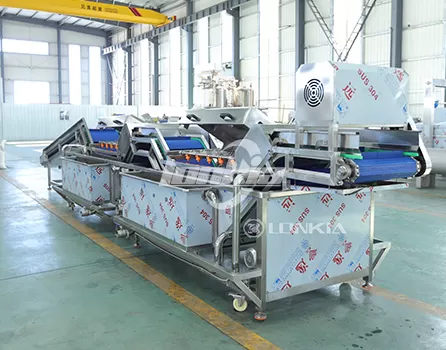
When designing or evaluating a veg washing system, engineers must consider a range of process and mechanical parameters that determine overall efficiency.
2.1 Throughput Capacity
Measured in kilograms per hour (kg/h), throughput depends on tank size, conveyor speed, and wash cycle duration. Higher capacity systems typically feature multiple tanks in series for pre-wash, wash, and final rinse stages.
2.2 Flow and Hydrodynamics
Uniform water circulation is essential to avoid “dead zones” where cleaning is insufficient. Computational fluid dynamics (CFD) is sometimes used in advanced design to model water flow and optimize nozzle placement or bubble distribution.
2.3 Energy and Water Efficiency
Pumps, blowers, and heaters are major energy consumers. Optimized piping layouts and variable frequency drives (VFDs) can significantly reduce power consumption. Water recycling systems also lower operating costs and environmental impact.
2.4 Cleaning Uniformity and Product Safety
Uniform exposure ensures every vegetable receives the same cleaning intensity. Uneven turbulence or poorly placed sprays can lead to partially washed products or mechanical damage.
2.5 Material and Mechanical Integrity
Stainless steel 304 or 316L ensures corrosion resistance.
Sealed bearings and motors prevent moisture ingress.
Food-grade seals and hoses maintain sanitary performance.
2.6 Maintenance Accessibility
Ease of disassembly, openable lids, and accessible filters reduce downtime and improve hygiene during maintenance.
3. Water Treatment and Recycling Systems
Efficient water management is one of the most important aspects of modern vegetable washing operations. As water consumption directly impacts both operational costs and sustainability, advanced washing lines incorporate closed-loop water treatment and recycling systems.
3.1 Water Flow and Filtration
A typical washing loop includes three main stages:
Coarse filtration – removal of leaves, stems, and large debris using mesh filters or rotary screens.
Fine filtration – capture of small suspended solids via sand filters or microfiltration membranes.
Disinfection – elimination of microbial contaminants using ozone, UV light, or low-dose chlorine.
3.2 Recirculation and Flow Optimization
Water recirculation helps maintain a consistent washing environment while reducing total consumption by up to 70%. The design must balance between maintaining cleanliness and avoiding excessive contaminant buildup. Flow meters and automatic control valves ensure stable water pressure and flow velocity throughout the washing stages.
3.3 Sediment and Wastewater Management
Sediments such as soil and plant fibers accumulate during continuous operation. Sediment traps or sloped-bottom settling tanks are used to collect and remove solid residues. Treated wastewater can be safely discharged or reused, depending on local regulations and plant sanitation standards.
3.4 Environmental Considerations
Modern equipment often integrates eco-friendly water systems, including low-pressure spray designs and air-assisted bubbling that minimize overall consumption. Water recycling not only reduces waste but also ensures compliance with sustainability goals in the food industry.
4. Maintenance and Troubleshooting
Routine maintenance ensures that the washing system continues to deliver consistent results and remains safe for food contact.
4.1 Preventive Maintenance
Key preventive actions include:
Nozzle and spray head cleaning every shift to prevent clogging.
Filter replacement according to differential pressure readings.
Pump inspection for seal leaks or bearing wear.
Electrical system checks to ensure sensor accuracy.
4.2 Common Operational Issues
Incomplete washing: Often caused by reduced flow pressure, blocked nozzles, or pump wear.
Foaming in the tank: Indicates organic buildup or detergent imbalance.
Water contamination: Usually due to clogged filters or insufficient disinfection.
Mechanical vibration: Caused by misaligned shafts or uneven load distribution.
4.3 Downtime Reduction
Quick-release fittings, removable covers, and easy-access panels reduce cleaning time between production runs. A modular design philosophy allows individual sections (pre-wash, main wash, rinse) to be serviced independently without halting the entire line.
5. Future Trends in Vegetable Washing Technology
The vegetable washing industry continues to evolve with advances in automation, sustainability, and hygiene design.
5.1 Smart Washing Systems
Integration of AI-based control enables automatic adjustment of washing intensity, flow rate, and air bubbling according to the contamination level detected by real-time sensors or camera systems.
5.2 Water and Energy Optimization
Next-generation washers use ultra-low-pressure spray technology, combining air and water jets to achieve high cleaning performance with minimal consumption. Some systems also recover heat from discharged water to preheat incoming flow, improving energy efficiency.
5.3 Hygiene-Centric Design Innovation
Future designs emphasize full CIP automation, improved accessibility, and reduced dead zones. 3D scanning is used in design validation to ensure complete cleanability and eliminate microbial risk points.
5.4 Modular and Scalable Systems
Manufacturers increasingly adopt modular configurations that allow plants to expand capacity or integrate pre-processing stages (e.g., cutting, grading) with minimal reconfiguration.
5.5 Sustainable Materials and Circular Design
There is growing research into alternative materials like recyclable polymers for non-critical components and closed-loop water ecosystems for zero-waste operation.
6.FAQ: Common Questions About Veg Washing Machines
Q3: How much water does an industrial veg washing machine consume?
Water usage depends on system design, capacity, and whether a recycling system is installed. Traditional open-loop systems may use 3–5 liters of water per kilogram of vegetables, while modern closed-loop systems with filtration and recirculation can reduce consumption by up to 70%.
Q4: How can I ensure hygiene and prevent contamination during washing?
Key hygiene measures include:
Using stainless steel construction (304 or 316L).
Installing CIP (Clean-In-Place) systems for internal cleaning.
Separating dirty and clean water circuits.
Using filtered or disinfected water (via UV or ozone).
Regular microbiological testing further ensures sanitation.
Q5: What is the ideal temperature and washing time for most vegetables?
For most produce, washing water should be between 15°C and 30°C, ensuring effective cleaning without thermal stress. Typical washing times range from 2 to 10 minutes, depending on vegetable type and contamination level.
Q6: Can washing machines handle delicate vegetables like spinach or herbs?
Yes. Bubble-type and flume washing machines are specifically designed for fragile produce. They use gentle turbulence and buoyancy rather than harsh mechanical contact, minimizing leaf damage while maintaining cleanliness.
Q8: How often should a veg washing machine be cleaned or serviced?
Daily cleaning is recommended at the end of each production shift, especially for food-contact zones. Filters, nozzles, and pumps should be checked weekly, and a full preventive maintenance inspection should be conducted monthly to ensure long-term reliability.