
The global demand for frozen and ready-to-eat French fries continues to grow in 2026, fueled by fast-food chains, retail supermarkets, and the expansion of quick-service restaurants in emerging markets. For investors and food processors, setting up a French fries manufacturing plant can be a profitable venture. However, one of the first questions every investor asks is: “How much does a French fries manufacturing plant cost?”
The answer depends on several factors, including plant capacity, automation level, utilities, and regional labor or energy prices. This guide provides a comprehensive breakdown of capital expenditures (CAPEX), operational expenses (OPEX), and return-on-investment (ROI) considerations, helping you make informed decisions before committing to a project.
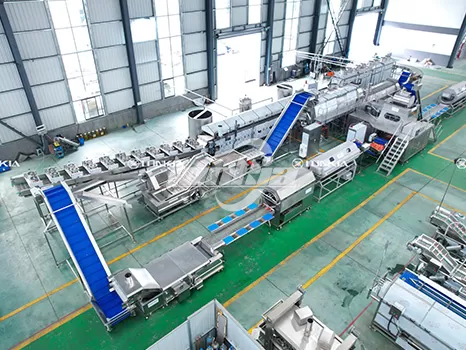
1. French Fries Manufacturing Plant Cost at a Glance (TL;DR)
If you are looking for a quick benchmark, here are the typical investment ranges in 2026:
- Small / pilot-scale plants (50–200 kg/h to ~1 t/h):
Equipment-only lines may cost $10,000 – $60,000. These are suitable for startups, test kitchens, or small-scale regional suppliers. - Medium commercial plants (1–5 tons/hour):
A complete turnkey french fries production line, including installation, utilities, and packaging, generally costs $60,000 – $300,000. - Large-scale industrial plants (5–50+ tons/hour):
Multi-line facilities with IQF freezers, advanced fryers, and integrated packaging systems range from $300,000 to $5 million or more, depending on the number of lines, level of automation, and civil works.
Note: These numbers are estimates based on current vendor quotes and industry averages. Actual project costs vary depending on raw material specifications, local building costs, and regulatory requirements.
2. Plant Types and Capacity Planning
Before calculating costs in detail, investors must first decide what type of plant to build. Plant size and throughput capacity are the single biggest drivers of investment.
- Pilot or craft lines (50–500 kg/h):
Ideal for product testing, local fresh-cut sales, or niche frozen products. Equipment is compact, labor-intensive, and budget-friendly. - Small commercial plants (0.5–2 tons/hour):
Suited for regional distributors, supermarket suppliers, or emerging exporters. These plants balance automation with manual labor to keep costs moderate. - Medium-scale industrial plants (2–8 tons/hour):
Target regional markets or national distribution. They require higher-grade fryers, IQF freezers, and packaging automation to maintain consistency and meet food safety standards. - Large-scale plants (8–50+ tons/hour):
Built for export-oriented processors and major fast-food suppliers. They demand sophisticated utility systems, multiple lines, redundancy in equipment, and large cold storage facilities.
Capacity planning checklist:
- Forecast raw potato availability (year-round vs seasonal).
- Decide on end-product formats (shoestring fries, crinkle-cut, coated, frozen).
- Factor in future scalability (leave space for additional fryers or freezers).
- Assess target customers (local markets, QSR chains, export).
A mismatch between plant capacity and market demand is a common pitfall — either overspending on idle capacity or struggling to keep up with demand.
3. Capital Expenditure (CAPEX) Breakdown
The majority of your French fries manufacturing plant cost will come from equipment, civil works, utilities, and installation. Let’s break it down:
a) Processing Equipment (Core Line Components)
- Potato washer & grader: $3,000 – $50,000
- Peeler (abrasive or steam): $5,000 – $80,000
- Cutting machine: $5,000 – $60,000
- Blancher: $10,000 – $80,000
- Dewatering / drying system: $5,000 – $40,000
- Continuous fryer: $20,000 – $250,000 (major cost driver, depends on size & oil system)
- Freezing unit (IQF tunnel): $50,000 – $700,000+
- Packaging machines: $10,000 – $250,000+
(These figures are equipment-only; vendor, brand, and automation level influence pricing.)
b) Civil Works & Construction
- Building construction (processing area, cold storage, utilities block) typically makes up 20–40% of CAPEX.
- Factors: floor load requirements, insulation, hygienic wall cladding, drainage, and ventilation systems.
c) Utilities & Supporting Systems
- Boilers/steam plant for blanching and frying.
- Refrigeration systems for freezers and cold rooms.
- Water treatment & wastewater handling — required by food safety regulations.
- Compressed air & power distribution for automation and packaging.
d) Installation & Commissioning
- Equipment installation, alignment, piping, electrical connections, automation controls.
- Final FAT (Factory Acceptance Test) and SAT (Site Acceptance Test).
- Costs typically add 10–15% on top of equipment value.
e) Contingency & Soft Costs
- Engineering & design fees, project management, permits, and training.
- Recommended 10–25% contingency to cover unforeseen expenses.
4. Operational Costs (OPEX): Beyond the Initial Investment
While CAPEX determines your entry cost, ongoing operational expenses (OPEX)shape long-term profitability. Investors often underestimate these recurring costs.
a) Raw Material (Potatoes)
- Potatoes are the largest OPEX component, typically accounting for 50–60% of total production costs.
- Price per tonne varies by region and season. Peel loss (15–25%) and cutting yield directly affect cost efficiency.
b) Energy and Utilities
- Steam and heating fuel for blanchers and fryers.
- Electricity for refrigeration, conveyors, and packaging machines.
- Energy efficiency can make or break profitability: heat recovery systems and optimized fryer oil turnover can cut costs significantly.
c) Labor
- Operators for each line, maintenance staff, and quality assurance teams.
- In high-wage countries, labor costs can rival raw material costs, making automation investment more attractive.
d) Maintenance and Consumables
- Frying oil replacement, filters, packaging films, spare parts.
- Preventive maintenance reduces downtime but requires budget allocation.
e) Packaging and Distribution
- Cartons, film rolls, pallets, and cold-chain logistics.
- Transport to QSR chains or export markets adds significant cost.
Illustrative OPEX Example:
For a 2-ton/hour plant, monthly OPEX could be distributed as:
- Potatoes: 55%
- Energy: 15%
- Labor: 10%
- Packaging: 10%
- Maintenance & misc.: 10%
5. ROI and Payback Analysis
The ultimate question is not only “How much does a French fries plant cost?” but also “When will I recover my investment?”
a) Key ROI Variables
- CAPEX (initial investment)
- Gross margin per tonne of finished fries
- Throughput capacity (tons/hour × hours/day × days/year)
- OPEX (labor, utilities, packaging, maintenance)
- Utilization rate (downtime and seasonal variation)
b) Example Payback Scenarios
- Small line (~1 t/h, CAPEX $50k–$80k): Payback achievable in 1–2 years if targeting local markets with fresh-cut or frozen fries.
- Medium line (~5 t/h, CAPEX $200k–$400k): Payback in 3–5 years, depending on raw material costs and energy efficiency.
- Large plant (~20+ t/h, CAPEX $2M+): Payback typically 5–8 years, but higher long-term ROI due to economies of scale and export markets.
c) Sensitivity Analysis
- A 20% potato price spike could cut profit margins by half.
- A 10% drop in capacity utilization might extend payback by 1–2 years.
- Energy-efficient fryers and IQF systems can shorten ROI by reducing OPEX.
6. Procurement & Implementation Roadmap
Building a French fries manufacturing plant is more than buying machines — it requires a structured approach.
a) Procurement Checklist
- Define target capacity and product types.
- Prepare detailed RFPs (Requests for Proposal) for vendors.
- Compare multiple suppliers on performance, warranty, after-sales service, and cost.
b) Implementation Milestones
- Feasibility study & market analysis.
- Engineering design & utility planning.
- Vendor selection & equipment procurement.
- Civil works & utility installation.
- Equipment installation & commissioning.
- Staff training & trial production.
- Ramp-up and commercial operation.
c) Common Risks and Mitigation
- Underestimated utilities: Solve with proper feasibility studies.
- Raw material variability: Contract farming agreements help.
- Lack of after-sales service: Choose vendors with local support.
- Regulatory delays: Engage consultants early to secure permits.
7. Frequently Asked Questions (FAQ)
Q1. How much space is needed for a French fries plant?
A small 1 t/h line may require 500–1,000 m², while large industrial plants can exceed 10,000 m².
Q2. Can I start with a small line and expand later?
Yes, modular plants allow for expansion. Leave sufficient space for future lines.
Q3. Which is more expensive: fresh-cut or frozen French fries?
Frozen plants require additional freezing, cold storage, and logistics, making them more capital- and energy-intensive.
Q4. How long does it take to set up a plant?
From planning to commissioning, timelines range from 6–18 months, depending on project size and regulatory approvals.
Q5. What certifications are required?
Most plants need HACCP, ISO 22000, or equivalent food safety certifications, plus local health and safety permits.
Conclusion
The French fries manufacturing plant cost in 2026 varies widely — from $10,000 for small pilot lines to $5 million or more for large-scale industrial facilities. The right investment depends on your market, capacity, and long-term goals.
Investors should look beyond equipment costs and consider utilities, OPEX, ROI timelines, and scalability. With careful planning, efficient design, and reliable suppliers, a French fries plant can deliver strong returns in the fast-growing global snack food market.