
In modern meat processing plants, the efficiency and precision of meat cutter equipment play a vital role in product quality, yield, and overall profitability. From basic grinding to complex portion control systems, these machines are the backbone of meat production lines.
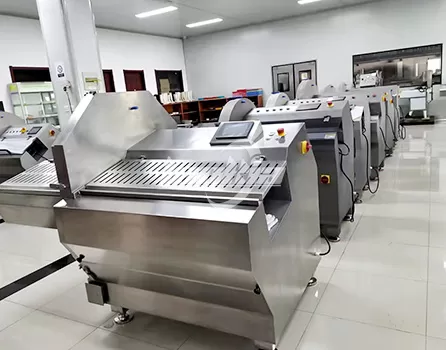
1. Why Meat Cutter Equipment Matters in Modern Processing
Efficient cutting isn’t just about slicing meat; it’s a scientific process that directly affects flavor, mouthfeel, texture, and production cost. Industrial meat cutter equipment automates and standardizes this process to achieve:
Consistent portioning – ensuring every cut or minced product has the same weight and dimensions.
Optimized yield – minimizing material loss from trimming or inaccurate cuts.
Improved texture control – managing fat-to-lean ratios and particle size for products like sausages, burgers, and meatballs.
Enhanced hygiene and safety – reducing human contact and cross-contamination.
Energy and labor efficiency – maximizing throughput while minimizing manual handling.
In short, reliable cutting equipment defines the foundation of your entire meat processing workflow. From deboning to grinding, every downstream process depends on how accurately the meat is prepared and portioned at the cutting stage.
2. Core Functions of Meat Cutter Equipment
Industrial meat cutters are designed to achieve several essential operations in food manufacturing. Here’s a breakdown of their primary functions and how each influences your final product.
2.1 Cutting and Portioning
The main function is to cut meat into defined sizes and weights. Automated portion cutters use vision or weight sensors to deliver exact-size portions, reducing giveaway and ensuring uniformity in packaging and presentation.
2.2 Grinding and Mincing
For products like sausages or burgers, meat grinders (also called mincers) reduce raw meat into small particles through rotating knives and perforated plates. The resulting texture depends on plate hole size — from coarse ground for chili meat to fine mince for emulsified products.
2.3 Comminution and Emulsification
Bowl cutters or choppers finely comminute meat and fat at high speed, creating uniform batters for emulsified products such as frankfurters or pâtés. The temperature control during cutting is crucial to maintain protein structure and prevent fat smearing.
2.4 Shredding and Flaking
Specialized shredders and flakers create fibrous textures for pulled meats, jerky, or ready-to-eat dishes. These machines can process both cooked and chilled meats without damaging fibers.
2.5 Deboning and Trimming Support
Some cutting systems integrate with trimming or deboning stations to streamline pre-processing. Automated systems can separate muscle groups, reducing manual labor and ensuring safety.
2.6 Weighing and Inline Portioning
Advanced systems combine cutting with built-in weighing and checkweighing features. This helps processors meet strict weight accuracy for retail packaging and reduces waste due to overweight packs.
3. Major Types of Industrial Meat Cutter Equipment
Industrial meat cutting machinery varies widely depending on processing goals, meat type, and production scale. Below are the most common categories and how each works within a production line.
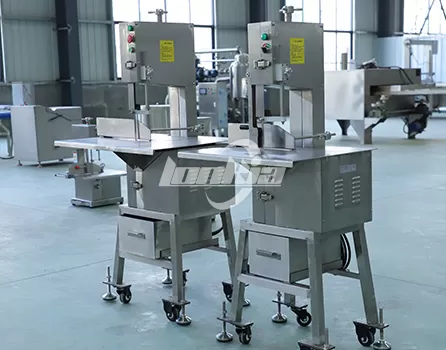
3.1 Band Saws / Meat Saws
Band saws are heavy-duty machines designed for cutting large meat blocks or bone-in carcasses. The continuous saw blade moves around wheels to slice through frozen or fresh meat efficiently.
Applications: primal cuts, frozen meat portions, bone-in beef or pork.
Key features:
Adjustable cutting thickness
Safety guards and automatic blade tensioning
Stainless-steel construction with easy-clean design
Advantages: fast cutting of dense or bone-in materials.
Limitations: not suitable for fine portioning or minced products.
3.2 Bowl Cutters / Bowl Choppers
Bowl cutters (also known as bowl choppers) are the heart of sausage and processed meat production. They use rapidly rotating knives within a spinning bowl to finely chop and mix meat, fat, and additives.
How it works:
The bowl rotates under a high-speed knife head.
Ice or chilled water is added to control temperature and prevent fat separation.
The process develops emulsions with consistent texture and binding.
Applications: sausages, meatballs, pâtés, spreads.
Advantages: uniform texture, fast mixing, excellent protein extraction.
Key specs: bowl capacity (e.g., 60–330 L), knife speed (1,500–4,000 rpm), cooling options, automation levels.
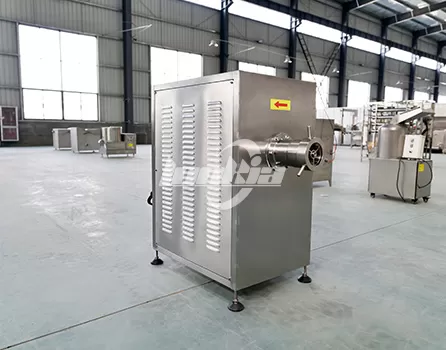
3.3 Meat Grinders / Mincers
Mincers are among the most versatile and essential machines in meat processing. They cut meat through rotating blades and perforated plates of different diameters, creating different grind textures.
Applications: ground beef, sausage filling, burger patties.
Key features:
Variable-speed drives
Screw-feed or hopper-feed systems
Stainless-steel blades and plates for hygiene
Advantages: adaptable for various meat textures and volumes.
Limitations: over-grinding may heat meat and affect texture — proper plate selection is crucial.
3.4 Rotary Slicers / Guillotine Cutters
These machines produce precise slices for cooked or raw boneless meat. A rotating or guillotine blade slices products according to set thickness, and automation allows continuous feed.
Applications: deli meats, bacon, ham slices, poultry strips.
Advantages: consistent thickness, reduced labor, integration with conveyor lines.
Common specs: slicing range (0.5–30 mm), capacity (up to 2,000 kg/h), adjustable knife speed.
3.5 Portion Cutters / High-Speed Portioning Systems
Portion cutters use cameras or X-ray sensors to measure product size and density, then cut to achieve exact weights. They are essential in modern processing where yield optimization is critical.
Applications: fillets, cutlets, steaks, or nuggets.
Advantages: weight accuracy, less trimming waste, real-time adjustment.
Key features: servo-controlled blades, automatic feed alignment, integration with packaging or marinating systems.
3.6 Shredders, Flakers, and Pullers
For processed and ready-to-eat meat, shredders and flakers produce shredded or flaked meat textures used in sandwiches, salads, and frozen foods.
Applications: pulled pork, chicken flakes, beef strips.
Advantages: maintains natural fiber, easy cleaning, continuous operation.
3.7 Integrated Automated Lines
Modern factories combine multiple cutting systems into automated meat processing lines. These systems connect deboning, grinding, mixing, and portioning through conveyors and PLC controls.
Benefits:
Seamless data flow and recipe management
Reduced handling time
Real-time production monitoring
Consistent product quality and traceability
These fully integrated solutions are now standard in high-throughput meat processing facilities, especially in poultry and red meat sectors.
4. Key Technical Components & Specifications to Compare
When selecting or operating industrial meat cutter equipment, understanding the technical specifications helps ensure compatibility, durability, and hygiene compliance. Below are the key parameters to evaluate.
4.1 Motor Power and Torque
Motor size determines the equipment’s cutting capacity and ability to handle tough or frozen meat. For example, small grinders may run on 5–10 kW motors, while large bowl cutters can exceed 50 kW for high shear performance.
4.2 Blade and Plate Design
Knife geometry and plate hole size directly influence product texture and efficiency.
Fine holes (2–5 mm): for emulsified sausage or spreads.
Medium holes (6–8 mm): for burger meat.
Coarse holes (10–13 mm): for chili or diced meat.
High-quality blades (tempered stainless steel) ensure longevity and clean cuts.
4.3 Capacity and Bowl/Throat Size
Measured in kilograms per hour or liters per batch, capacity must align with production needs. Oversized equipment may waste energy; undersized machines cause bottlenecks.
4.4 Temperature Control
Maintaining low meat temperature prevents protein denaturation. Some bowl cutters include double-jacket cooling or ice injection systems to keep product below 12°C.
4.5 Automation & Controls
PLC-based systems enable recipe management, variable speed control, and automatic data logging. Advanced models integrate load cells for weight control and remote diagnostics.
4.6 Sanitary Design
Look for smooth welds, rounded corners, and tool-free disassembly. Machines with IP65 or higher protection are ideal for wet cleaning environments. Stainless steel SUS304 is standard; SUS316 is recommended for high-salinity or brine applications.
4.7 Throughput and Efficiency
Calculate throughput (kg/h) relative to labor and line balancing. Efficient machines maintain 85–95% uptime, depending on cleaning cycles and material feed rate.
5. Hygiene, Sanitation, and Food Safety Design
In meat processing, hygiene is not optional—it’s fundamental. Since meat cutter equipment comes in direct contact with raw proteins, poor design or cleaning practices can lead to microbial contamination, product recalls, and legal penalties.
5.1 Hygienic Design Principles
A well-designed cutting machine should comply with EHEDG or USDA sanitation standards. Key design elements include:
Fully welded stainless-steel frame (SUS304 or SUS316)
Sloped surfaces to prevent liquid accumulation
Tool-free disassembly for daily cleaning
Sealed bearings and motors to avoid grease leakage
Waterproof electrical enclosures rated IP65–IP69K
Modern systems such as Lonkia’s Meat Cutter Series feature open-frame architecture and smooth welds that allow thorough washdown without bacterial buildup.
5.2 Cleaning and Sanitation Procedures
Regular cleaning cycles typically include:
Pre-rinse to remove visible residues
Foam cleaning using food-grade detergent
High-pressure rinse to wash chemical residues
Sanitization with approved disinfectants
Drying and inspection before reassembly
Automation can reduce cleaning time and chemical usage. Many plants now integrate CIP (Clean-In-Place) systems in grinding or cutting lines for improved safety and reduced downtime.
6. Maintenance, Safety, and Operator Training
Proper maintenance extends equipment life, prevents unplanned shutdowns, and ensures consistent performance.
6.1 Routine Maintenance
Check blade sharpness and replace when worn
Lubricate bearings (if non-sealed type)
Inspect belts, gears, and electrical components
Verify temperature and speed sensors
Calibrate weighing and load systems
Scheduled maintenance should be logged in digital systems to comply with HACCP and ISO 22000 requirements.
6.2 Operator Safety Features
Cutting operations pose risks due to sharp blades and moving parts. Modern machines include:
Safety interlocks to disable operation when guards are open
Emergency stop buttons at multiple locations
Automatic lid locks on bowl cutters
Non-slip flooring and ergonomic designs to reduce strain
Employee training is equally important. Regular safety workshops and visual SOPs help operators handle the equipment confidently and safely.
7. Choosing the Right Meat Cutter Equipment
Selecting the right machine requires balancing production needs, meat type, hygiene standards, and budget. Below is a simplified decision framework.
7.1 Define Your Application
Identify what kind of product you process most frequently:
Ground products → choose a meat mincer machine
Sausage emulsions → use a bowl cutter
Ready-to-eat shredded meat → opt for a shredder or flaker
Mixed production → consider a multi-functional cutting line
7.2 Determine Capacity and Automation Level
Estimate your daily or hourly output. For medium to large plants, integrating automatic feeding and discharge conveyors can boost efficiency and worker safety.
7.3 Evaluate Hygiene and Maintenance Needs
If your facility handles multiple meat types (e.g., beef, chicken, seafood), choose systems with quick disassembly and color-coded parts to prevent cross-contamination.
7.4 Compare Manufacturer Support
A reliable manufacturer should offer:
Installation and commissioning services
Spare parts availability
Operator training
Technical after-sales support
Lonkia, for example, provides customized meat processing solutions tailored to product type, layout, and automation goals.
Industrial meat cutter equipment forms the foundation of every successful meat processing plant. From grinding and emulsifying to portioning and shredding, each system contributes to food safety, consistency, and profitability.Choosing the right configuration — combined with smart maintenance, hygienic design, and automation — ensures that your production line delivers superior quality with minimal waste.