
Choosing the right potato sorting and grading line is an important decision for farms, potato packing facilities, and food processing plants. The right system can improve grading accuracy, reduce labor costs, increase processing capacity, and maintain consistent product quality.
However, different businesses have different requirements. A small packing station may only need a basic grading machine, while a large potato processing plant may require a fully automatic line integrated with washing, inspection, weighing, and packaging equipment. This guide explains the key factors to consider before making a purchase.
Determine Your Required Processing Capacity
The first step is to determine how many potatoes you need to process per hour.
Small operations may only require a few tons per hour, while commercial processing plants may need 10, 20, or even more tons per hour.
Choosing the right capacity helps prevent production bottlenecks. It is also worth considering future expansion so that the equipment can continue to meet your needs as production increases.
Decide How You Need to Grade Potatoes
Different markets have different grading requirements. Before choosing a machine, determine what characteristics you need to separate.
A potato grading line may classify potatoes according to:
size
diameter
weight
quality
appearance
For fresh potato suppliers, size grading may be sufficient. Processors producing French fries or potato chips may require more precise grading to achieve consistent cutting and processing results.
Consider the Level of Automation
Automation has a major impact on both equipment price and production efficiency.
A basic semi-automatic line may require workers to handle feeding, inspection, or packing. A fully automatic system can integrate:
automatic feeding
conveying
sorting
grading
weighing
packaging
For high-volume businesses, greater automation can reduce labor requirements and provide more stable production.
Choose the Right Grading Technology
The grading mechanism should match your product and quality requirements.
Mechanical grading systems are commonly used for separating potatoes by size and are suitable for many fresh potato applications.
More advanced systems can incorporate electronic or optical sorting technology to identify defects, discoloration, damaged potatoes, or other quality problems.
While advanced sorting systems require a higher investment, they may be worthwhile when product quality and sorting accuracy are critical.
Pay Attention to Gentle Potato Handling
Potatoes can be damaged by excessive drops and rough handling. Bruising can reduce product value, particularly for potatoes intended for fresh markets.
A good potato sorting and grading line should provide:
smooth product transfer
controlled conveyor speeds
low-drop feeding
appropriate contact surfaces
Gentle handling helps maintain product quality throughout the grading process.
Check Machine Construction and Hygiene
Potato processing equipment operates in demanding environments and needs to be easy to clean.
Food-grade stainless steel construction offers good:
corrosion resistance
durability
hygiene
cleaning performance
The machine should also provide convenient access to conveyors, grading components, and other areas requiring regular cleaning and maintenance.
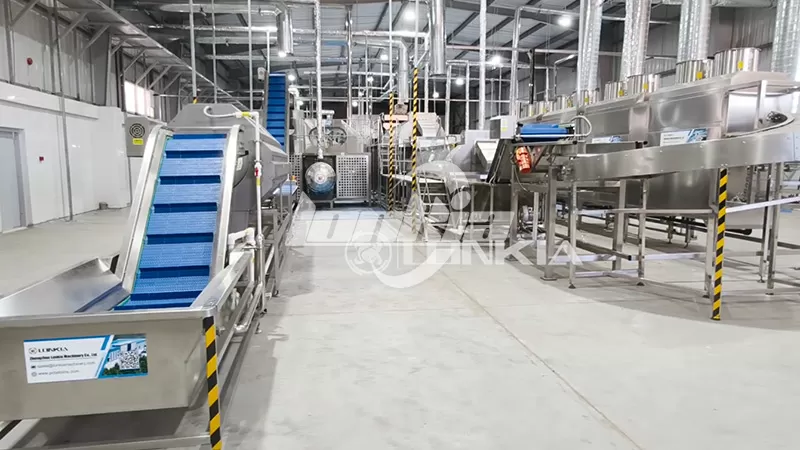
Consider Integration with Other Equipment
If you are building a complete potato processing line, make sure the grading system can connect with other equipment.
A complete system may include:
potato receiving hopper
washing machine
brushing machine
sorting and grading machine
inspection conveyor
weighing machine
packaging machine
Integrated equipment creates a continuous production flow and reduces manual handling.
Compare Total Operating Costs
The purchase price should not be the only consideration when comparing suppliers.
Also evaluate:
labor requirements
electricity consumption
maintenance costs
spare parts availability
expected service life
A machine with a higher initial price may provide better long-term value if it delivers higher productivity and lower operating costs.
Choose a Manufacturer That Offers Customization
Every potato processing facility has different production conditions. A reliable manufacturer should be able to customize the line according to your capacity, grading requirements, factory layout, and budget.
Professional manufacturers can also help determine the appropriate machine configuration instead of simply offering a standard product.
Why Choose LONKIA Machinery?
LONKIA Machinery provides customized potato processing equipment and complete processing solutions for customers worldwide.
Our potato sorting and grading lines can be configured for different capacities and applications, with options for washing, sorting, grading, inspection, weighing, and packaging.
Whether you operate a small potato packing facility or a large-scale processing plant, LONKIA Machinery can help design a solution that matches your production requirements.
Conclusion
Choosing the right potato sorting and grading line starts with understanding your production capacity, grading requirements, automation needs, and future growth plans. Machine quality, gentle product handling, hygiene, integration, and operating costs should also be carefully evaluated.
Instead of choosing equipment based only on price, focus on the overall value the system can provide. A properly designed potato sorting and grading line can help your business increase productivity, reduce labor costs, and deliver more consistent potato products.