
If you are searching for a cabbage processing line for sale, choosing the right equipment requires more than comparing prices. A suitable production line should match your processing capacity, final product specifications, factory layout, and automation requirements.
For commercial vegetable processors, investing in the right cabbage processing equipment can improve production efficiency, reduce manual labor, and maintain consistent product quality. Before placing an order, it is important to understand the equipment configuration, technical specifications, operating costs, and manufacturer's capabilities.
Determine Your Cabbage Processing Requirements
The first step is to define what you want to produce. Different cabbage products require different processing methods and equipment configurations.
Common applications include:
Fresh-cut cabbage
Sliced cabbage
Shredded cabbage
Cabbage for salads and coleslaw
Cabbage for fermented food production
Cabbage for prepared and frozen food products
Your final product determines the cutting method, washing requirements, dewatering process, and packaging configuration.
Check the Processing Capacity
Processing capacity is one of the most important factors when buying a commercial cabbage processing line.
Before contacting a supplier, determine your required output in kilograms or tons per hour. The equipment should be capable of meeting your daily production targets without creating bottlenecks.
Also consider future business growth. If you expect production demand to increase, choosing a system with suitable expansion options can help avoid replacing the entire line later.
Understand Which Equipment Is Included
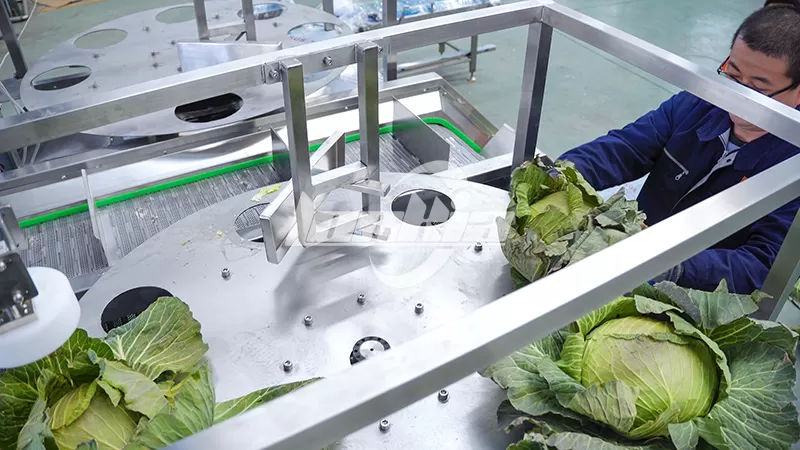
A complete cabbage processing line can include multiple machines working together.
Depending on your production requirements, the system may include:
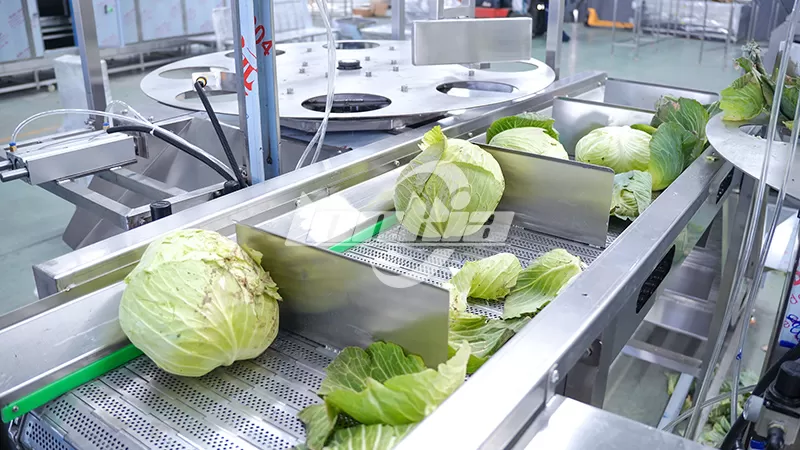
Cabbage feeding and conveying equipment
Trimming and preparation machines
Industrial cabbage cutting or shredding machines
Vegetable washing machines
Dewatering equipment
Inspection conveyors
Weighing and packaging machines
When reviewing a quotation, check the complete equipment list rather than focusing only on the main cutting or washing machine. Confirm which components are included and which need to be purchased separately.
Choose the Right Automation Level
Cabbage processing lines are available in semi-automatic and fully automatic configurations.
A semi-automatic system generally requires more operator involvement but may be suitable for smaller production facilities.
A fully automatic cabbage processing line integrates more operations, such as feeding, conveying, cutting, washing, and packaging. It is generally more suitable for businesses with higher production volumes and greater demand for continuous operation.
The best choice depends on your production scale, labor availability, and investment budget.
Evaluate Equipment Quality and Hygiene
Since cabbage processing equipment comes into direct contact with food products, hygiene and construction quality are essential considerations.
Before purchasing, check:
Materials used in food-contact areas
Stainless steel construction
Smooth and accessible surfaces
Drainage and cleaning design
Equipment durability
Ease of maintenance
A hygienic equipment design can make daily cleaning easier and help maintain appropriate food processing conditions.
Compare Cabbage Processing Line Prices
The price of a cabbage processing line depends on several factors, including processing capacity, machine configuration, automation level, and customization requirements.
A basic cutting and washing system will generally have a different investment cost from a complete automatic production line with trimming, dewatering, inspection, conveying, and packaging.
When comparing suppliers, consider the total investment rather than the equipment price alone. Installation, transportation, spare parts, maintenance, and technical support may also affect the overall purchasing cost.
Check the Manufacturer's Customization Capabilities
Every cabbage processing factory has different requirements. A reliable manufacturer should be able to adjust the equipment configuration according to your product specifications and production conditions.
Customization may involve:
Processing capacity
Cutting size and product shape
Washing and dewatering methods
Conveyor length and arrangement
Automation level
Factory installation layout
Packaging equipment integration
A customized solution can help ensure that all machines work together efficiently.
Consider Installation and After-Sales Support
Purchasing industrial processing equipment is a long-term investment. Technical support is therefore an important part of the buying decision.
Before ordering, clarify the following:
Installation and commissioning arrangements
Equipment operating instructions
Spare parts availability
Maintenance guidance
Warranty terms
Technical support after delivery
Clear communication about these services can help reduce installation difficulties and unexpected downtime.
What Information Should You Provide When Requesting a Quotation?
To receive an accurate quotation for a cabbage processing line, prepare the following information:
Required processing capacity per hour
Type of cabbage product
Required cutting size and shape
Washing and dewatering requirements
Desired automation level
Packaging specifications
Available factory space
Target delivery schedule
Providing these details allows the manufacturer to recommend a more suitable configuration instead of offering a standard equipment package that may not match your production needs.
Why Choose LONKIA Machinery?
LONKIA Machinery provides food processing machinery and customized production line solutions for commercial food manufacturers.
Cabbage processing equipment can be configured according to production capacity, final product specifications, automation requirements, and factory layout. Depending on the project, the production line can integrate cutting, washing, dewatering, conveying, inspection, and packaging equipment.
By discussing your production requirements with LONKIA Machinery, you can identify a practical equipment configuration for your cabbage processing business.
Conclusion
When looking for a cabbage processing line for sale, buyers should evaluate processing capacity, equipment configuration, automation, hygiene, pricing, customization, and after-sales support.
Rather than choosing equipment based only on the lowest quotation, focus on finding a production line that meets your actual processing requirements and supports long-term business development. The right cabbage processing solution can help improve productivity, reduce manual handling, and maintain consistent product quality.