
Processing large quantities of fresh cabbage can be time-consuming when every stage depends on manual labor. From trimming and cutting to washing, dewatering, and packaging, inefficient operations can increase labor costs and slow down production.
A modern cabbage processing line integrates multiple machines into one coordinated production system. By automating repetitive tasks and improving material flow, food manufacturers can increase processing efficiency, reduce manual handling, and maintain more consistent product quality.
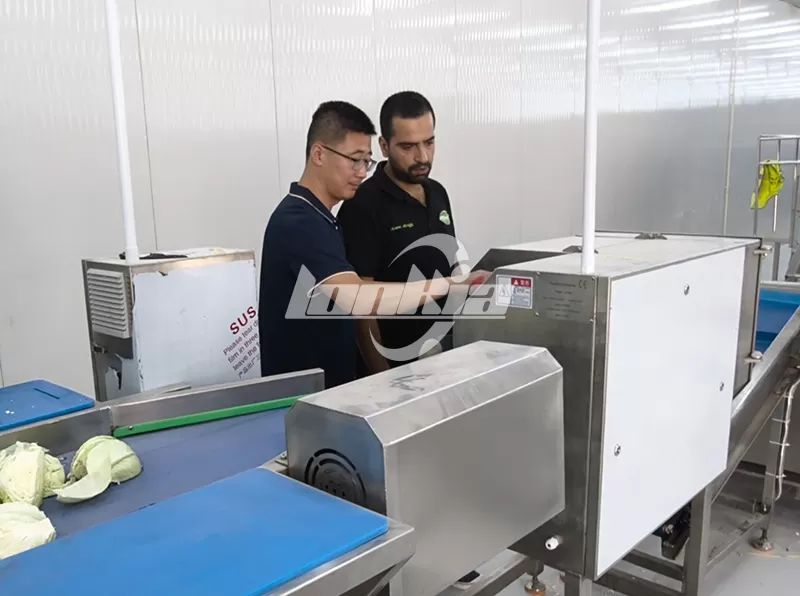
What Makes Cabbage Processing More Efficient?
Processing efficiency depends on several factors, including equipment capacity, processing speed, labor requirements, and coordination between machines.
A well-designed cabbage processing line connects different stages into a continuous workflow. Instead of moving cabbage manually between separate machines, conveyors and automated equipment help maintain a steady production flow.
This reduces unnecessary handling and allows manufacturers to process larger quantities of cabbage in less time.
How Does a Cabbage Processing Line Increase Production Speed?
An integrated production line can improve processing speed in several ways.
Automated Feeding and Conveying
Automatic feeding systems deliver fresh cabbage to processing equipment continuously. Conveyors transfer materials between machines, reducing manual transportation and waiting time.
Faster Cutting and Shredding
Industrial cabbage cutting and shredding machines can process large quantities of cabbage with consistent cutting results. Compared with manual cutting, mechanical processing significantly reduces repetitive labor and improves production speed.
Continuous Vegetable Washing
Industrial vegetable washing machines can handle continuous batches of cut cabbage. This helps maintain a steady workflow and reduces the time required for manual washing.
Efficient Dewatering and Packaging
After washing, dewatering equipment removes excess surface water before inspection or packaging. Integrating weighing and packaging equipment can further reduce manual handling and improve overall production efficiency.
How Does Automation Reduce Labor Costs?
Labor is an important operating expense in commercial vegetable processing.
A cabbage processing line can reduce the number of workers required for repetitive tasks such as material transportation, cutting, washing, and product transfer.
Operators can focus more on equipment monitoring, quality inspection, and production management rather than performing every processing step manually.
The actual labor savings depend on production capacity, automation level, and the original production workflow.
Can a Cabbage Processing Line Improve Product Consistency?
Yes. Consistent processing is another important advantage of industrial cabbage processing equipment.
Mechanical cutting machines help maintain more uniform cabbage sizes, while standardized washing and dewatering procedures improve processing consistency.
A properly configured production line can also reduce unnecessary product handling, helping minimize damage during processing.
This is particularly important for manufacturers producing shredded cabbage, fresh-cut vegetables, and cabbage for commercial foodservice.
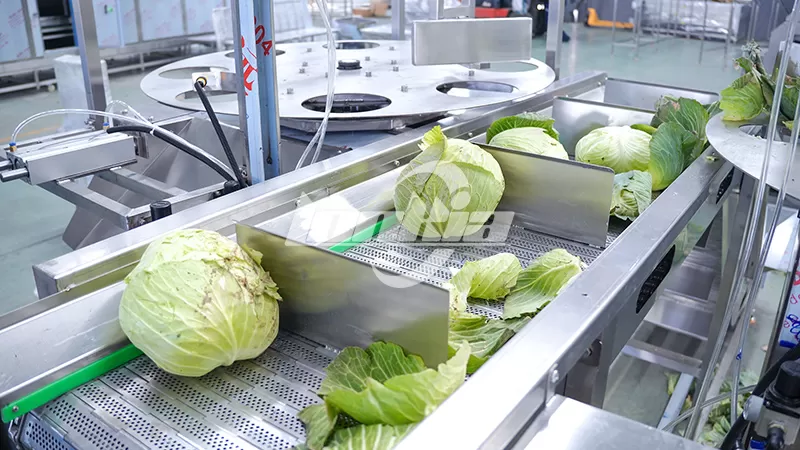
How Does Integrated Equipment Reduce Production Bottlenecks?
When individual machines operate independently, differences in processing capacity can create delays. For example, a high-speed cutting machine may produce more cabbage than the washing equipment can handle.
An integrated cabbage processing line is designed to match the capacities of different machines.
Important considerations include:
Matching cutting and washing capacities
Maintaining continuous material flow
Reducing unnecessary transfers
Providing sufficient conveyor capacity
Coordinating equipment operation
Allowing convenient cleaning and maintenance
Proper equipment matching helps prevent bottlenecks and improves overall production performance.
What Factors Affect Cabbage Processing Efficiency?
Even with automatic equipment, several factors can influence production efficiency.
Raw material quality: Cabbage size, freshness, and condition can affect trimming and cutting performance.
Equipment capacity: Each machine should match the required production output.
Cutting specifications: Different cutting sizes may require different equipment settings or configurations.
Washing requirements: Cleaning methods and washing time should match the final product requirements.
Maintenance: Regular inspection and maintenance help reduce unexpected equipment downtime.
Factory layout: A logical equipment arrangement improves material flow and simplifies daily operations.
How to Choose a Cabbage Processing Line for Maximum Efficiency?
Before purchasing a cabbage processing line, manufacturers should evaluate their actual production requirements.
Consider the following points:
Required hourly processing capacity
Type of finished cabbage product
Cutting size and processing specifications
Washing and dewatering requirements
Desired automation level
Available factory space
Labor and operating costs
Future production expansion plans
Choosing equipment based on the complete production process is more effective than selecting individual machines based only on their prices.
Why Choose LONKIA Machinery?
LONKIA Machinery provides food processing machinery and customized production line solutions for commercial food manufacturers.
Cabbage processing lines can be configured with feeding, cutting, washing, dewatering, conveying, inspection, and packaging equipment according to production requirements.
By coordinating different processing stages, LONKIA Machinery helps customers develop practical production solutions designed to improve workflow, reduce manual handling, and support commercial cabbage processing operations.
Conclusion
A cabbage processing line improves processing efficiency by integrating multiple operations into a coordinated production system. Automated feeding, industrial cutting, continuous washing, dewatering, and packaging can reduce manual work and increase production speed.
For food manufacturers handling large quantities of cabbage, the right equipment configuration can also improve product consistency and reduce production bottlenecks. The key is to select a processing line that matches actual production capacity, product requirements, and long-term business needs.