
1.What Is a Tote Washer
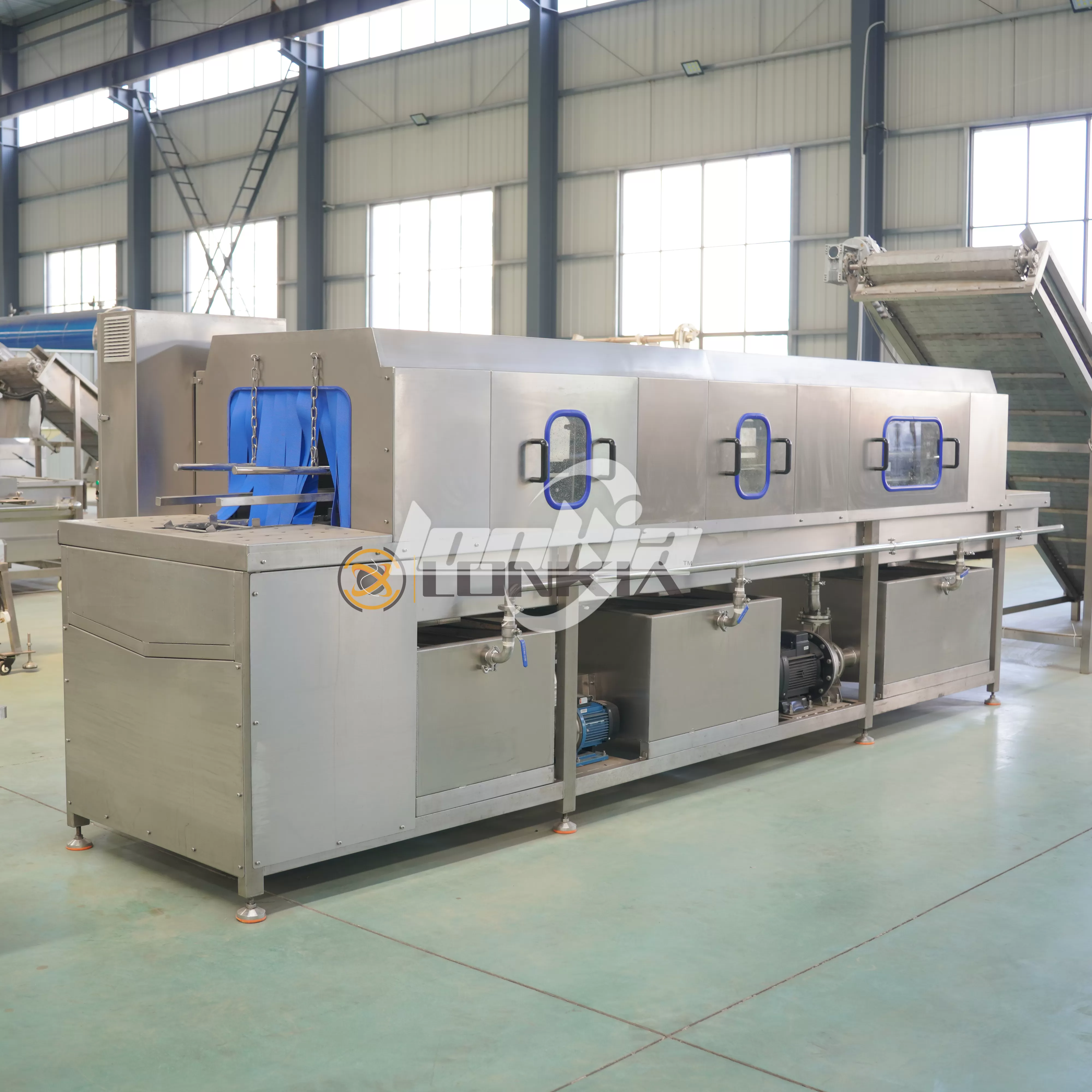
In modern food processing and distribution, hygiene is not just a matter of compliance — it directly affects product quality, consumer safety, and a company’s reputation. A tote washer is a specialized industrial cleaning system designed to thoroughly wash, sanitize, and sometimes dry reusable totes, IBCs (intermediate bulk containers), and other transport bins used in food manufacturing, dairy production, cold storage, and catering supply chains.
2. Core Benefits of Investing in a Tote Washer
Purchasing an industrial tote washer is a significant investment, but the return is multifaceted. Beyond obvious time savings, the benefits extend into compliance, sustainability, and operational reliability.
2.1 Improved Operational Efficiency
Manual washing of totes can take 5–10 minutes per unit, depending on soil type and labor skill. An industrial tote washer can reduce this to 30–90 seconds per tote, depending on capacity and configuration. For a plant processing hundreds or thousands of totes per day, this translates into:
Labor reduction: fewer workers dedicated to repetitive cleaning tasks.
Time savings: faster turnaround of totes back into production cycles.
Consistency: every tote cleaned to the same standard, eliminating variability.
2.2 Food Safety and Compliance
Food-grade tote washers are designed with hygienic engineering principles — smooth stainless steel surfaces (304 or 316 grade), rounded corners, and self-draining chambers to avoid bacterial growth. With integrated sanitizing steps, they can meet or exceed regulatory requirements. This ensures readiness for audits under HACCP, FSMA, and retailer-specific standards.
Cross-contamination reduction: separating allergen-containing totes from general-use totes.
Pathogen control: achieving microbial reduction through controlled water temperature and chemical dosing.
2.3 Water and Energy Savings
A common misconception is that automated washers consume more water. In reality, advanced systems reuse water across multiple stages through multi-stage filtration and recirculation.
Water efficiency: up to 70% reduction compared to manual hose washing.
Energy management: integrated heaters with insulation minimize heat loss.
Chemical control: automated dosing reduces chemical waste and ensures correct concentrations.
2.4 Worker Health and Safety
Manual tote cleaning often involves bending, lifting, and exposure to hot water and chemicals. By automating the process:
Lower risk of workplace injuries (slips, chemical burns, musculoskeletal strain).
Better working conditions for staff, freeing them for higher-value tasks.
Regulatory compliance with occupational safety standards
3. Applications of Tote Washers in Food and Related Industries
Tote washers are versatile across multiple industries, but their most impactful role is within the food and beverage supply chain, where hygiene and efficiency are critical.
3.1 Food Processing Plants
In fruit, vegetable, meat, and sauce production, totes are used to transport bulk raw materials. Residues can include starch, proteins, fats, and sticky syrups — all difficult to remove consistently by hand. A tote washer ensures:
Reliable removal of stubborn residues with high-pressure jets.
Sanitization to reduce microbial load.
Quick turnaround so totes are ready for the next production cycle.
3.2 Cold Storage and Frozen Food Logistics
Cold chain facilities frequently handle totes that accumulate ice, salt, or residual brine. Without proper cleaning, these residues can corrode containers and compromise hygiene. Tote washers configured with heated water and drying units:
Prevent corrosion by removing salt.
Eliminate residues that may affect frozen food safety.
Support high-volume operations where quick cleaning between cycles is crucial.
3.3 Dairy and Beverage Industries
Dairy applications demand the highest standards of hygiene because milk residues spoil rapidly and encourage bacterial growth. Tote washers with 316 stainless steel, controlled heating, and integrated sanitizers are commonly used to clean:
Milk transport totes.
Beverage concentrate bins.
Syrup and juice containers.
The systems are often integrated with CIP (clean-in-place) protocols to maintain validation across shifts.
3.4 Central Kitchens and Food Distribution
Large-scale catering operations and food distribution centers depend on reusable totes for daily operations. The sheer volume of totes makes manual cleaning unfeasible. Tote washers offer:
Rapid batch cleaning for dozens or hundreds of totes per hour.
Compact footprint for installation in urban or space-limited facilities.
Compliance with municipal hygiene standards for ready-to-eat food preparation.

4. Types of Tote Washers and Key Components
Not all tote washers are the same. Understanding their design variations and critical componentshelps you select the right system for your facility.
4.1 Types of Tote Washers
Rotary Drum / Barrel Systems
Totes are loaded into a rotating chamber where high-pressure spray nozzles clean all surfaces. Compact and efficient, suitable for small to medium-scale operations.Tunnel or Conveyorized Systems
Totes move continuously through a tunnel with multiple cleaning stages: pre-rinse, wash, sanitize, and drying. Designed for high-capacity plants requiring hundreds of totes per hour.High-Pressure Jet Systems
Specialized for stubborn residues, using rotating spray arms and higher PSI levels. Often paired with heated water.
4.2 Key Components of a Tote Washer
Spray Nozzle Arrays: Strategically placed for 360° coverage, adjustable pressure.
Filtration and Recirculation Units: Multi-stage filters (mesh, cartridge, or centrifugal) to enable water reuse.
Pumps and Heating Systems: Ensure consistent water temperature and flow rate.
Control Systems (PLC + HMI): Allow recipe management, parameter logging, and troubleshooting.
Safety Features: Emergency stop buttons, interlocked doors, overflow protection.
Drying Units: Air knives, centrifugal dryers, or heated blowers to ensure totes are ready for immediate reuse.
Understanding these types and components helps buyers assess whether a system can handle their specific tote sizes, soil loads, and compliance requirements.
5. Key Buying Tips and Specification Checklist
Purchasing an industrial tote washer requires balancing performance, footprint, cost, and compliance. Below is a checklist of non-negotiable points to clarify with suppliers.
5.1 Performance and Capacity
How many totes per hour can the system handle?
What is the maximum and minimum tote size?
What are the achievable water temperature and spray pressure ranges?
5.2 Space and Utility Requirements
Equipment footprint and clearance needed for installation.
Utility connections: electricity (kW), steam (if applicable), compressed air, water inlets/outlets.
Material flow integration: loading direction, conveyor height, and automation compatibility.
5.3 Hygiene and Material Design
Stainless steel grade (304 vs 316).
Hygienic welding, smooth surfaces, and absence of dead corners.
Self-draining chambers to prevent stagnant water.
5.4 Control and Automation
PLC with multiple cleaning recipes.
Data logging of temperature, pressure, and cycle time.
Remote monitoring and diagnostic capabilities.
5.5 Water and Chemical Management
Recirculation rate and filtration efficiency.
Compatibility with standard food-grade detergents and sanitizers.
Wastewater discharge requirements and options for recycling.
5.6 Maintenance and Support
List of wear parts (spray nozzles, seals, bearings, pumps).
Supplier’s lead time for spare parts.
Availability of local service and training.
5.7 Total Cost of Ownership (TCO)
Initial purchase price.
Installation and commissioning costs.
Consumables (chemicals, filters).
Utility consumption (water, electricity, steam).
Maintenance and labor savings.
This checklist helps ensure that decision-makers avoid surprises during installation and operation. It also provides a structured way to compare multiple suppliers’ quotations side by side.
6. Installation, Maintenance, and Validation
6.1 Installation Considerations
Ensure the floor can support the equipment’s weight.
Provide adequate drainage slope and outlet capacity.
Plan for safe utility connections (electrical panels, steam lines, water supply).
Reserve space for maintenance access around the equipment.
6.2 Commissioning and Testing
During factory acceptance testing (FAT) or site acceptance testing (SAT), verify:
Temperature distribution inside the wash chamber.
Uniformity of spray coverage.
Cleaning validation through microbiological swabs or ATP tests.
Data recording and export functions.
6.3 Maintenance Routines
Daily: Inspect nozzles, filters, and check chemical levels.
Weekly: Flush tanks, verify pump performance, calibrate sensors.
Monthly: Replace or clean filters, check seals, lubricate moving parts.
Annually: Comprehensive inspection of pumps, electrical components, and PLC backups.
6.4 Validation and Documentation
For food factories, cleaning validation is essential. A standard SOP should include:
Defining sampling points (corners, drains, high soil load areas).
Testing methods: ATP swabs, total viable count (TVC), chemical residue detection.
Acceptance limits and corrective actions.
Maintaining logs for regulatory audits.
7.FAQ
Q1. How much does a tote washer cost?
Prices range from $20,000 for compact units to $150,000+ for large automated systems.
Q2. Can one machine handle multiple tote sizes?
Yes, most models are adjustable, but always confirm with the supplier regarding your tote dimensions.
Q3. How is cleaning performance verified?
By microbiological testing (TVC), ATP swabs, or chemical residue detection.
Q4. What is the typical maintenance schedule?
Daily inspection, weekly checks, monthly filter changes, and annual overhauls.
Q5. Do tote washers save water compared to manual cleaning?
Yes, advanced recirculation systems can cut water use by up to 70%.
Q6. What materials are recommended for food applications?
Stainless steel 304 for general use, and 316 for dairy or highly corrosive environments.
Q7. Can the system integrate with existing production lines?
Yes, conveyorized washers can be synchronized with upstream and downstream equipment.
Investing in an industrial tote washer is not merely about buying a piece of equipment — it is about upgrading your entire hygiene and efficiency system. From reducing labor costs and ensuring food safety compliance to cutting water and energy usage, the advantages are comprehensive and measurable.
By understanding the types of washers available, the key features to evaluate, and the cost-benefit analysis, decision-makers can confidently select the right system. Whether you are a small food processor or a large-scale logistics hub, the right tote washer ensures that cleanliness and productivity go hand in hand.