
In today’s competitive food industry, the choice of freezing method directly affects product quality, production efficiency, and long-term profitability. Frozen foods are expected to maintain freshness, taste, and texture comparable to fresh products, while also ensuring extended shelf life and compliance with food safety standards.
Two of the most widely used technologies are blast freezing and individual quick freezing (IQF). At first glance, both aim to preserve food by lowering temperature quickly, but the differences in freezing speed, ice crystal formation, energy use, and handling flexibility can make one more suitable than the other depending on your products and market.
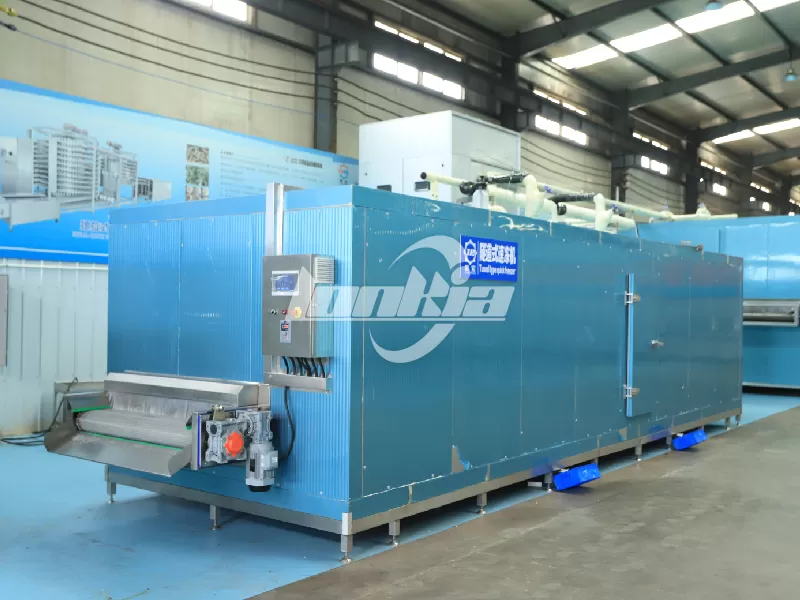
1.What is Individual Quick Freezing (IQF)?
Individual Quick Freezing (IQF) is a modern freezing technology designed to freeze each piece of food individually rather than in bulk. Unlike traditional methods that cause food items to stick together, IQF ensures that products such as berries, vegetables, seafood, or French fries remain free-flowing and easy to portion after freezing.
How IQF Works
Rapid cold airflow: High-velocity cold air is circulated around the product, reducing the surface temperature quickly.
Separation mechanism: Vibrating conveyors or fluidized beds keep items apart during freezing, preventing clumping.
Short freezing time: The process rapidly lowers the food’s temperature, minimizing the formation of large ice crystals.
Advantages of IQF
Superior product quality – Smaller ice crystals reduce cellular damage, preserving natural texture, taste, and nutrients.
No clumping – Each unit is frozen separately, making it easier for downstream packaging and end consumers.
Versatility – Ideal for small items (shrimp, peas, diced fruit) or sliced products that need to stay separate.
Market appeal – Products look more appealing and are easier to handle, which can lead to higher retail value.
Limitations of IQF
Higher capital cost (CAPEX): The equipment is more advanced and requires precise engineering.
Energy demand: Rapid freezing consumes more energy, though modern designs include energy recovery systems.
Maintenance: More moving parts and airflow systems mean stricter cleaning and servicing schedules.
2.What is Blast Freezing?
Blast freezing is a widely used method where food is frozen in bulk by exposing it to very cold air circulated at high speed. It is often applied in food plants, cold storage facilities, and logistics centers due to its simplicity and lower initial investment.
How Blast Freezing Works
Cold air circulation: Fans push air at temperatures typically between –30°C to –40°C across the product.
Batch or continuous tunnels: Products are placed on trays, racks, or conveyors inside blast freezers.
Gradual freezing: Compared to IQF, the freezing process takes longer, leading to larger ice crystals.
Advantages of Blast Freezing
Lower equipment cost: Blast freezers are simpler and generally more affordable than IQF systems.
Large-batch suitability: Well-suited for bulk products such as meat blocks, fish fillets, or prepared trays.
Flexible use: A single unit can handle different product types with minimal adjustment.
Ease of operation: Less complex compared to IQF, requiring lower operator skill.
Limitations of Blast Freezing
Longer freezing times: Slower cooling increases the risk of quality degradation.
Product clumping: Items often freeze together, making portioning difficult.
Higher drip loss: Larger ice crystals damage cell walls, leading to moisture loss upon thawing.
Energy inefficiency: Extended cycles and larger volumes of cold air circulation may result in higher utility costs over time.
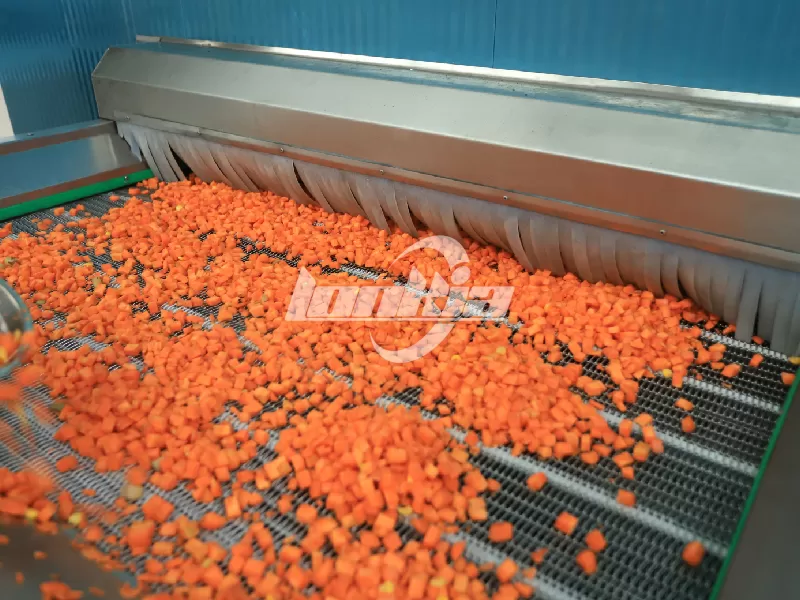
3.Initial Comparison: IQF vs. Blast Freezing
When comparing individual quick freezing vs. blast freezing, the fundamental difference lies in how quickly the product core temperature is reduced and how food items are handled during freezing.
Freezing Speed: IQF freezes products significantly faster than blast freezing, minimizing ice crystal formation.
Product Quality: IQF better preserves texture and color, while blast freezing may cause drip loss and soggy textures.
Flexibility: IQF is preferred for small or individual units; blast is better for large blocks or trays.
Cost Balance: Blast freezers cost less initially, but IQF can provide better long-term returns by reducing product loss and improving marketability.
This initial overview highlights why many modern food processors are shifting to IQF when product quality and consumer convenience are top priorities, while still relying on blast freezing for bulk or cost-sensitive applications.
4.Detailed Comparison: IQF vs. Blast Freezing
To help food processors make the right choice, below is a side-by-side comparison of individual quick freezing (IQF) and blast freezing based on key performance factors:
| Factor | Individual Quick Freezing (IQF) | Blast Freezing |
|---|---|---|
| Freezing Speed | Very fast (minutes or less for small items) | Slower (can take hours for large blocks) |
| Ice Crystal Formation | Small crystals → less cell damage | Larger crystals → more texture loss |
| Product Quality | Maintains color, texture, taste, and nutrients | Higher drip loss, potential sogginess |
| Product Handling | Free-flowing, no clumping; ideal for retail packaging | Items freeze together, bulk handling only |
| Suitable Products | Small or individual items (berries, shrimp, diced vegetables, French fries) | Large cuts, trays, or bulk blocks (meat, fish fillets, prepared meals) |
| CAPEX (Initial Cost) | Higher investment due to advanced equipment | Lower initial investment |
| OPEX (Operating Cost) | Higher energy use per unit, but better product yield | Potentially less energy-intensive, but higher product loss |
| Footprint | Compact modular lines, integration-friendly | Larger cold rooms or tunnel systems |
| ROI Potential | Faster payback with high-value or export markets | Slower payback, more suitable for commodity products |
This comparison shows that individual quick freezing is superior for quality-sensitive, high-value, or retail-oriented products, while blast freezing remains relevant for bulk and cost-driven operations.
5.Which Method Fits Which Product and Business Model?
IQF Is Ideal For:
Fruits and vegetables: berries, peas, diced carrots, mango chunks, etc.
Seafood: shrimp, squid rings, fish portions, shellfish.
Snack and fast-food items: French fries, nuggets, onion rings.
Export-oriented processors: when visual appeal and convenience drive market value.
Blast Freezing Is Best For:
Large cuts of meat and fish: whole salmon, chicken, beef sides.
Prepared meals in trays: frozen ready-to-eat dishes.
Bulk storage: palletized or large carton-packed goods.
Cost-sensitive markets: where investment budgets are limited.
Hybrid Strategy:
Many modern food businesses use a combination of both. For example:
First freeze products individually with IQF → store or ship them in bulk using blast freezers.
Or use IQF for premium retail SKUs while continuing blast freezing for low-cost bulk exports.
This hybrid approach maximizes flexibility while balancing quality and cost efficiency.
6.FAQs
1. Does individual quick freezing consume more energy than blast freezing?
Yes, IQF can use more energy due to rapid air circulation, but it saves costs in the long run by preserving more product quality and reducing waste.
2. Can a blast freezer be converted into an IQF system?
Not directly. IQF requires specialized conveyors and airflow systems. However, some hybrid upgrades are possible.
3. Which method better prevents drip loss?
IQF, because smaller ice crystals reduce cell rupture, leading to less moisture loss upon thawing.
4. Is IQF suitable for seafood?
Absolutely. IQF is widely used for shrimp, fish portions, and shellfish to preserve texture and prevent clumping.
5. What is the payback period for an IQF system?
Typically 2–5 years, depending on throughput, product type, and target markets. Export-oriented businesses often recover faster.
6. Do both methods meet food safety standards?
Yes, when operated correctly. Both IQF and blast freezing can be designed to comply with HACCP, ISO 22000, and local food safety regulations.
7.Which Is Better for Your Business?
The decision between individual quick freezing vs. blast freezing depends on your product portfolio, target markets, and investment capacity:
- Choose IQF if your business focuses on retail-ready, high-value, or export products where quality and appearance drive consumer preference.
- Choose blast freezing if you deal with large bulk products or cost-sensitive markets where speed of freezing is less critical than affordability.
- For many processors, the optimal solution is a hybrid approach, using IQF for premium SKUs and blast freezing for bulk storage.
By carefully evaluating product type, CAPEX/OPEX balance, and long-term ROI, food processors can select the right freezing technology to ensure sustainable growth and market competitiveness.