
In the blueberry processing industry, the washing stage directly determines product quality and the effectiveness of subsequent processing steps. Because blueberries have thin skins that are easily damaged and are covered with fine debris, traditional washing methods often struggle to balance cleanliness with fruit integrity. The bubble washing technology used by the Blueberry Cleaner is a solution specifically designed to address this challenge.
What is the Core Challenge of Blueberry Cleaning?
Unlike ordinary fruits and vegetables, the challenges of cleaning blueberries primarily lie in:
- Extremely thin skin that is easily damaged
- A powdery coating that is easily disrupted, affecting the appearance
- Small fruit size with densely adhering impurities
- Low and inconsistent efficiency of manual cleaning
Traditional rinsing or brushing methods often cause mechanical damage while removing impurities, leading to a decrease in yield.
How Bubble Cleaning Technology Works?
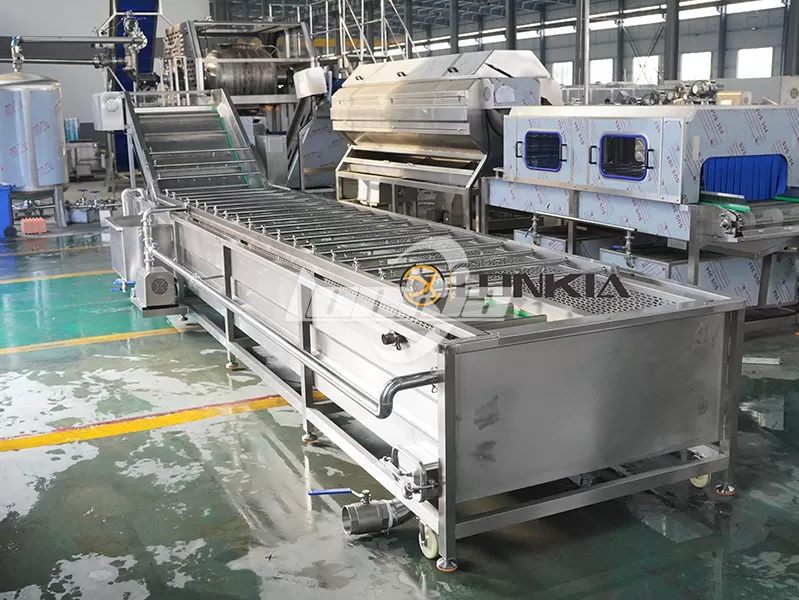
The core of the blueberry cleaner lies in its combined cleaning method using bubbles and water flow.
The equipment uses an air pump to generate a large number of fine bubbles in the tank, causing the blueberries to tumble in the water. Simultaneously, the water flow propels them, achieving multi-directional cleaning. A secondary rinse is then performed via overhead spray nozzles to further remove residual impurities.
The key advantages of this method are:
- No mechanical friction
- More uniform cleaning
- Controllable impact on fruit
The hydrodynamic forces generated by bubble turbulence effectively strip away mud, impurities, and some pesticide residues while avoiding direct damage to the fruit skin.
Why Is Bubble Cleaning More Suitable for Blueberries?
1. Effectively prevents fruit damage
Unlike brushing or high-impact washing, bubble cleaning uses water flow to achieve gentle cleaning, significantly reducing skin breakage and preserving the blueberries' intact appearance.
2. Improves cleaning uniformity
Bubbles create all-around turbulence in the water, ensuring every blueberry is enveloped by the water flow, thereby achieving thorough cleaning with no blind spots—which is particularly critical for small-sized fruits.
3. Removes fine impurities and pesticide residues
When bubbles burst, they generate micro-impact forces that effectively dislodge mud, pollen, and pesticide residues adhering to the fruit surface, enhancing cleanliness.
4. Adjustable cleaning intensity
High-quality blueberry cleaners allow for adjustment of bubble intensity, water pressure, and conveyor speed, enabling the equipment to adapt to blueberries of varying ripeness or from different batches.
How Does Equipment Design Enhance Cleaning Performance?
A mature blueberry cleaner typically includes:
- Bubble Generation System (Core)
- Water Circulation and Filtration System
- High-Pressure Spray System
- Conveyor Belt (Variable Frequency Speed Control)
These components work in tandem to achieve a continuous, stable cleaning process while reducing manual intervention and improving overall efficiency.
What Does This Mean for Processing Companies?
For blueberry processing companies, adopting bubble cleaning technology is not merely an equipment upgrade but a key element of quality control:
- Improves product consistency
- Reduced damage rate and increased yield
- Reduced reliance on manual labor
- Provides stable raw materials for subsequent sorting and drying
In practical applications, established equipment suppliers like Lonkia typically optimize the configuration of the bubble system and spray structure based on the customer's production capacity and process requirements, thereby achieving more consistent cleaning results.
Conclusion
The reason bubble washing technology has become the core solution for blueberry cleaners lies in its ability to strike a balance between high cleanliness and low damage—precisely the most challenging issue in blueberry processing.
For processing companies striving for quality and efficiency, selecting the right bubble washing equipment is not only about improving cleaning performance but also a crucial step toward enhancing the competitiveness of the entire production line.