
A complete cabbage processing line combines different types of food processing equipment to turn fresh cabbage into a cleaned, cut, dried, and ready-to-pack product. The exact configuration depends on the final product, production capacity, and level of automation required.
For commercial cabbage processors, integrating multiple machines into one continuous production line can reduce manual handling, improve processing efficiency, and provide more consistent results.
What Equipment Is Used in a Cabbage Processing Line?
A complete cabbage processing line may include feeding, trimming, cutting, washing, dewatering, inspection, conveying, and packaging equipment.
The main equipment can include:
Cabbage feeding and conveying equipment
Cabbage trimming and preparation equipment
Cabbage cutting or shredding machines
Vegetable washing machines
Dewatering equipment
Inspection and sorting conveyors
Transfer conveyors
Weighing and packaging equipment
Not every production line needs all of these machines. The equipment should be selected according to the actual processing requirements.
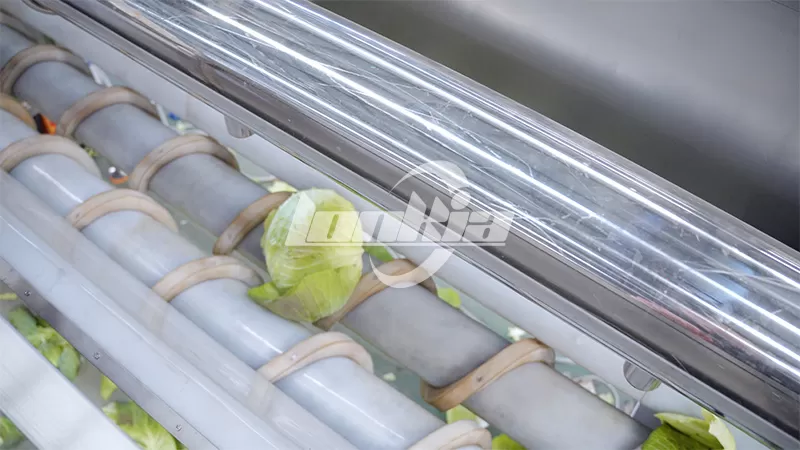
Cabbage Feeding and Conveyor System
The feeding system is the starting point of the production line. It transfers fresh cabbage into the processing equipment at a controlled and continuous rate.
Conveyors can also connect different machines, reducing manual transportation between processing stages. For larger cabbage processing plants, an automated conveying system helps maintain a stable production flow.
Cabbage Trimming Equipment
Fresh cabbage may contain damaged outer leaves, roots, or unwanted portions that need to be removed before further processing.
Trimming equipment can reduce manual preparation work and provide more consistent raw material preparation. Depending on the production process, trimming can be performed manually, semi-automatically, or integrated into the processing line.
Cabbage Cutting and Shredding Machines
Cutting equipment is one of the key components of a cabbage processing line.
Depending on the final product, cabbage can be processed into slices, strips, pieces, or shredded cabbage. Industrial cabbage cutters and shredders are designed to provide consistent cutting sizes while processing large quantities of raw material.
The cutting method should be selected according to the required product specifications.
Vegetable Washing Machine
After trimming and cutting, the cabbage normally needs to be washed to remove soil, plant debris, and other surface contaminants.
Industrial vegetable washing machines can provide continuous washing for commercial production. Different washing methods can be selected depending on the product, capacity, and required cleaning level.
A suitable washing system should also allow easy cleaning and maintenance.
Cabbage Dewatering Equipment
After washing, excess water needs to be removed before the cabbage moves to the next processing stage or packaging.
Dewatering equipment can help reduce surface moisture and improve the condition of the product before packaging. Depending on the production requirements, centrifugal dewatering or air-drying systems can be used.
The appropriate method depends on the cabbage product and desired moisture level.
Inspection and Sorting System
An inspection section allows operators to check the processed cabbage and remove unwanted materials or pieces that do not meet product requirements.
Inspection can be performed manually on a conveyor or combined with automated systems for larger production lines.
This stage helps improve final product consistency before packaging.
Weighing and Packaging Equipment
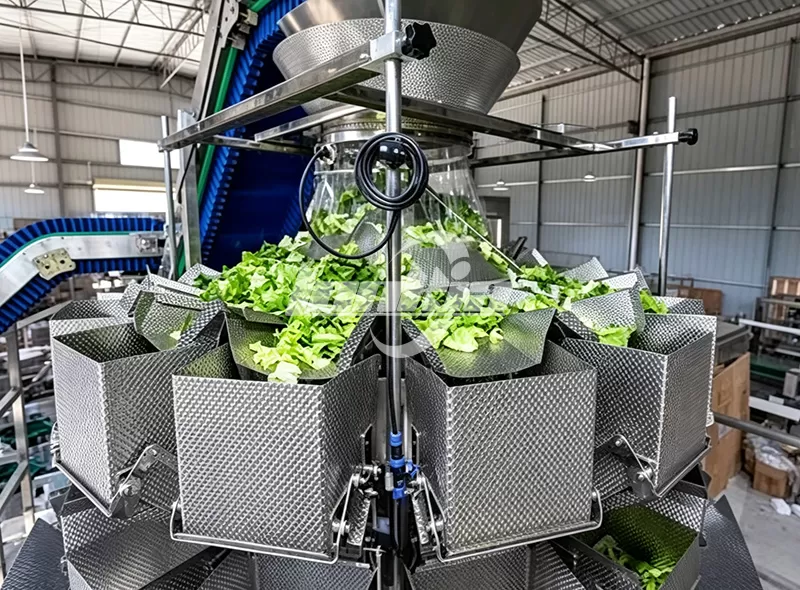
For packaged cabbage products, weighing and packaging equipment can be added to the end of the processing line.
The packaging system can be configured according to the product type, package size, production capacity, and packaging material.
Integrating packaging with the processing line can reduce manual handling and create a more continuous production workflow.
How Does the Equipment Work Together?
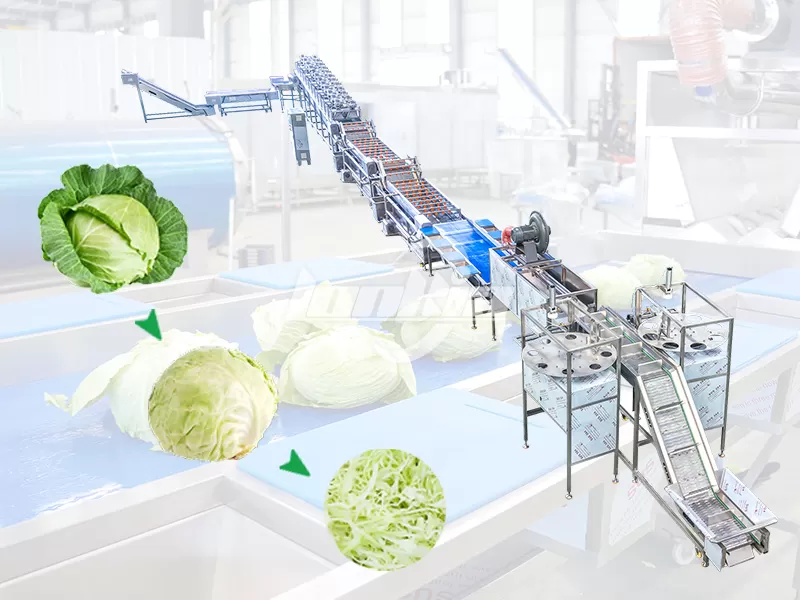
A typical cabbage processing flow may look like:
Feeding → Trimming → Cutting/Shredding → Washing → Dewatering → Inspection → Weighing → Packaging
However, the actual process can be different depending on the final cabbage product.
For example, a production line for shredded fresh cabbage may require cutting, washing, dewatering, and packaging, while another application may require additional processing stages.
How to Choose the Right Equipment?
When selecting cabbage processing equipment, consider the following factors:
Required processing capacity
Final cabbage product
Cutting size and shape
Washing requirements
Required moisture level
Automation level
Available factory space
Packaging requirements
Future production expansion
The equipment should work together as a complete system rather than being selected independently. Proper equipment matching can help prevent production bottlenecks and improve overall efficiency.
Can a Cabbage Processing Line Be Customized?
Yes. Commercial cabbage processing lines can be customized according to different production requirements.
A manufacturer can adjust the number and type of machines, conveyor layout, processing capacity, automation level, and packaging system according to the customer's factory and product requirements.
For businesses with future expansion plans, the line can also be designed with additional capacity or space for future equipment.
Why Choose LONKIA Machinery?
LONKIA Machinery provides food processing machinery and customized production line solutions for vegetable processors. A cabbage processing line can be configured with cutting, washing, dewatering, conveying, inspection, and packaging equipment according to the customer's production requirements.
By integrating the different processing stages into one system, LONKIA Machinery can help customers create an efficient and practical cabbage processing workflow.
Conclusion
A complete cabbage processing line can include feeding, trimming, cutting, washing, dewatering, inspection, conveying, weighing, and packaging equipment. The actual configuration depends on the type of cabbage product, required capacity, and level of automation.
Rather than choosing equipment based only on individual machine prices, businesses should consider how each machine works together as part of the complete production process. A properly configured cabbage processing line can improve efficiency, reduce manual handling, and provide more consistent processing results.