
In the world of food and beverage processing, safety, efficiency, and product quality are non-negotiable. Among the many technologies that ensure these standards, the HTST pasteurizer stands out as one of the most reliable and widely used solutions. HTST stands for High-Temperature Short-Time pasteurization—a process designed to kill pathogens quickly without compromising the taste, texture, or nutritional value of the product.
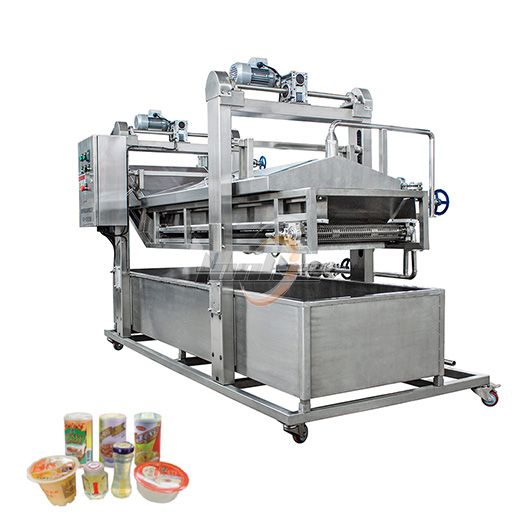
What Is an HTST Pasteurizer?
An HTST pasteurizer is a continuous processing system used to heat liquid food products—like milk, juice, and beer—to a specific high temperature for a short duration, then rapidly cool them before packaging. The goal is to destroy harmful microorganisms such as Listeria, Salmonella, and E. coli, while preserving the product's sensory and nutritional qualities.
HTST Pasteurization Time and Temperature
The most common HTST standard for milk, for example, is:
Temperature: 72°C (161°F)
Time: 15 seconds
Other products may require different combinations, but the principle remains the same—brief high heat followed by rapid cooling.
Key Features of an HTST Pasteurizer
Modern HTST pasteurizers are designed for precision, automation, and food safety. Below are some of their defining features:
1. Plate Heat Exchangers (PHE)
These stainless steel plates transfer heat between fluids efficiently. The product flows between alternating hot and cold channels, allowing rapid heating and cooling in a compact space.
2. Regenerative Heating System
A key feature in most HTST systems, regenerative heating allows the outgoing hot product to preheat the incoming cold product. This not only saves energy but also ensures temperature consistency.
3. Flow Diversion Valve (FDV)
If the product doesn’t reach the required temperature, the FDV redirects it back to the holding section to prevent under-pasteurized material from reaching packaging.
4. Holding Tube
This section ensures that the product remains at the target temperature for the exact required time, ensuring effective microbial kill.
5. Automatic Controls and Monitoring
HTST pasteurizers are typically equipped with programmable logic controllers (PLC), digital temperature sensors, and alarms to ensure compliance with food safety standards.
How Does an HTST Pasteurizer Work?
Understanding the flow process of an HTST system helps illustrate its reliability and efficiency. Here’s a step-by-step breakdown:
Step 1: Preheating
The raw product enters the system and is preheated by the outgoing pasteurized product using the regenerative heating section.
Step 2: Heating
Using hot water or steam, the product is brought to the target pasteurization temperature (e.g., 72°C).
Step 3: Holding
The product passes through the holding tube where it is maintained at that temperature for the required time (e.g., 15 seconds).
Step 4: Flow Diversion
A flow diversion valve ensures that only fully pasteurized product continues through the system. If not, it is returned for reprocessing.
Step 5: Cooling
The pasteurized product is rapidly cooled to storage or packaging temperature, often using chilled water in the final section of the heat exchanger.
Step 6: Discharge
The product is now ready for storage or aseptic filling, depending on the packaging method used.
Benefits of Using an HTST Pasteurizer
Choosing an HTST pasteurizer offers numerous operational and quality-related advantages over traditional methods like batch pasteurization.
1. Higher Throughput
HTST systems are continuous, enabling the pasteurization of thousands of liters per hour—ideal for large-scale production.
2. Energy Efficiency
Thanks to regenerative heating, HTST pasteurizers consume significantly less energy compared to batch systems.
3. Improved Product Quality
Shorter heating times help retain the original flavor, color, and nutritional value of the product.
4. Consistent Safety Compliance
Automated controls and monitoring ensure that every drop of product meets safety requirements with minimal human error.
5. Reduced Downtime
Automated cleaning systems (CIP—Clean-in-Place) and smart controls reduce maintenance and improve uptime.
Industry Applications of HTST Pasteurizers
HTST pasteurizers are not limited to dairy. They’re widely used across multiple food and beverage sectors where liquid processing is involved:
1. Dairy Industry
Milk
Cream
Yogurt base
Ice cream mix
2. Beverage Industry
Fruit juices
Beer and cider
Flavored waters
Plant-based drinks (soy, almond, oat milk)
3. Food Processing
Liquid eggs
Sauces and gravies
Soup bases
Brine and syrups
4. Pharmaceuticals & Nutraceuticals
Liquid vitamins
Health tonics
Oral suspensions
In every case, HTST systems deliver reliable microbial control without sacrificing taste or quality.
Compliance and Standards
HTST pasteurizers are built to meet international food safety regulations. For example:
FDA Pasteurization Standards (U.S.)
3-A Sanitary Standards
EHEDG Guidelines (Europe)
HACCP Integration
Meeting these standards is crucial for producers looking to distribute their products nationally or globally.
Choosing the Right HTST Pasteurizer
When selecting an HTST pasteurizer, consider the following:
Processing volume: Choose a unit that matches your daily or hourly output needs.
Product type: Viscosity, particulate size, and acidity affect system design.
Automation level: Higher-end models offer advanced diagnostics and remote monitoring.
Space and energy availability: Regenerative systems are energy-efficient but may require a larger footprint.
It’s also essential to partner with experienced manufacturers who can customize systems to meet your process requirements and provide ongoing technical support.
The HTST pasteurizer is a cornerstone of modern liquid food processing. It offers unmatched speed, safety, and efficiency, making it an essential asset for any producer seeking to meet food safety standards while maintaining high product quality. Whether you’re in dairy, juice, or plant-based beverage production, investing in an HTST system can future-proof your operation, reduce waste, and increase output.
By understanding how HTST technology works and how to apply it in your facility, you’re not just improving a process—you’re ensuring the safety, satisfaction, and trust of your consumers.