
For investors and food processors considering a shoestring potatoes manufacturing plant in 2026, cost estimation has become significantly more complex than in previous years. Rising energy prices, labor shortages, stricter food safety regulations, and higher expectations for automation all contribute to a wider cost range and greater uncertainty during project planning.
Shoestring potatoes, while seemingly a simple product, require a highly controlled and continuous processing flow. Small deviations in cutting accuracy, moisture removal, or frying conditions can directly affect yield, texture, and final product consistency. As a result, plant cost is not determined by a single piece of equipment, but by how well the entire system is designed and integrated.
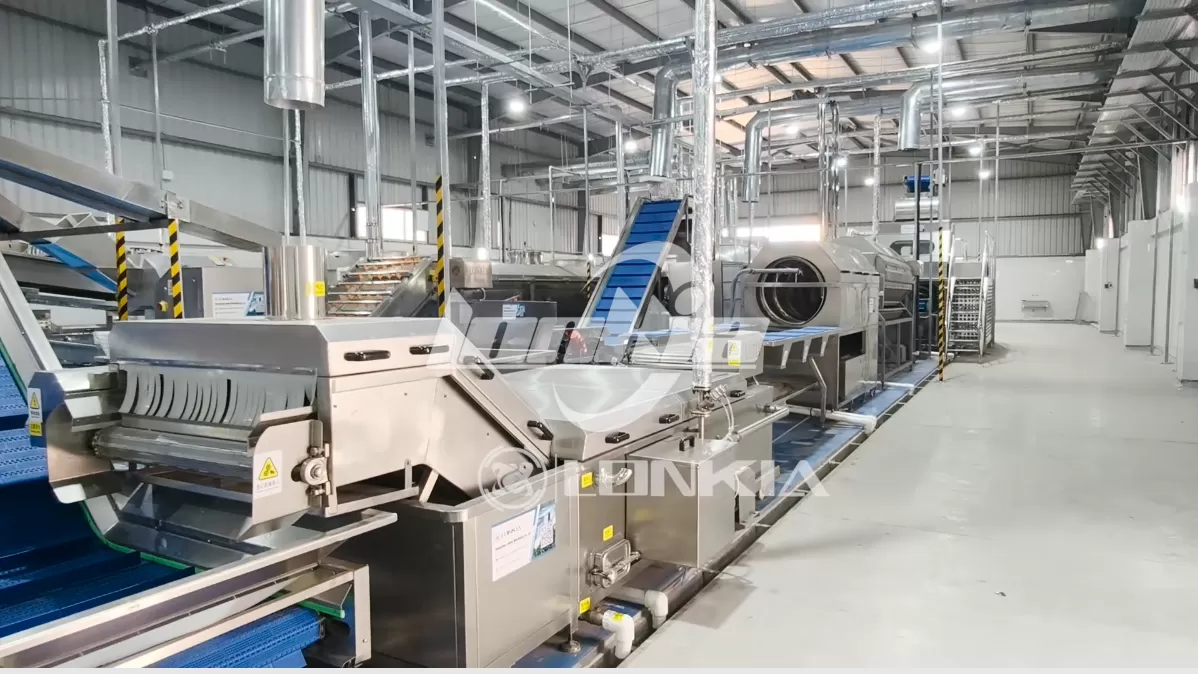
1.What Defines a Shoestring Potatoes Manufacturing Plant?
Product Characteristics That Drive Cost
Shoestring potatoes are defined by their thin, uniform cross-section and high surface-area-to-volume ratio. Compared to standard French fries, this product format introduces several technical challenges:
Higher sensitivity to cutting accuracy
Faster moisture loss during thermal processing
Greater risk of breakage and over-frying
These characteristics directly influence equipment selection and line configuration, which in turn drive capital expenditure.
Unlike multipurpose potato lines, a dedicated shoestring potatoes manufacturing plant must prioritize precision, stability, and throughput consistency. This specialization increases efficiency but also raises the technical threshold—and cost—of the processing line.
Typical Production Flow Overview
A standard shoestring potatoes manufacturing plant includes the following stages:
Raw potato receiving and storage
Washing and peeling
Precision cutting into shoestring dimensions
Washing and starch removal
Blanching and partial dehydration
Frying and oil management
Cooling and freezing
Packaging and cold storage
Each stage contributes incrementally to total plant cost, but their combined integration determines the final investment level. Underestimating the complexity of this flow is one of the most common reasons projects exceed budget.
2.Understanding Cost Structure: CAPEX vs OPEX
Before analyzing specific numbers, it is essential to distinguish between capital expenditure (CAPEX) and operating expenditure (OPEX).
Capital Expenditure (CAPEX)
CAPEX includes all upfront investments required to build and commission the plant:
Processing equipment
Installation and commissioning
Facility construction and utilities setup
For shoestring potatoes manufacturing plants, CAPEX typically represents the largest financial barrier to entry and the most visible cost component.
Operating Expenditure (OPEX)
OPEX includes recurring costs such as:
Energy (electricity, gas, steam)
Labor
Maintenance and spare parts
Oil consumption and waste treatment
Many feasibility studies underestimate OPEX, focusing too heavily on equipment price. In practice, a lower initial CAPEX does not guarantee lower total cost of ownership.
In 2026, rising energy and labor costs mean OPEX considerations should influence equipment selection from the very beginning.
3.Equipment Cost: The Primary Driver of Total Plant Investment
Why Equipment Cost Dominates CAPEX
In a shoestring potatoes manufacturing plant, processing equipment typically accounts for the largest share of CAPEX—often more than half of the total initial investment. This is because the product requires:
Continuous, high-speed processing
Tight dimensional tolerances
Stable thermal control
These requirements limit the use of low-cost, generalized equipment and increase reliance on specialized systems.
Washing and Peeling Systems
The washing and peeling stage sets the baseline for yield and product quality. Inefficient peeling increases raw material loss and creates downstream problems in cutting and frying.
Key cost drivers at this stage include:
Capacity matching with the rest of the line
Peeling efficiency and yield preservation
Water consumption and recycling systems
In 2026, processors increasingly favor systems that reduce water usage and labor intervention, which raises upfront cost but improves long-term economics.
Precision Cutting Equipment for Shoestring Potatoes
Cutting is one of the most critical—and underestimated—cost factors.
Shoestring cutting requires:
High-precision blades or knife grids
Stable feed alignment
Minimal breakage at high throughput
Lower-cost cutting systems often struggle to maintain consistent strip dimensions, leading to higher fines, product loss, and uneven frying. As a result, cutting equipment selection has a disproportionate impact on both CAPEX and yield-related OPEX.
Blanching and Moisture Control Equipment
Blanching is not merely a pre-frying step; it directly affects color, texture, and oil uptake.
Cost factors include:
Temperature and dwell-time control
Water and energy efficiency
Integration with dewatering systems
Inadequate blanching capacity often forces processors to slow down the entire line, reducing effective throughput and increasing per-unit cost.
Continuous Fryers as a Cost Center
Frying equipment represents one of the single most expensive components in a shoestring potatoes manufacturing plant. Continuous fryers must deliver:
Uniform heat transfer
Precise residence time control
Stable oil circulation and filtration
Because shoestring potatoes have a high surface-area-to-volume ratio, they are especially sensitive to temperature fluctuations. Maintaining consistency requires advanced control systems, which adds to equipment cost.
Oil Management and Filtration
Oil quality directly affects product taste, color, and shelf life. Poor oil management increases operating cost through higher oil consumption and product rejects.
Modern plants allocate significant budget to:
Continuous filtration systems
Crumb removal and oil turnover control
Heat recovery and energy optimization
These systems may not be immediately visible in headline cost figures, but they significantly influence long-term operating economics.
4.Plant Capacity: Why Bigger Is Not Always Cheaper
The Non-Linear Relationship Between Capacity and Cost
A common misconception is that doubling capacity roughly doubles cost. In reality, the relationship between plant capacity and investment is non-linear.
Key observations include:
Small plants suffer from poor economies of scale
Medium-scale plants often achieve the best cost-to-output balance
Large plants require disproportionately higher investment in utilities, automation, and redundancy
As capacity increases, supporting systems—such as freezing, oil handling, and cold storage—become major cost multipliers.
Capacity Planning as a Strategic Decision
In 2026, many processors adopt phased expansion strategies rather than building maximum capacity from day one. This approach reduces financial risk while preserving future scalability.
Choosing equipment that supports modular expansion often costs more initially but prevents expensive retrofits later.
5.Infrastructure and Facility Costs
Plant Building and Civil Works
The physical facility is often treated as a secondary cost compared to processing equipment, but in reality, civil works can account for a substantial portion of total plant investment.
A shoestring potatoes manufacturing plant requires:
Sufficient floor space for continuous product flow
Hygienic zoning between raw and cooked areas
Reinforced flooring to support heavy equipment and oil systems
In addition, drainage, waterproofing, and anti-slip surface treatments are critical due to constant water and oil exposure. Cutting corners in civil design may reduce initial costs but often leads to higher maintenance expenses and operational disruptions.
Utilities and Supporting Systems
Utilities infrastructure is one of the most underestimated cost components, especially in first-time projects.
Key utility systems include:
Electrical power distribution
Steam or thermal energy systems
Water supply and wastewater treatment
Compressed air
Refrigeration and cold storage
As plant capacity increases, utility requirements grow faster than linearly. For example, freezing systems and cold storage for shoestring potatoes can significantly increase both CAPEX and ongoing energy consumption.
In 2026, energy efficiency and heat recovery systems are increasingly integrated into new plants. While these systems raise upfront costs, they are often necessary to keep long-term operating expenses under control.
6.Labor, Automation, and Workforce Costs in 2026
Labor Cost Trends and Availability
Labor availability and cost continue to shape plant economics in 2026. Many regions face persistent labor shortages, particularly for repetitive, physically demanding tasks common in food processing.
Key labor-related cost drivers include:
Wage inflation
Training requirements
Shift coverage for continuous operation
Plants that rely heavily on manual intervention often experience higher turnover, inconsistent output, and rising operational costs over time.
Automation as a Cost-Stabilizing Strategy
Automation does not simply replace labor—it stabilizes cost and performance. In a shoestring potatoes manufacturing plant, automation is most impactful in:
Product feeding and alignment
Frying and oil management control
Packaging and palletizing
Higher automation increases CAPEX but typically reduces:
Labor dependency
Product variability
Downtime caused by human error
In 2026, many investors view automation not as a luxury, but as a hedge against long-term labor risk.
7.Compliance, Food Safety, and Regulatory Costs
Food Safety and Quality Assurance Requirements
Shoestring potatoes are often supplied to retail, foodservice, or export markets, each with strict regulatory requirements.
Compliance-related costs may include:
Hygienic equipment design
Traceability and data recording systems
Metal detection and inspection equipment
Certification and audit preparation
These costs are not optional. Failing to budget for them early often results in expensive retrofits after commissioning.
Environmental and Waste Management Obligations
Wastewater, oil disposal, and solid waste management increasingly affect plant economics. Regulatory pressure in many regions requires investment in:
Effluent treatment systems
Oil recovery or disposal solutions
Emission control
While these systems add to initial investment, they are essential for operational continuity and regulatory approval.
8.Hidden and Indirect Costs That Impact Total Investment
Installation, Commissioning, and Ramp-Up Losses
Beyond equipment purchase, significant costs arise during installation and commissioning.
These include:
Mechanical and electrical installation
Control system integration
Trial production and yield loss during ramp-up
It is common for early-stage production to operate below target efficiency, leading to temporary losses that should be included in realistic cost planning.
Maintenance, Spare Parts, and Downtime Risk
Plants designed with minimal redundancy or low-quality components may appear cheaper initially but often incur higher lifetime costs.
Budgeting should account for:
Critical spare parts
Preventive maintenance programs
Planned downtime
Ignoring these factors leads to unpredictable operating expenses and reduced plant availability.
9.Regional Cost Differences in 2026
Equipment Sourcing and Logistics
Plant cost varies significantly depending on whether equipment is sourced locally or imported. Importing specialized equipment may increase CAPEX due to logistics, duties, and installation complexity but can improve long-term performance and yield.
Energy and Labor Cost Variability
Regional differences in energy pricing and labor laws strongly influence both CAPEX and OPEX.
For example:
Regions with low energy costs favor high-capacity freezing systems
Regions with high labor costs benefit more from automation
Understanding local cost structures is essential for accurate plant budgeting.
10.Estimated Cost Ranges by Plant Scale (Indicative)
While exact figures depend on many variables, realistic cost estimation in 2026 is better approached through ranges rather than fixed numbers.
Typical scenarios include:
Small-scale plant: lower initial investment but higher unit cost
Medium-scale plant: balanced CAPEX and OPEX, often the most cost-effective
Large-scale industrial plant: high CAPEX with strong long-term cost advantages
The key is not identifying the lowest possible investment, but determining the most sustainable cost structure for the intended market.
In 2026, the cost of a shoestring potatoes manufacturing plant is defined less by individual machines and more by system-level decisions. Equipment precision, automation strategy, utility infrastructure, and compliance planning all interact to shape total investment and long-term profitability.
Rather than asking “What is the cheapest plant I can build?”, decision-makers should ask:
What level of yield, stability, and scalability is required?
How will operating costs evolve over time?
Does the plant design support future growth?
A well-planned shoestring potatoes manufacturing plant may require higher upfront investment, but it delivers stronger cost control, higher yields, and more predictable performance over its operational life.