
The cost of a cabbage processing line in 2026 can vary significantly depending on processing capacity, automation level, equipment configuration, and the type of cabbage products being produced. A small semi-automatic system may require a relatively simple setup, while a fully automatic commercial cabbage processing line can include cutting, washing, dewatering, inspection, conveying, and packaging equipment.
For food processing companies planning to purchase cabbage processing equipment, understanding the factors behind the price is more useful than looking at a single fixed number. The right configuration should match your production capacity, product requirements, and future expansion plans.
What Determines the Cost of a Cabbage Processing Line?
Several factors have a direct impact on the total investment.
Processing Capacity
Capacity is one of the most important price factors. A line designed to process several hundred kilograms of cabbage per hour will have different equipment requirements from a system designed for several tons per hour.
Higher-capacity systems generally require larger conveyors, washing machines, cutting equipment, and supporting systems.
Level of Automation
A semi-automatic cabbage processing line requires more manual handling but can reduce the initial investment. An automatic cabbage processing line uses more integrated equipment to reduce labor and improve continuous production.
Automation may increase the initial equipment cost but can be beneficial for companies processing cabbage at high volumes.
Equipment Configuration
Not every cabbage processing line needs the same machines. A basic line may include feeding, cutting, and washing equipment, while a more complete system may also include:
Cabbage trimming equipment
Cabbage cutting or shredding machines
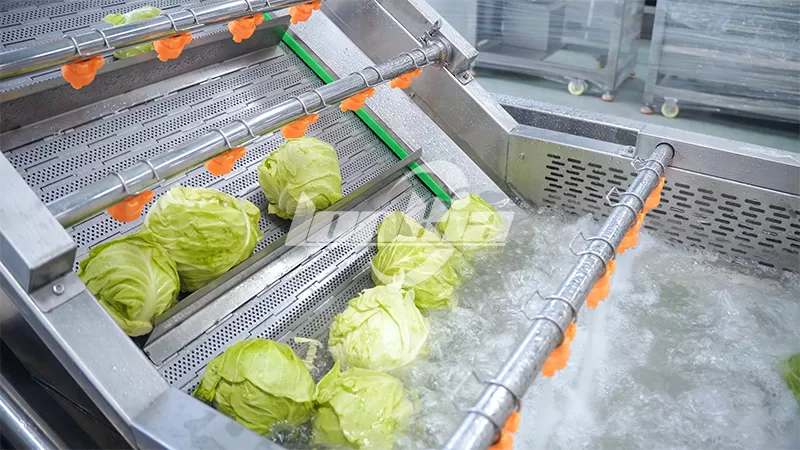
Vegetable washing machines
Dewatering equipment
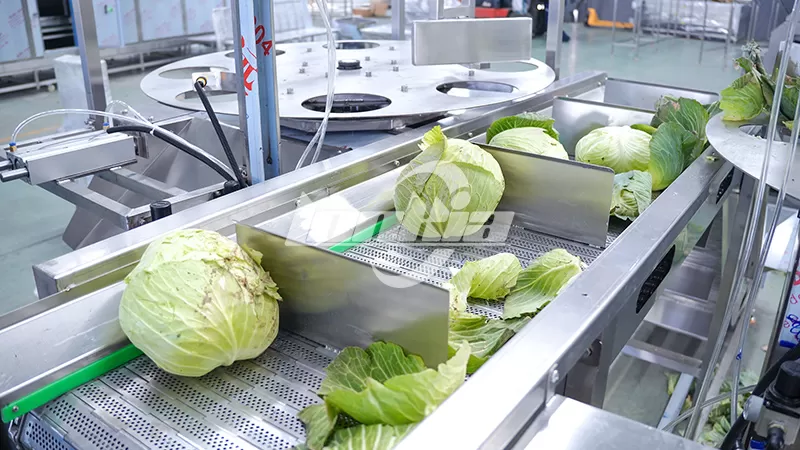
Inspection conveyors
Automatic conveying systems
Weighing and packaging equipment
More processing stages generally mean a higher total investment.
Typical Cabbage Processing Line Price Range
There is no universal price for a cabbage processing line because each production line is normally customized.
As a general purchasing reference, buyers can think about the investment in three levels:
| System Type | Typical Configuration | Relative Investment |
|---|---|---|
| Small / Semi-Automatic | Feeding, cutting, basic washing | Lower |
| Medium Commercial Line | Cutting, washing, dewatering, conveying | Medium |
| Fully Automatic Line | Integrated processing, conveying, inspection and packaging | Higher |
These categories are more useful for initial planning than using a fixed price because the final quotation depends on the required capacity and equipment configuration.
Does a Fully Automatic Cabbage Processing Line Cost More?
Yes. A fully automatic cabbage processing line normally requires more equipment, control systems, conveyors, sensors, and integration work than a semi-automatic system.
However, equipment price is only one part of the investment. Automation can reduce repetitive manual work, improve production consistency, and allow the line to operate continuously.
For large-scale cabbage processing plants, these benefits can be important when evaluating the total operating cost rather than only the initial purchase price.
What Equipment Is Included in the Price?
The equipment included in a cabbage processing line depends on the customer's production process.
A typical commercial system may include:
Raw cabbage feeding system
Trimming and preparation equipment
Cabbage cutting or shredding machine
Vegetable washing machine
Dewatering or drying equipment
Inspection conveyor
Transfer conveyors
Weighing and packaging equipment
Some customers may only require processing equipment, while others need a complete turnkey production line.
Does Cabbage Processing Capacity Affect the Price?
Capacity has a major influence on equipment selection and overall cost.
For example, a plant processing cabbage for a small foodservice operation may not need the same equipment configuration as a large fresh-cut vegetable factory. Increasing production capacity can require larger processing machines, additional conveyors, higher-capacity washing systems, and more advanced automation.
Therefore, buyers should determine the required hourly capacity before requesting quotations.
How Can You Reduce the Cost of a Cabbage Processing Line?
Reducing the initial investment does not necessarily mean choosing the cheapest equipment. A better approach is to select only the processing stages that are actually required.
You can consider:
Choosing the appropriate production capacity
Starting with essential processing equipment
Selecting semi-automatic equipment where appropriate
Avoiding unnecessary automation
Designing an efficient equipment layout
Planning future expansion in advance
For high-volume production, it is also important to consider labor, maintenance, water consumption, energy use, and production efficiency when comparing different configurations.
What Should You Ask a Cabbage Processing Line Manufacturer?
Before purchasing, provide the manufacturer with as much production information as possible.
Important information includes:
Required capacity per hour
Type of cabbage product
Desired cutting size
Washing requirements
Dewatering requirements
Packaging requirements
Factory space and layout
Required automation level
With this information, a manufacturer can recommend a suitable configuration and provide a more accurate quotation.
Why Choose LONKIA Machinery?
LONKIA Machinery provides customized food processing machinery and complete processing solutions for vegetable processors. Cabbage processing lines can be configured according to production capacity, processing requirements, automation level, and factory layout.
Instead of using the same configuration for every customer, LONKIA Machinery can combine cutting, washing, dewatering, conveying, inspection, and other equipment according to the actual production process.
Conclusion
The cost of a cabbage processing line in 2026 depends mainly on capacity, automation, equipment configuration, and customization. A basic semi-automatic system can be designed for smaller operations, while large food processing plants may require a fully integrated automatic production line.
When comparing cabbage processing line prices, buyers should look beyond the initial equipment cost and consider labor requirements, production efficiency, maintenance, and future expansion. Choosing the right configuration can help create a more efficient a