
In modern vegetable and fruit processing lines, blanching is not a secondary or optional operation—it is a critical control step that directly affects product quality, safety, and process efficiency.
Whether the final product is frozen, dehydrated, canned, or used in ready-to-eat or ready-to-cook foods, improper blanching can lead to color degradation, texture loss, nutrient instability, and reduced shelf life. Compared with raw material variability or packaging issues, blanching failures are often less visible but far more systematic in their impact.
As processing lines scale up and quality standards become stricter, manual or rudimentary blanching methods are no longer sufficient. This is why industrial processors rely on dedicated blanching machines to achieve controlled, repeatable, and verifiable thermal treatment.
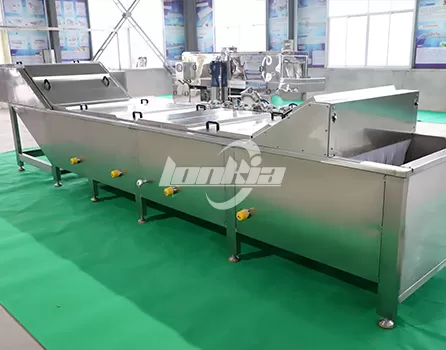
1. What Is a Blanching Machine?
A blanching machine is an industrial food-processing device designed to apply short, precisely controlled heat treatment to vegetables or fruits before downstream processing.
From a process-engineering perspective, blanching is neither simple washing nor full cooking. Instead, it is a functional thermal pre-treatment positioned between cleaning and further processing steps such as freezing, drying, or packaging.
Key characteristics of an industrial blanching machine include:
Accurate control of temperature and residence time
Capability for continuous operation
Consistent treatment across varying product loads
Hygienic design compliant with food safety standards
Unlike household blanching, which relies on visual judgment and manual timing, industrial blanching machines operate within defined process windows, ensuring product consistency across large production volumes.
2. Purpose of Blanching in Vegetable and Fruit Processing
2.1 Enzyme Inactivation
The most fundamental purpose of blanching is enzyme inactivation.
Fresh fruits and vegetables contain naturally occurring enzymes such as polyphenol oxidase and peroxidase. If left active, these enzymes continue to function after harvesting, leading to:
Enzymatic browning
Flavor degradation
Texture softening
Nutrient loss
By exposing the product to elevated temperatures for a short, controlled duration, a blanching machine disrupts enzyme activity before irreversible quality deterioration occurs. This step effectively “stabilizes” the product for downstream processing.
2.2 Color Retention and Visual Quality
Color is one of the most important quality indicators for processed fruits and vegetables. Blanching plays a direct role in preserving natural pigments such as chlorophyll, carotenoids, and anthocyanins.
When correctly applied, blanching helps:
Maintain bright green color in vegetables like peas, beans, and broccoli
Prevent browning in sliced fruits
Improve visual uniformity across production batches
Without proper blanching, even well-packaged products may appear dull or discolored, negatively affecting consumer perception.
2.3 Texture Stabilization and Process Uniformity
In addition to enzyme control, blanching also affects cell structure and firmness. Controlled heat exposure softens plant tissues slightly, making products more uniform and predictable during subsequent operations such as cutting, freezing, or drying.
From a processing standpoint, this results in:
Reduced mechanical damage during handling
Improved consistency during freezing or dehydration
More predictable cooking behavior for end users
A properly designed blanching machine ensures that this softening occurs evenly, without overcooking or excessive moisture absorption.
3. How a Blanching Machine Works
Although designs vary, most blanching machines operate based on the same fundamental principles: heat transfer, residence time control, and rapid post-treatment cooling.
3.1 Heating Medium and Temperature Control
Industrial blanching machines typically use one of two heating media:
Hot water blanching, where products are immersed or conveyed through heated water
Steam blanching, where saturated steam transfers heat directly to the product surface
Temperature is maintained within a narrow range, usually between 70°C and 100°C, depending on product type, size, and moisture content. Precise temperature regulation is essential to achieve enzyme inactivation without excessive nutrient loss.
3.2 Product Conveyance and Residence Time
Residence time—the duration the product remains exposed to heat—is just as critical as temperature.
Blanching machines use controlled conveying systems (such as belt conveyors or screw mechanisms) to ensure that each piece of product receives the same thermal treatment. This eliminates variability caused by batch loading or uneven flow.
3.3 Immediate Cooling and Process Integration
After blanching, products are typically transferred immediately to cooling systems to stop thermal action. This prevents overprocessing and prepares the product for the next stage, such as freezing or drying.
In modern processing lines, blanching machines are fully integrated into continuous systems, allowing smooth material flow and consistent production rates.
4. Types of Blanching Machines Used in Processing Lines
Different fruits and vegetables require different blanching approaches. As a result, blanching machines are designed in multiple configurations to match product characteristics, throughput requirements, and downstream processes.
4.1 Hot Water Blanchers
Hot water blanchers use heated water as the primary heat transfer medium. Products are immersed or conveyed through a water bath maintained at a controlled temperature.
Typical applications include:
Leafy vegetables
Root vegetables cut into uniform sizes
Products requiring even heat penetration
Key advantages:
Uniform heat distribution
Effective enzyme inactivation
Simple process control
Limitations:
Higher water consumption
Potential leaching of water-soluble nutrients if not well controlled
4.2 Steam Blanchers
Steam blanchers rely on saturated steam to transfer heat directly to the product surface without full water immersion.
Commonly used for:
Cut vegetables and fruits
Products sensitive to water absorption
High-throughput continuous lines
Advantages:
Reduced water usage
Better nutrient retention
Faster heating rates
Considerations:
Requires precise steam distribution
Initial equipment complexity may be higher
4.3 Continuous vs. Batch Blanching Systems
Batch blanchers are suitable for small-scale or multi-product operations where flexibility is more important than throughput.
Continuous blanching machines are designed for industrial-scale processing, offering stable output, consistent quality, and easier automation.
For most medium-to-large vegetable and fruit processing lines, continuous blanching systems are preferred due to their efficiency and process repeatability.
5. How to Choose the Right Blanching Machine for Your Processing Line
Selecting the right blanching machine requires a process-driven approach rather than focusing solely on capacity or footprint.
5.1 Product Characteristics
Key factors include:
Product type (leafy, root, soft fruit, firm fruit)
Cut size and thickness
Surface area and moisture content
These parameters directly influence heat transfer behavior and required blanching time.
5.2 Throughput and Line Integration
The blanching machine must match the upstream and downstream capacities of the production line. Oversized or undersized equipment can cause bottlenecks or underutilization.
Important integration considerations:
Conveyor height alignment
Continuous flow compatibility
Automation and control system interfaces
5.3 Process Control and Repeatability
Modern processing lines rely on data-driven quality control. A suitable blanching machine should allow:
Accurate temperature and time adjustment
Stable operation under varying loads
Easy monitoring and documentation
Consistent process control is essential for meeting food safety and quality standards.
6. Common Blanching Problems and How to Solve Them
Even well-designed blanching systems can encounter challenges if not properly configured or maintained.
6.1 Uneven Blanching
Causes:
Inconsistent product size
Poor flow distribution
Incorrect conveyor speed
Solutions:
Improve raw material sorting
Adjust residence time
Optimize product loading depth
6.2 Over-Blanching and Quality Loss
Symptoms:
Mushy texture
Faded color
Nutrient degradation
Corrective actions:
Lower temperature or shorten exposure time
Improve cooling efficiency immediately after blanching
6.3 Under-Blanching and Enzyme Reactivation
Risks:
Enzymatic browning during storage
Reduced shelf life
Prevention:
Validate blanching parameters through testing
Monitor temperature stability during peak loads