
A crate washer machine is an essential piece of equipment for cleaning plastic storage crates in food processing plants. Whether the equipment can operate stably depends not only on the machine itself but is also closely related to the plant's power supply, water supply, drainage, heating methods, and on-site installation conditions. If the supporting infrastructure is not adequately prepared in advance, it may prevent the equipment from being installed as planned and could even disrupt subsequent production.
So, what preparations are needed in advance to install an industrial crate washer? The following sections provide an overview from the perspectives of equipment configuration and practical use.
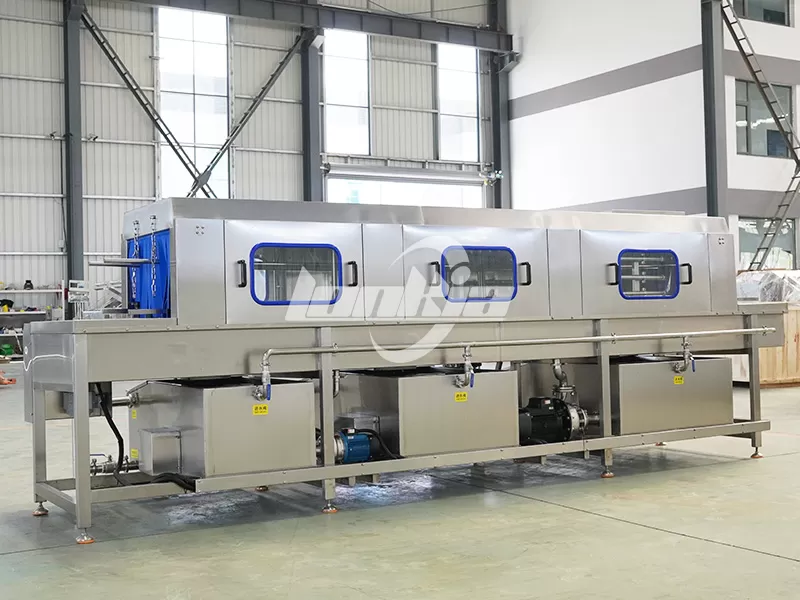
What Infrastructure Must Be Prepared Before Installing a Crate Washer?
1. Power Supply and Electrical Requirements
Crate washers typically consist of a conveyor system, water pumps, heating units, and a control system, with different configurations requiring varying power consumption. Taking the LONKIA crate washer machine as an example, the equipment operates on a 380V, 50Hz power supply with a power consumption of approximately 9–34.5 kW, depending on the specific configuration.
Before installation, customers need to confirm:
- Whether the crate washer factory's supply voltage, frequency, and number of phases match the equipment's requirements;
- Whether the on-site power capacity can meet the equipment's operational requirements;
- Whether a dedicated power source and necessary electrical protection measures are available.
Verifying electrical parameters in advance helps prevent power supply mismatches after the equipment arrives at the facility.
2. Water Supply Conditions
The crate washer machine removes food residues from the surface of reusable crates via a spray system; therefore, a stable water supply is essential for ensuring effective cleaning.
Before installation, verify the following:
- Whether the water supply pressure and flow rate meet the equipment's requirements;
- Whether the size of the inlet pipes matches the equipment's connections;
- Whether the water source meets production water quality standards;
- Whether additional water storage facilities are required.
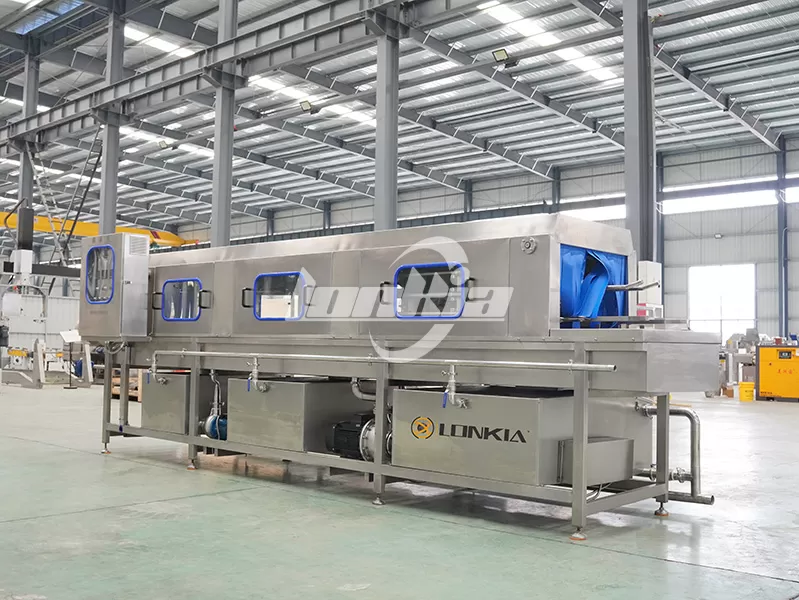
LONKIA crate washer machines feature a multi-tank and recirculating filtration design, enabling phased management of the wash water. Customers must still verify water replenishment requirements based on the equipment configuration and actual cleaning needs.
3. Drainage Facilities
The cleaning process generates wastewater containing food residues, grease, and detergents. Insufficient drainage capacity may cause water accumulation around the equipment, affecting normal operation.
Before installation, pay close attention to the following:
- The diameter and capacity of the drainage pipes;
- Whether the equipment's drain outlet is compatible with the on-site drainage system;
- Whether the floor has an appropriate drainage slope;
- Whether a separate wastewater collection system is required.
How Does the Heating Method Affect Equipment Configuration?
Crate washer machines can be configured with either electric or steam heating, depending on the production process.
Differences Between Electric and Steam Heating
Electric heating requires an electrical system capable of meeting the equipment's power requirements and is relatively straightforward to install; steam heating, however, requires the facility to have a stable steam supply, and the steam pressure, connections, and piping conditions must be verified.
If the facility is already equipped with a centralized steam system, a steam heating solution can be considered; if there is no steam supply, electric heating can be selected based on the on-site electrical conditions.
What Other Issues Should Be Considered at the Installation Site?
In addition to water, electricity, and heating requirements, equipment layout is equally important.
First, installation space should be reserved based on the actual dimensions of the crate washer machine, ensuring sufficient operating areas at both the feed and discharge ends. Second, maintenance space must be reserved around the equipment to facilitate future inspections of the water pump, nozzles, filtration system, and conveyor chain.
If the facility plans to add an air knife for water removal or a drying module, the equipment length and subsequent conveying space for the turnover baskets must also be considered in advance.
How to Ensure the Smooth Commissioning of Crate Washer?
We recommend that customers provide the following information before equipment production begins:
Factory voltage, frequency, and available power capacity.
On-site water supply pressure, water quality, and drainage conditions.
Whether a steam supply is available.
The length, width, and height of the equipment installation area.
Reusable crate dimensions and hourly washing capacity.
LONKIA can design suitable equipment configurations and installation plans for customers based on on-site conditions, returnable bin specifications, and cleaning requirements. Confirming this information in advance helps minimize installation adjustments and improves the efficiency of bringing the equipment into production.